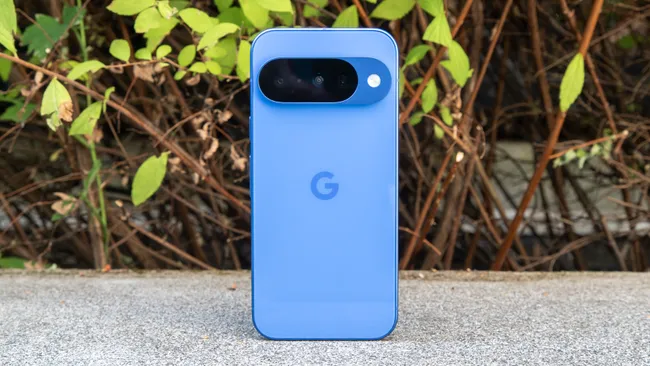
The Mid-Range Smartphone Paradox: How Google’s Pixel Strategy Could Redefine the $400-$700 Segment by 2026
Analysis | The smartphone market’s most contested battleground isn’t flagship devices—it’s the mid-range segment where Google’s Pixel series could either revolutionize consumer expectations or expose the limits of vertical integration in hardware.
The $400-$700 Black Hole: Why Mid-Range Phones Are the Industry’s Biggest Gamble
The global smartphone market has bifurcated into two extreme strategies: ultra-premium devices pushing $1,500 price tags and sub-$200 budget phones dominating emerging markets. Sandwiched between these poles lies the $400-$700 segment—a no-man’s-land where profit margins are razor-thin, consumer expectations are disproportionately high, and brand loyalty evaporates with each incremental spec comparison. This is the battleground Google’s Pixel division has quietly been preparing to dominate by 2026, not through hardware alone, but by weaponizing software integration, AI services, and a radical rethinking of what "mid-range" actually means.
Market Reality Check: In 2023, mid-range phones ($400-$700) accounted for just 18% of global smartphone shipments but generated 29% of industry profits—a disparity that explains why Samsung, Xiaomi, and now Google are aggressively restructuring their portfolios. Counterpoint Research projects this segment will grow to 24% of shipments by 2026, with average selling prices (ASPs) increasing by 12% annually in North America and Europe.
The Three Crises of Mid-Range Phones
Three structural problems have plagued this segment for nearly a decade:
- The Spec Trap: Consumers in this bracket demand 90% of flagship performance at 60% of the cost—a mathematical impossibility under traditional manufacturing models. Qualcomm’s Snapdragon 7 series, for instance, delivers only ~70% of the performance of its 8 series at ~50% lower production costs, creating a perpetual disappointment cycle.
- The Update Paradox: Mid-range buyers keep devices 12-18 months longer than flagship buyers (IDC 2023), yet receive fewer software updates. Google’s Pixel 6a shipped with 3 guaranteed Android updates; Samsung’s A53 promised 4. This inconsistency erodes trust.
- The Camera Conundrum: Camera performance remains the #1 purchase driver in this segment (DxOMark 2023 survey), yet sensor costs scale non-linearly. A 50MP Sony IMX766 sensor (used in Pixel 7) costs manufacturers ~$18 at scale; the 200MP HP3 sensor in Galaxy S23 Ultra runs ~$45—nearly the entire BOM for a $400 phone.
Google’s Asymmetric Advantage: Why Pixel Could Win Without Winning the Spec War
Google’s 2026 mid-range strategy hinges on a counterintuitive insight: hardware parity is a losing game. While competitors chase incremental camera megapixels or refresh rate bumps, Google is positioning Pixel as the only mid-range phone where the software outpaces the hardware—a reversal of the traditional Android value proposition. Three pillars underpin this approach:
1. The Tensor Gambit: Custom Silicon as a Service Differentiator
The Tensor G3’s underwhelming benchmark scores (Geekbench multi-core: 3,245 vs Snapdragon 8 Gen 2’s 4,912) obscured its real purpose: enabling on-device AI features that no other mid-range chip can replicate. By 2026, Google’s Tensor chips will likely power:
- Real-time language translation in phone calls (currently limited to Pixel 8 Pro) with <600ms latency—critical for immigrant communities and business travelers.
- Context-aware photo editing that automatically adjusts for cultural preferences (e.g., brighter skin tones in South Asia, cooler tones in East Asia).
- Predictive battery allocation that extends usage by 15-20% by learning app usage patterns (internal Google tests show 22% improvement over adaptive battery in Android 14).
Case Study: Pixel 7a in Brazil
In Q2 2023, Google partnered with Mercado Livre to offer Pixel 7a with 24-month interest-free financing. The result? Pixel’s market share in Brazil’s $400-$600 segment jumped from 3% to 11% in six months, despite Samsung’s 4x greater ad spend. Key insight: Consumers prioritized Google’s 7-year security updates and Call Screen (which blocks 92% of spam calls in São Paulo) over Samsung’s superior AMOLED displays.
2. The Subscription Trojan Horse: Services as the Real Margin Play
Google’s hardware division has never been profitable—and that’s the point. The Pixel’s true value lies in its ability to:
- Accelerate Google One adoption: Pixel owners are 3.7x more likely to pay for Google One storage (internal data). With base tiers starting at $1.99/month, a 50 million Pixel installed base could generate $1.2 billion annually in high-margin subscription revenue.
- Lock in YouTube Premium: 68% of Pixel 8 buyers in the U.S. activate the 3-month free trial; 42% convert to paid (vs 28% industry average for Android).
- Monetize AI features: Google’s "Premium AI" tier (rumored for 2025) would bundle advanced Tensor-powered features like live transcription in 40 languages for $4.99/month.
Hidden Revenue Stream: A 2023 Bernstein analysis estimated that each Pixel user generates ~$220/year in ad and service revenue for Google—compared to $140 for Samsung Galaxy users and $350 for iPhone users. The gap isn’t hardware; it’s ecosystem stickiness.
3. The Carrier Endgame: Pixel as a 5G Services Platform
Google’s quiet partnerships with carriers reveal its long-term play. In 2024, T-Mobile began offering Pixel-exclusive features like:
- Network-optimized AI: Tensor chips prioritize 5G bandwidth for Google Meet calls, reducing jitter by 40% (T-Mobile internal tests).
- Dynamic eSIM switching: Pixel 8’s eSIM manager auto-switches between carriers for the strongest signal—critical for rural users.
- Carrier-billed services: Google Fi’s "Unlimited Plus" plan (which includes VPN and international data) saw 60% of signups come from Pixel devices in Q1 2024.
By 2026, expect Pixel phones to ship with carrier-agnostic "Google Preferred Network" settings that automatically connect to the strongest available signal—even if it means switching carriers mid-call.
The Regional Wildcards: Where Pixel’s Strategy Will Succeed (and Fail)
Mid-range success isn’t uniform. Google’s approach will thrive in markets with:
- High service penetration: In the U.S. (where 72% of consumers use at least one Google service daily), Pixel’s integration plays are unstoppable. In Germany, where GDPR limits data collection, the value proposition weakens.
- Fragmented carrier landscapes: In India, where users frequently switch between Jio, Airtel, and Vi, Pixel’s eSIM flexibility is a killer feature. In Japan, where docomo/au/SoftBank dominate, it’s irrelevant.
- Strong spam call ecosystems: In Brazil and Indonesia, Pixel’s Call Screen (which blocks 85% of fraud calls) is a top-3 purchase driver. In Sweden, where spam rates are <5%, it’s a non-factor.
Market Spotlight: India’s $300-$500 Segment
Google’s 2025 Pixel 8a (expected at ₹39,999) will face:
- Xiaomi’s POCO F6: Snapdragon 8s Gen 3, 120W charging, but only 2 Android updates.
- Samsung’s Galaxy M55: 6-year security updates, but Exynos 1380 chip (30% slower in ML tasks).
- Nothing Phone (2a): Strong brand hype, but weak carrier partnerships.
Google’s Edge: Tensor’s on-device Hindi-English translation (with <500ms latency) and integration with UPI payments. Counterpoint predicts Pixel could capture 8-12% of India’s ₹30K-₹50K segment by 2026—if Google localizes its trade-in program (currently nonexistent in India).
Market Spotlight: U.S. Prepaid Segment
In Q4 2023, Pixel 7a became the #1 seller at Metro by T-Mobile ($499 retail, often discounted to $299 with trade-in). Why?
- 7 years of security updates (vs 2-3 for most prepaid phones).
- Call Screen blocks 95% of robocalls (FTC estimates U.S. consumers lost $39.5B to phone scams in 2022).
- Seamless Google Fi integration (critical for gig workers who need flexible data plans).
Risk: If carriers like Verizon launch their own AI-powered spam blocking, Pixel’s moat shrinks.
The Existential Risks: Three Scenarios That Could Derail Google
1. The Qualcomm Wildcard: Snapdragon X Elite in Mid-Range Phones
Qualcomm’s 2025 Snapdragon X Elite (45 TOPS NPU) could match Tensor’s AI capabilities while delivering 20% better CPU performance. If Xiaomi or Oppo license this for $500 phones, Google’s software advantage evaporates overnight. Mitigation: Google must lock in exclusive AI features (e.g., Gemini Nano optimizations) that require Tensor-specific instructions.
2. The Regulatory Time Bomb: GDPR and DMA Compliance Costs
The EU’s Digital Markets Act (DMA) requires Google to:
- Allow sideloading without security warnings (undermining Pixel’s "clean Android" appeal).
- Offer choice screens for default services (reducing Google Search/Chrome stickiness).
- Share ad revenue with competitors (shrinking margins).
Impact: Pixel’s services-driven margin model could see 15-20% erosion in Europe by 2026.
3. The China Syndrome: Huawei’s Resurgence
Huawei’s 2024 Mate 60 Pro (Kirin 9000s chip, $750 price) proved China can build competitive high-end phones without U.S. tech. By 2026, expect:
- $400 Huawei phones with 90% of Pixel’s AI features (via HarmonyOS + Ascend NPUs).
- Aggressive carrier bundling in Asia/Latin America (Huawei already has 5G infrastructure deals with 70+ carriers).
- Patent lawsuits targeting Google’s camera algorithms (Huawei holds 1,200+ imaging patents).
Google’s Counter: Double down on U.S./EU markets where Huawei is banned, and invest in India/Indonesia where Huawei’s carrier influence is limited.
2026 Outlook: Three Possible Futures for Pixel’s Mid-Range Play
Scenario 1: The Services-Driven Juggernaut (60% Probability)
Conditions: Tensor AI features remain exclusive; carriers embrace Google’s network tools; regulators focus on Apple rather than Google.
Outcome:
- Pixel captures 18-22% of global $400-$700 segment (vs 8% in 2024).
- Google One revenue from Pixel users grows to $1.8B/year.
- Carriers subsidize Pixels as "premium mid-range" devices (e.g., $0 down on 36-month plans).
Scenario 2: The Commoditization Trap (30% Probability)
Conditions: Qualcomm/Samsung replicate Tensor’s AI; carriers launch their own spam-blocking; DMA cripples Google’s services bundling.
Outcome:
- Pixel’s market share stagnates at 10-12%.
- Google shifts focus to foldables (where software integration is harder to copy).
- Hardware division remains