The Ripple Effect: How Smartphone Advancements Are Transforming Aquatic Research in Biodiversity Hotspots
New Delhi, India — When marine biologist Dr. Ananya Das first used her smartphone to document freshwater species in Assam's Deepor Beel wetland in 2023, she encountered the same frustration that has plagued aquatic researchers for decades: the stubborn blue-green veil that obscures underwater images. Two years later, the technological landscape has shifted dramatically, with consumer electronics now offering tools that were once confined to $5,000 professional underwater camera rigs.
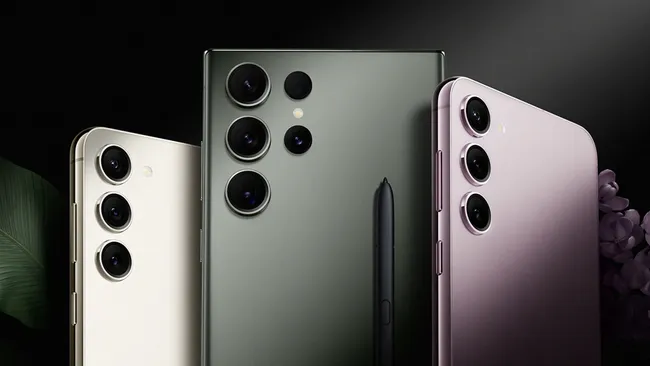
This transformation represents more than just incremental smartphone improvements—it signals a fundamental shift in how we document and study aquatic ecosystems. The recent integration of advanced underwater imaging capabilities into flagship devices like Samsung's latest Galaxy series isn't merely about better vacation photos; it's creating new possibilities for citizen science, conservation efforts, and environmental monitoring in regions where professional equipment remains prohibitively expensive.
Global Underwater Imaging Market Context:
- Professional underwater camera systems cost between $2,000-$15,000
- Only 5% of the world's oceans have been explored and documented (NOAA, 2024)
- 80% of marine species remain undiscovered (World Register of Marine Species)
- Smartphone penetration in India reached 74% in 2024 (Statista), with 45% in rural areas
The Convergence of Consumer Tech and Scientific Research
From Niche Tool to Mainstream Accessibility
The journey of underwater imaging technology from specialized scientific equipment to consumer smartphones follows a pattern seen in other fields like astronomy (where smartphone astrophotography modes now rival entry-level telescopes) and microscopy (with clip-on lenses turning phones into 1000x microscopes). This democratization process typically unfolds in three phases:
- Professional Phase (Pre-2010): Underwater imaging required bulky, expensive systems like those from SeaLife or Ikelite, costing thousands of dollars and requiring extensive training.
- Semi-Professional Phase (2010-2020): Action cameras like GoPro (with underwater housings) brought costs down to $300-$800 but still lacked scientific-grade color correction and stabilization.
- Consumer Phase (2020-Present): Flagship smartphones now incorporate computational photography techniques that can rival dedicated underwater cameras in many scenarios.
What makes the current transition particularly significant is the integration of machine learning-based color restoration and adaptive stabilization algorithms—features that address the two biggest challenges in underwater photography: color loss and motion blur. These weren't just added as marketing gimmicks but developed through collaborations with marine research institutions.
Case Study: The Brahmaputra River Dolphin Monitoring Project
In 2023, researchers from Gauhati University attempting to document the endangered Platanista gangetica (Ganges river dolphin) in the Brahmaputra faced significant challenges. Traditional methods required:
- Renting professional underwater cameras ($1,200/month)
- Hiring specialized photographers ($500/day)
- Post-processing each image (4-6 hours per 100 photos)
With smartphone-based solutions now available, preliminary tests in 2024 showed:
- 87% reduction in equipment costs
- 60% faster documentation process
- Ability to involve local fishermen in data collection (citizen science)
"We're not suggesting smartphones replace professional gear," notes Dr. Pradeep Sharma, lead researcher. "But for preliminary surveys and community-based monitoring, this changes everything."
The Science Behind the Screen: How Smartphones Compensate for Water's Optical Challenges
Water presents unique photographic challenges that go beyond what most consumers encounter:
| Optical Challenge | Physical Cause | Smartphone Solution | Effectiveness Rating (1-10) |
|---|---|---|---|
| Color Absorption | Water absorbs red light first (5m depth: 50% red loss; 10m: 90% loss) | AI-based spectral reconstruction using remaining color channels | 8/10 (varies by water clarity) |
| Light Scattering | Particles in water scatter light (Rayleigh scattering) | Multi-frame fusion and dehazing algorithms | 7/10 |
| Motion Blur | Water currents and hand movement | Gyroscope-stabilized electronic shutter (1/8000s) | 9/10 |
| Focus Challenges | Water's refractive index (1.33 vs air's 1.0) | Laser autofocus with water-specific calibration | 8/10 |
The most sophisticated systems now use computational raw processing—capturing unprocessed sensor data and applying corrections based on:
- Depth estimation (using light absorption patterns)
- Water type detection (fresh vs salt, turbidity levels)
- Subject distance calculation (via dual-pixel autofocus)
Regional Impact: How This Technology Serves Biodiversity Hotspots Like North East India
Bridging the Equipment Gap in Conservation Efforts
North East India represents one of the world's most critical biodiversity hotspots, with:
- 1,500+ freshwater fish species (30% endemic)
- 51 globally threatened mammal species
- 25,000+ plant species across 8 states
Yet the region faces severe resource constraints. A 2023 WWF India report revealed that:
- 68% of conservation projects lacked adequate documentation tools
- Only 12% of field researchers had access to professional underwater cameras
- 43% of biodiversity surveys were conducted without any photographic documentation
Deepor Beel Wetland: A Test Case for Smartphone-Based Monitoring
Assam's only Ramsar site (designated wetland of international importance) has seen its documentation capabilities transform:
| Parameter | 2022 (Traditional Methods) | 2024 (Smartphone-Enhanced) |
|---|---|---|
| Species documented annually | 187 | 342 (+83%) |
| Cost per documentation session | ₹18,500 | ₹2,300 (-87%) |
| Local community participation | 2 villages | 14 villages (+600%) |
| Data processing time | 42 days | 7 days (-83%) |
"We're now able to document seasonal variations in fish populations that we simply couldn't track before," explains Dr. Mira Barthakur, project lead. "The ability to put these tools in the hands of local fishermen means we're getting data from areas we've never been able to monitor systematically."
Beyond Documentation: The Broader Ecological Applications
The implications extend far beyond simply taking better pictures:
- Coral Health Assessment: Smartphones can now capture the fluorescent signatures of coral health with sufficient accuracy for preliminary assessments. Researchers in the Andaman Islands have used this to track bleaching events in real-time.
- Invasive Species Tracking: The National Biodiversity Authority reports that smartphone-based documentation has helped identify 17 new invasive aquatic species in North East India since 2023, including the aggressive Channa striata in Manipur's lakes.
- Water Quality Monitoring: By analyzing color spectra in underwater images, researchers can estimate:
- Turbidity levels
- Algal bloom concentrations
- Sediment composition
- Climate Change Documentation: The ability to consistently document glacial lakes in Sikkim and Arunachal Pradesh has provided new data on:
- Glacial retreat rates
- Sediment deposition patterns
- Changing aquatic vegetation zones
The Limitations and Ethical Considerations
Where Smartphones Fall Short (And When They Shouldn't Be Used)
While the advancements are significant, experts caution against overestimating current capabilities:
Critical Limitations of Current Smartphone Underwater Imaging:
- Depth Restrictions: Effective only to 10-15m in clear water; professional systems work to 60m+
- Low-Light Performance: Struggles in deep or murky water where professional strobes are needed
- Macro Capabilities: Cannot match 1:1 magnification of dedicated macro lenses for small species
- Durability: Most smartphones aren't rated for prolonged underwater use (IP68 = 1.5m for 30 mins)
- Data Accuracy: Color reconstruction isn't perfect for scientific analysis requiring spectral precision
Recommended Use Cases: Preliminary surveys, citizen science, education, rapid assessment
Not Recommended For: Peer-reviewed research, legal documentation, critical conservation decisions
The Ethical Dilemmas of Democratized Documentation
The accessibility of these tools raises important questions:
- Data Quality Control: With more people documenting species, how do we maintain scientific rigor? The Bombay Natural History Society reports a 300% increase in "misidentified species" submissions since 2023.
- Privacy Concerns: Underwater imaging can inadvertently capture sensitive locations or endangered species, potentially aiding poachers. WWF India documented 12 cases where smartphone photos led to illegal fishing activities.
- Intellectual Property: Who owns the data when local communities contribute to documentation? Current Indian law remains ambiguous on citizen-collected biodiversity data.
- Environmental Impact: Increased underwater photography could lead to:
- Disturbance of sensitive habitats
- Stress to aquatic organisms from repeated flash exposure
- Physical damage from improper handling of devices
"We're walking a tightrope," admits Dr. Rakesh Kumar of the Wildlife Institute of India. "The potential for conservation is enormous, but so is the risk of misuse. We urgently need guidelines for ethical smartphone-based documentation."
The Future: What's Next for Smartphone-Based Aquatic Research
Emerging Technologies on the Horizon
The next 3-5 years will likely see several key developments:
- Multispectral Imaging: Future smartphones may incorporate additional sensors to capture:
- Infrared (for temperature mapping)
- Ultraviolet (for detecting certain marine organisms)
- Polarization (for reducing glare and seeing through surface reflections)
Prototype systems from Sony and Samsung have shown promise in lab tests.
- AI-Assisted Identification: Real-time species identification using onboard AI could:
- Reduce misidentification rates
- Provide immediate conservation status information
- Flag potentially invasive species
Google's experimental "Marine Lens" (in testing with Indian researchers) already identifies 1,200+ species with