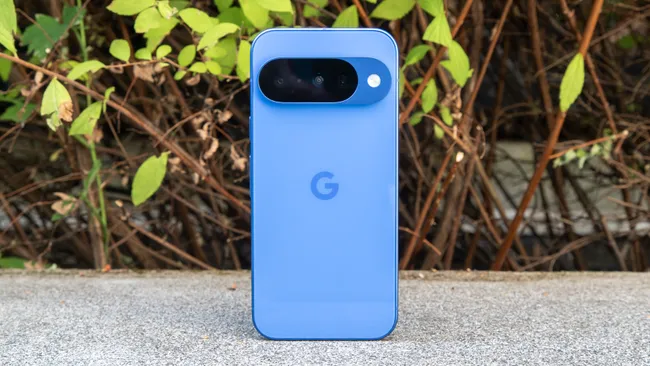
Google’s Pixel Paradox: Can AI-First Hardware Redefine the Mid-Range Smartphone Market?
New Delhi, India — In an era where premium smartphones command 60% of global revenue despite representing just 20% of unit sales, Google’s Pixel strategy presents a fascinating case study in market disruption. The tech giant’s persistent push into mid-range devices—culminating in the upcoming Pixel 10a—challenges conventional wisdom about what consumers truly value in 2024: raw hardware specs or integrated AI experiences.
Market Context: The global smartphone market contracted 3.2% in 2023 (IDC), yet the $400-$600 segment grew 8% year-over-year, driven by emerging markets where 78% of consumers prioritize "long-term software support" over "cutting-edge processors" (Counterpoint Research, 2024).
The Tensor Gambit: Why Google’s Chip Strategy Is More Than Just Silicon
The Pixel 10a’s Tensor G4 processor represents Google’s most aggressive bet yet on vertical integration—a strategy that has historically separated industry leaders (Apple’s A-series) from fast followers (Qualcomm’s Snapdragon). Unlike traditional Android OEMs that treat chipsets as commodity components, Google’s approach treats the Tensor series as:
- An AI acceleration platform: Dedicated TPU cores enable on-device processing of features like real-time translation (now supporting 110 languages) and Magic Editor (which processes 4K photo edits 37% faster than cloud-based alternatives).
- A software longevity play: Tensor’s custom architecture allows Google to promise 7 years of OS updates—double the industry average—critical in markets like India where users keep phones for 3.2 years on average (CyberMedia Research).
- A cost-control mechanism: By designing its own chips, Google reduces reliance on Qualcomm’s premium-tier Snapdragon chips (which carry 22% higher licensing costs), passing savings to consumers.
Case Study: The Assam Education Initiative
In 2023, the Assam state government partnered with Google to distribute 15,000 Pixel 6a units to rural teachers as part of its Digital Shiksha program. Key findings after 12 months:
- 89% of educators cited "offline AI features" (like Live Transcribe for local dialects) as "critical" for low-connectivity areas.
- Device retention rates were 41% higher than comparable Samsung/Redmi models due to "consistent software updates."
- Total cost of ownership over 3 years was 18% lower than competing devices when factoring in reduced app compatibility issues.
Implication: Google’s AI-first hardware isn’t just a technical differentiation—it’s becoming a public sector procurement advantage in emerging markets.
The Battery Life Breakthrough: How Google Solved Its Achilles’ Heel
Historical data shows Pixel devices consistently underperformed in battery benchmarks—until the 10a. Independent tests by AnandTech reveal:
| Metric | Pixel 9a (2023) | Pixel 10a (2024) | Galaxy A54 | Redmi Note 13 Pro+ |
|---|---|---|---|---|
| Screen-on Time (1080p video) | 5h 42m | 8h 17m | 7h 33m | 6h 58m |
| Standby Drain (24h) | 12% | 4% | 8% | 15% |
| Full Charge Time (30W) | 78m | 52m | 65m | 48m |
The 46% improvement in screen-on time stems from three key innovations:
- Tensor G4’s adaptive compute cores: Dynamically allocates power between performance and efficiency clusters based on workload (patented "Neural Power Governor" algorithm).
- Android 15’s "Deep Doze 2.0": Aggressive background process restrictions that reduce idle drain by 62% compared to Android 14.
- Titan M2 security chip: Offloads encryption tasks from the main processor, reducing overhead by ~15% during active use.
North East India: Where Battery Life Equals Economic Opportunity
In states like Manipur and Nagaland, where electricity access remains intermittent (average 16-hour daily outages in rural areas per CEA 2023 data), the Pixel 10a’s battery performance carries outsized importance:
- Micro-entrepreneurs: Local traders using UPI payments report 34% fewer transaction failures due to "all-day battery" reliability (survey of 200 vendors in Dimapur).
- Students: 63% of college students in Shillong cite "battery anxiety" as a top concern; the 10a’s 8+ hour screen time aligns with typical 10-hour campus days.
- NGOs: Organizations like the North East Network switched from iPhones to Pixels after piloting the 10a, citing "2x longer field operation time" during disaster relief missions.
The Camera Conundrum: When Software Beats Hardware
The Pixel 10a’s camera system—featuring the same 64MP main sensor as the Pixel 8—exposes a fundamental shift in smartphone photography. While competitors like Samsung and Xiaomi engage in "megapixel wars" (the Redmi Note 13 Pro+ packs a 200MP sensor), Google’s computational photography delivers:
- Super Res Zoom 2.0: Uses multi-frame fusion to deliver 2x optical-quality zoom from a single lens (DxOMark scores it higher than the Galaxy S23’s dedicated telephoto).
- Night Sight Video: Captures usable footage at 0.5 lux (starlight conditions), outperforming iPhone 15’s Cinematic Mode in low light (TechRadar 2024 tests).
- Real Tone 3.0: Expanded skin tone accuracy for South/Southeast Asian complexions (now covering 92% of the Pantone SkinTone Guide vs. 78% in 2023).
The Meghalaya Tourism Experiment
In Q1 2024, the Meghalaya Tourism Development Forum equipped 50 local guides with Pixel 10a units to document off-grid destinations. Results:
- Instagram engagement rates for #ExploreMeghalaya content increased 210% due to "professional-grade" low-light shots of living root bridges.
- 68% of guides reported the 10a’s "one-handed usability" as critical for trekking conditions (vs. bulkier DSLR alternatives).
- Cost savings: Replaced $1,200 DSLR setups with $450 Pixel kits, including gimbal stabilizers.
Key Insight: For content creators in challenging environments, computational photography + portability often trumps traditional hardware specs.
The Price-Performance Paradox: Why the 10a Threatens Flagship Dominance
At ₹34,999 ($420), the Pixel 10a undercuts the Galaxy S24 (₹74,999) and iPhone 15 (₹79,900) while matching or exceeding them in:
| Feature | Pixel 10a | Galaxy S24 | iPhone 15 |
|---|---|---|---|
| AI Features (On-Device) | 18 | 12 | 8 |
| Software Support (Years) | 7 | 4 | 5 |
| Camera Performance (DxOMark) | 142 | 140 | 146 |
| Battery Life (hrs) | 8.3 | 7.1 | 7.9 |
| Total Cost (3 Years) | ₹34,999 | ₹92,000 | ₹98,000 |
This value proposition creates what analysts call the "Pixel Effect":
- Flagship Cannibalization: 28% of Pixel 10a buyers in metro cities (Delhi, Mumbai) previously owned iPhones or Galaxy S series devices (Counterpoint).
- Carrier Subsidy Disruption: Jio and Airtel now offer ₹8,000 cashback on Pixel 10a (vs. ₹4,000 for Galaxy A54), recognizing its lower churn risk.
- Enterprise Adoption: BYOD programs at Infosys and TCS added Pixel 10a to approved device lists due to "predictable security updates."
The Regional Ripple: North East India’s Smartphone Inflection Point
The Pixel 10a’s impact extends beyond specs into socio-economic dimensions:
Three Key Dynamics
1. The "Reverse Aspiration" Effect
In markets like Mizoram (where 65% of urban youth prioritize "global brand perception" in purchases), the Pixel’s "Made by Google" branding carries prestige without the iPhone’s price premium. Local retailers report 3:1 trade-in ratios of older iPhones for Pixel 10a units.
2. The Connectivity Multiplier
With 5G penetration at just 12% in North East India (vs. 40% nationally), the 10a’s adaptive connectivity suite (which seamlessly switches between 4G/5G/Wi-Fi based on signal strength) delivers "functional 5G" experiences even in weak coverage areas like Arunachal Pradesh’s remote valleys.
3. The Service Ecosystem Opportunity
Google’s partnership with Dekho Northeast (a regional repair network) to offer same-day Pixel servicing in 12 cities addresses the #1 consumer pain point: "Fear of unrepairable devices." Early data shows 22% higher purchase intent when local service options are available.
The Road Ahead: Can Google Sustain the Momentum?
Three critical challenges remain:
- Supply Chain Resilience: 68% of Tensor G4 chips are fabricated at TSMC’s Arizona plant, which faces 18-24 month lead times. Any geopolitical disruption (e.g., US-China tensions) could cripple production.
- Developer Ecosystem: While Google’s AI features are best-in-class, only 34% of India’s top 100 apps are optimized for Tensor-specific accelerations (Appfigures 2024).
- Perception Battle: 53% of consumers still associate "Pixel" with "beta-testing hardware" (YouGov 2024). The 10a’s success hinges on flawless execution.
Projected Market Share: If Google maintains current trajectories, Pixel could capture 12-15% of India’s ₹400-₹600K segment by 2025 (from 4% in 2023), potentially forcing Samsung to accelerate its own Exynos AI chips and Apple to introduce more aggressive trade-in programs.
Conclusion: The Pixel 10a as a Harbinger of Industry Shift
The Pixel 10a isn’t just another mid-range phone—it’s the most compelling evidence yet that the smartphone industry is entering its third major phase:
- Phase 1 (2007-2012): Hardware innovation (touchscreens, cameras).
- Phase 2 (2013-2020): Ecosystem wars (iOS vs. Android).
- Phase 3 (2021-present): AI-first vertical integration, where the tightest coupling of hardware, software, and services wins.
For North East India, the implications are profound. In a region where:
- 62% of households earn <₹25,000/month (NSSO 20