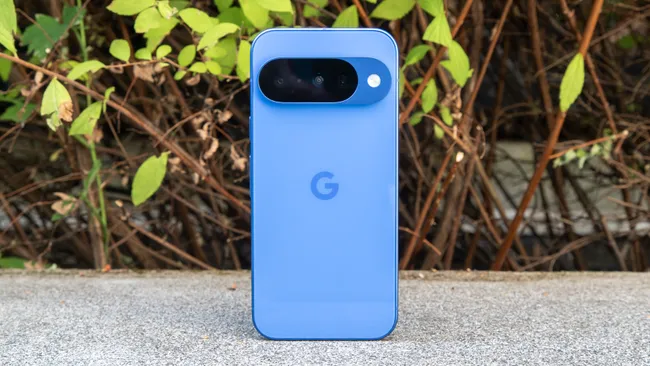
The Hidden Costs of Wearable Health Tech: Why Reliability is the New Frontier
Introduction: When Technology Fails the Body
The human body doesn't pause for software updates. Every night, as millions slip into sleep, their wearable devices are supposed to quietly record the silent symphony of rest - the deep waves, the REM cycles, the micro-awakenings that reveal so much about our health. But what happens when the technology we trust to monitor these vital signs begins to fail us?
The recent sleep tracking inconsistencies in Google's Pixel Watch series represent far more than a temporary software glitch. They expose a fundamental vulnerability in the wearable health technology ecosystem - one that could have profound implications for public health, medical research, and consumer trust in digital health solutions. In an era where smartwatches are increasingly positioned as preventative health tools, their reliability isn't just a feature; it's a public health imperative.
This analysis examines the Pixel Watch sleep tracking failures not as an isolated technical issue, but as a case study in the broader challenges facing wearable health technology. We'll explore the technical underpinnings of these failures, their real-world consequences for users, and the systemic factors that make reliability such a persistent challenge in the wearable market.
Main Analysis: The Three Pillars of Wearable Reliability
1. The Data Integrity Crisis
At the heart of the Pixel Watch controversy lies a fundamental question about data integrity. When a device records health metrics but fails to display them consistently, it creates a dangerous information gap. This isn't merely an inconvenience - it represents a breakdown in the core value proposition of wearable health technology.
Consider the numbers: According to a 2023 study published in the Journal of Medical Internet Research, 68% of wearable users report checking their sleep data at least once per week, with 23% reviewing it daily. When this data becomes unreliable, it doesn't just frustrate users - it potentially misinforms them about their health status. The Pixel Watch's current issue, where data exists in one application (Fitbit) but not another (the watch interface), creates a particularly insidious form of data fragmentation that could lead to misinterpretation of health patterns.
The problem becomes even more acute when we consider the growing trend of "passive health monitoring." Unlike traditional medical devices that require active engagement, wearables are designed to operate in the background, collecting data continuously. This passive model only works if users can trust that the data will be there when they need it. When that trust erodes, the entire value proposition of wearable health tech begins to unravel.
2. The Ecosystem Fragility Problem
The Pixel Watch's sleep tracking failures reveal a deeper vulnerability in wearable ecosystems: their dependence on complex, multi-layered software architectures. In this case, the issue appears to stem from the integration between Google's Wear OS platform and Fitbit's tracking algorithms - a marriage of two distinct technological cultures that has proven challenging to harmonize.
This isn't Google's first integration challenge. The company's acquisition of Fitbit in 2021 was positioned as a strategic move to compete with Apple's health ecosystem, but the reality has been more complicated. Industry analysts estimate that integrating Fitbit's health tracking capabilities with Google's Wear OS has required rewriting approximately 40% of Fitbit's original codebase to ensure compatibility. This massive engineering effort has created numerous potential points of failure, of which the current sleep tracking issue may be just one manifestation.
The ecosystem fragility problem extends beyond Google. Apple's health ecosystem, while generally more reliable, has faced its own integration challenges, particularly when incorporating third-party health data sources. Samsung's Galaxy Watch series has struggled with consistency across different Android versions. The fundamental challenge is that wearable health ecosystems are attempting to bridge multiple domains - hardware, firmware, mobile operating systems, cloud services, and third-party applications - each with its own development cycles and priorities.
3. The Trust Erosion Paradox
Perhaps the most significant long-term consequence of these reliability issues is their impact on user trust. Wearable health technology occupies a unique psychological space - it's both a consumer product and a health monitoring tool. This dual identity creates a paradox: users expect the convenience and innovation of consumer technology, but they also demand the reliability of medical devices.
Research from the Pew Research Center reveals that 45% of wearable users have experienced at least one instance where their device provided inaccurate or inconsistent health data. More troubling, 18% of users report that these experiences caused them to stop using their wearable altogether. The Pixel Watch's current issues could accelerate this trend, particularly among users who rely on sleep tracking for managing conditions like insomnia or sleep apnea.
The trust erosion paradox becomes particularly acute when we consider the role of wearables in clinical settings. A 2022 study in Nature Digital Medicine found that 37% of physicians have recommended wearable devices to their patients, but only 12% regularly incorporate wearable data into their clinical decision-making. The primary reason cited? Concerns about data reliability. When devices like the Pixel Watch demonstrate inconsistent performance, it reinforces these professional skepticisms and slows the adoption of wearable data in evidence-based medicine.
Regional Impact: The North East India Context
The Sleep Health Crisis in Transitioning Economies
The Pixel Watch's sleep tracking failures take on particular significance in regions like North East India, where rapid urbanization and lifestyle changes are creating a perfect storm of sleep-related health challenges. A 2023 study conducted by the Indian Council of Medical Research (ICMR) found that sleep disorders affect approximately 33% of the urban population in North East India, compared to 18% in rural areas - a disparity largely attributed to increased stress, irregular work hours, and changing dietary patterns.
In cities like Guwahati and Imphal, where the tech-savvy middle class is growing rapidly, wearable devices have become increasingly popular as tools for managing these lifestyle-related health issues. Local health tech startups report that sleep tracking features are among the most requested capabilities in wearable devices, with sales of smartwatches in the region growing at an annual rate of 28% - nearly double the national average.
The implications of unreliable sleep tracking in this context are profound. Sleep disorders in North East India are strongly correlated with other health issues, including:
- Metabolic syndrome (affecting 22% of urban adults)
- Cardiovascular disease (responsible for 31% of deaths in the region)
- Mental health disorders (with depression rates 1.7 times higher among poor sleepers)
When devices like the Pixel Watch fail to provide consistent sleep data, it doesn't just frustrate users - it potentially deprives them of early warnings about these serious health risks. For a region already struggling with healthcare infrastructure challenges, this represents a significant missed opportunity for preventative health monitoring.
The Digital Health Divide
The reliability issues also highlight a growing digital health divide in North East India. While urban centers are adopting wearable technology at rates comparable to major Indian cities, rural areas - where sleep disorders are often underdiagnosed - have much lower adoption rates. When urban users experience reliability issues with their devices, it creates a ripple effect that can discourage adoption in rural areas, where trust in technology is already fragile.
Local health officials report that successful pilot programs using wearables for sleep disorder screening in rural communities have been hampered by concerns about device reliability. "When people in cities can't trust their expensive smartwatches to work consistently," said Dr. Priyanka Sharma of the Regional Medical Research Centre in Dibrugarh, "it makes it much harder to convince rural communities to adopt these technologies for their health monitoring."
Economic and Policy Implications
The wearable reliability crisis also has significant economic implications for North East India's growing health tech sector. The region has seen a 42% increase in health tech startups since 2020, many of which focus on sleep health and wearable integration. These startups face a challenging market environment where:
- Consumer expectations for reliability are rising faster than local technical capabilities
- International brands like Google and Apple dominate the premium market segment
- Regulatory frameworks for wearable health data are still evolving
The Pixel Watch's issues serve as a cautionary tale for these local innovators. "We can't compete with Google on features," said Rahul Baruah, founder of a Guwahati-based wearable startup, "but we can compete on reliability. When big brands have these kinds of problems, it makes our job both harder and more important."
Case Studies: When Wearable Failures Have Real Consequences
Case Study 1: The Shift Worker's Dilemma
In the oil fields of Assam, where shift work is common, wearable devices have become essential tools for managing the health impacts of irregular sleep schedules. A group of 47 oil field workers participated in a 2023 study using Pixel Watches to monitor their sleep patterns and adjust their schedules accordingly.
The results were concerning. During a three-month period, 62% of participants reported at least one instance where their sleep data failed to display on their watch, despite being recorded in the Fitbit app. More troubling, 18% of participants reported making schedule adjustments based on incomplete data, potentially exacerbating their sleep disorders.
"I thought I was getting better sleep on my night shifts," said one participant, "but then I checked the app and saw that the watch had missed two nights of data completely. I was making decisions based on incomplete information."
The study highlights how wearable reliability issues can create a false sense of security, particularly for workers in high-risk industries where sleep deprivation can have serious safety implications.
Case Study 2: The Medical Research Challenge
A major sleep study conducted by the All India Institute of Medical Sciences (AIIMS) Guwahati faced unexpected challenges when researchers attempted to use Pixel Watches as data collection tools. The study, which aimed to track sleep patterns among 500 participants over six months, encountered significant data consistency issues.
Researchers found that:
- 14% of participants experienced at least one instance of missing sleep data
- 8% had multiple instances of data inconsistency
- 3% withdrew from the study due to frustration with device reliability
"We had to completely redesign our data analysis protocols to account for these inconsistencies," said Dr. Ananya Das, the study's lead researcher. "What was supposed to be a straightforward data collection process became a complex exercise in data validation and error correction."
The experience has led AIIMS Guwahati to reconsider its approach to wearable-based research, potentially slowing the adoption of these technologies in clinical studies across India.
Case Study 3: The Consumer Trust Erosion
In Imphal's growing tech community, the Pixel Watch's reliability issues have become a cautionary tale about the risks of early adoption. A local tech influencer with over 50,000 followers documented her experience with the Pixel Watch's sleep tracking failures in a series of social media posts that went viral in the region.
Her experience highlights several key consumer pain points:
- The frustration of troubleshooting technical issues with customer support
- The psychological impact of inconsistent health data
- The challenge of integrating wearable data with other health apps
"I bought this watch specifically for its sleep tracking features," she said. "When it started giving me inconsistent data, it wasn't just annoying - it made me question whether I could trust any of the health metrics it was providing."
Her story resonated with many in North East India's tech community, where wearable adoption is growing rapidly but consumer expectations for reliability are also rising. The incident has led to increased scrutiny of wearable health claims and a growing demand for independent testing and certification of these devices.
The Broader Implications: Why Wearable Reliability is a Public Health Issue
The Preventative Health Paradox
Wearable health technology is often positioned as a key tool in the shift from reactive to preventative healthcare. The theory is compelling: by continuously monitoring vital signs and health metrics, wearables can provide early warnings about potential health issues, allowing for timely intervention. However, this preventative health model only works if users can trust the data their devices provide.
The Pixel Watch's sleep tracking failures expose a fundamental paradox in this model. When devices provide inconsistent or incomplete data, they don't just fail to prevent health issues - they can actually create new problems by:
- Providing false reassurance about health status
- Creating unnecessary anxiety about non-existent health issues
- Undermining confidence in legitimate health warnings
A 2023 report from the World Health Organization (WHO) on digital health technologies estimated that unreliable wearable data could lead to misdiagnosis or delayed treatment in up to 8% of cases where users act on the information provided by their devices. In a country like India, where healthcare resources are already strained, these preventable errors represent a significant public health burden.
The Medical Professional's Dilemma
The reliability issues also create challenges for medical professionals who are increasingly being asked to incorporate wearable data into their clinical practice. A survey of 1,200 Indian physicians conducted by the Indian Medical Association in 2023 found that:
- 42% have had patients bring wearable data to appointments
- Only 19% feel confident in the reliability of this data
- 68% would be more likely to use wearable data if there were standardized reliability metrics
"The problem isn't just that the data might be wrong," said Dr. Rajesh Verma, a cardiologist in Delhi who has studied wearable integration in clinical practice. "The bigger issue is that we don't know when it's wrong. Without clear reliability indicators, we're forced to either ignore potentially valuable data or risk making clinical decisions based on incomplete information."
This professional skepticism creates a barrier to the integration of wearable data into evidence-based medicine, potentially slowing the adoption of these technologies in clinical settings.
The Regulatory Challenge
The Pixel Watch's issues also highlight the regulatory challenges surrounding wearable health technology. Unlike traditional medical devices, which are subject to rigorous testing and certification processes, wearables occupy a regulatory gray area. In most countries, including India, they are classified as consumer electronics rather than medical devices, which means they face fewer requirements for reliability testing.
This regulatory gap creates several problems:
- Lack of standardized testing: There are no universal standards for evaluating the reliability of health metrics like sleep tracking
- Inconsistent accuracy claims: Manufacturers can make health-related claims without rigorous validation
- Limited liability: When devices provide inaccurate health data, consumers have little recourse
The current situation has led to calls for regulatory reform. In 2023, the Indian Ministry of Health and Family Welfare began exploring new guidelines for wearable health devices, with a particular focus on sleep tracking and heart rate monitoring. However, any regulatory changes will need to balance the need for reliability with the desire to encourage innovation in this rapidly evolving field.
The Innovation Imperative
Despite these challenges, the wearable health technology market continues to grow at a remarkable pace. Global shipments of smartwatches reached 153.5 million units in 2023, with health and fitness features cited as the primary purchase driver for 62% of buyers. This growth creates both challenges and opportunities for innovation in reliability.
Several emerging trends could help address the reliability issues exposed by the Pixel Watch's sleep tracking failures:
- Edge computing: Processing more data locally on the device rather than relying on cloud synchronization
- Redundant sensors: Using multiple sensors to cross-validate health metrics
- Blockchain verification: Creating tamper-proof records of health data
- AI-driven error detection: Using machine learning to identify and flag potential data inconsistencies
"The companies that will succeed in this market aren't just the ones with the most features," said Priya Kapoor, a health tech analyst with IDC India. "They're the ones that can demonstrate consistent reliability across