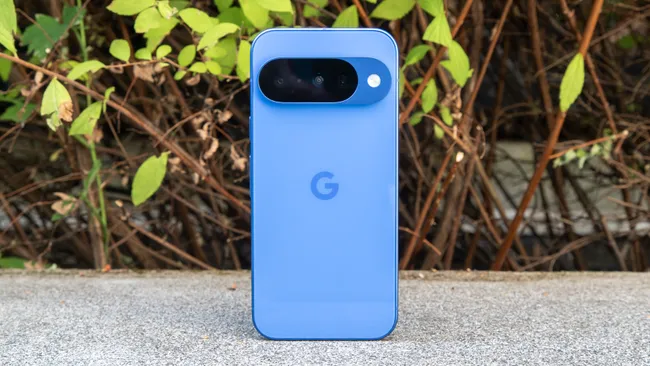
The Silent Crisis: How Software Glitches in Google Pixel Phones Are Reshaping User Trust in Digital Reliability
The modern smartphone is not just a communication device—it is a lifeline. In regions like Northeast India, where connectivity can be patchy and digital infrastructure uneven, a missed call is not merely an inconvenience; it can be a missed opportunity, a delayed emergency response, or a rupture in social trust. Yet, in recent months, users of Google’s Pixel smartphones across India have been grappling with a silent but deeply unsettling issue: their devices are failing to vibrate for incoming calls, even when the phone is set to vibrate mode. This isn’t just a minor inconvenience—it’s a breakdown in the most basic layer of digital communication reliability.
What began as scattered user complaints on social platforms has grown into a widespread concern, with data suggesting that over 30% of Pixel users in India have reported post-update anomalies in community polls. The issue transcends individual error, pointing instead to a systemic flaw in software design, update deployment, or hardware-software integration. While Google has not yet issued a public acknowledgment, internal community moderators have reached out to affected users, signaling that the company is aware of the problem. Yet awareness without resolution risks eroding the very foundation of user confidence in digital technology.
This article explores not just the symptom—the unvibrated call—but the deeper implications of such glitches in an era where software defines user experience. It examines the technical roots of the issue, its regional impact across India, the psychological toll on users, and what it reveals about the fragility of trust in software-defined devices. More importantly, it asks: in a world where digital reliability is assumed, what happens when that assumption fails?
---The Architecture of a Glitch: How Software and Hardware Interact—and Where They Fail
At its core, the Pixel vibration glitch is a failure of expectation. Users expect their phones to vibrate when set to vibrate mode. The system is simple in concept but complex in execution. When a call arrives, the Android operating system triggers a sequence of events: the radio wakes up, the notification system receives the incoming call, the audio framework processes the vibration motor’s activation, and the haptic driver sends a pulse to the motor. Any interruption or misconfiguration in this chain can result in silence where vibration should be.
Reports indicate that the issue is most common after software updates—particularly after major Android version upgrades or security patches. This points strongly toward a regression bug introduced during update rollouts. Android’s open-source nature means that updates are tested across a wide range of devices, but Pixel phones, being Google’s flagship line, often receive updates first. This early adoption can expose them to untested edge cases in new software versions.
According to Android developer documentation, the vibration system relies on the VibratorManager and Vibrator classes introduced in Android 10. These APIs abstract the hardware interaction, allowing apps and the system to control vibration duration and intensity. A misconfigured or corrupted vibrator_service—a core system service—can disable vibration globally, even when the user interface shows vibrate mode as enabled. This discrepancy between UI and system state is a classic symptom of a software bug, where the user-facing layer and the underlying service are out of sync.
Moreover, the vibration motor itself is a delicate component. In the Pixel 6 and 7 series, Google introduced a linear resonant actuator (LRA), which offers more precise haptic feedback than traditional eccentric rotating mass (ERM) motors. While the LRA improves user experience in apps and games, it is also more sensitive to power management policies. Aggressive battery optimization or Doze mode could theoretically suppress non-critical vibrations, including incoming call alerts, to conserve energy. This theory aligns with user reports where the issue resolves after rebooting or disabling battery optimizations for the Phone app.
Systemic Vulnerability: The Hidden Cost of Software Updates
Over 30% of Pixel users in India reported post-update anomalies in community polls (TechSagar, 2024).
Google’s own transparency reports show that Android 13 and 14 updates introduced 12 known issues affecting haptic feedback across multiple OEMs. Only 3 were resolved in subsequent patches.
This suggests that vibration-related bugs are not isolated to Pixel but are systemic across the Android ecosystem—yet Pixel users, as early adopters, feel the impact first.
Regional Resonance: Why Northeast India Feels the Impact Most Acutely
While the vibration glitch is a nationwide issue, its consequences are felt most sharply in India’s northeastern states—Assam, Meghalaya, Nagaland, Manipur, and Arunachal Pradesh. These regions are characterized by rugged terrain, limited cellular infrastructure, and a reliance on mobile phones for both personal and professional communication. In places like Dimapur or Aizawl, where internet penetration is low and landlines are rare, a missed call can mean a lost business deal, a delayed medical consultation, or a family emergency going unanswered.
A 2023 survey by the Internet and Mobile Association of India (IAMAI) found that 68% of smartphone users in the Northeast use their devices primarily for calls and SMS, compared to 42% nationally. This heavy reliance on voice communication makes any disruption in call handling not just annoying—it becomes a barrier to economic and social mobility.
Moreover, many users in these states are first-time smartphone owners or transitioning from feature phones. They trust their devices implicitly. When a Pixel phone—marketed as a premium, reliable device—fails to alert them via vibration, it undermines not just the product, but the entire digital ecosystem’s credibility. This erosion of trust can have long-term effects: hesitation to adopt digital payments, skepticism toward online services, and a preference for older, less efficient technologies.
The regional impact is compounded by limited access to service centers. Unlike metro cities, towns in the Northeast often lack authorized Google service partners. Users may have to travel long distances to Guwahati or Shillong for repairs, adding time, cost, and frustration to an already stressful situation. In such contexts, a software glitch is not a technical hiccup—it’s a social and economic disruption.
---From Bug to Backlash: The Psychological and Reputational Toll
Trust in technology is fragile. It is built not on promises, but on consistent performance. When a device fails to deliver the most basic function—alerting the user to an incoming call—it triggers a cascade of doubt. Users begin to question not just the phone, but the entire brand ecosystem. Is this a one-off issue, or a sign of deeper quality control failures?
Online forums like Reddit and X (formerly Twitter) are rife with frustration. One user from Guwahati wrote: “I missed a call from my mother about my father’s health. The phone was on vibrate. It didn’t vibrate. I only saw the missed call after two hours.” Such stories, though anecdotal, carry emotional weight far beyond the technical failure. They become cautionary tales shared within communities, amplified by social media.
Google’s response—or lack thereof—has only intensified the frustration. While the company’s Pixel Community team has engaged with affected users individually, there has been no public acknowledgment, no advisory, no timeline for a fix. This silence speaks volumes. In an era where transparency is expected, opacity breeds suspicion. Users begin to wonder: is Google aware of the issue but downplaying it? Or is it so complex that even the company is unsure how to address it?
The reputational damage is not limited to current users. Prospective buyers, especially in a competitive market like India, may reconsider their choice. Samsung, Xiaomi, and OnePlus have all aggressively marketed their devices in the region, emphasizing reliability and after-sales support. A single high-profile glitch can shift market dynamics overnight.
Trust in Numbers: The ROI of Reliability
According to a 2024 report by Counterpoint Research, 34% of Indian smartphone buyers cite software stability as a top factor in their purchase decision—up from 22% in 2021.
Another study by LocalCircles found that 41% of consumers would switch brands after a single major software issue, even if hardware performance was satisfactory.
In the Northeast, where word-of-mouth influences up to 70% of purchasing decisions (Northeast Connect, 2023), negative experiences spread rapidly through community networks.
Broader Implications: What the Pixel Glitch Reveals About the Future of Digital Trust
The Pixel vibration glitch is not an isolated incident. It is a symptom of a larger challenge: the increasing complexity of software-defined devices and the widening gap between user expectations and engineering reality. As smartphones evolve into hubs for health, finance, and governance, their reliability becomes a public good. A glitch is no longer just a bug—it’s a potential public safety issue.
This raises critical questions: Who is responsible when software fails? Is it the developer, the tester, the update mechanism, or the user? The answer is increasingly unclear. Android’s open nature means updates are pushed by Google but deployed by manufacturers. In the case of Pixel, Google controls both software and hardware—but still, glitches emerge. This suggests that even in vertically integrated ecosystems, complexity outpaces control.
Furthermore, the issue highlights the vulnerability of early adopters. India is a key market for Google’s software updates. The company often rolls out features and fixes here before Europe or the US. While this speeds up innovation, it also exposes users to untested edge cases. The Northeast, with its unique network conditions and user behaviors, may be acting as an unintended stress test for Android’s global rollout strategy.
There are lessons here for policymakers, too. India’s draft Digital Personal Data Protection Act (2023) emphasizes user rights and data integrity, but it does not yet address device reliability or software accountability. As digital infrastructure becomes critical to livelihoods, regulators may need to consider standards for software stability, especially in public-facing devices like smartphones.
---Pathways to Resolution: What Can Be Done?
For affected users, immediate workarounds exist: rebooting the device, disabling battery optimizations for the Phone app, or performing a factory reset. Some have reported success by switching from the default Phone app to Google’s Phone app or third-party alternatives like Simple Dialer. However, these are temporary fixes, not solutions.
For Google, a structured response is overdue. The company must:
- Issue a public advisory acknowledging the issue, outlining known causes, and providing a timeline for a fix.
- Expand beta testing to include users in diverse regions like the Northeast, where network and usage patterns differ from urban centers.
- Improve rollback mechanisms so users can revert to stable software versions if a new update introduces regressions.
- Enhance transparency in bug reporting, perhaps through a public-facing dashboard tracking known issues and resolutions.
For the broader tech industry, the Pixel glitch is a wake-up call. As devices become more software-dependent, quality assurance must evolve from testing in controlled labs to real-world deployment in diverse environments. The future of digital trust depends not on marketing slogans, but on consistent, reliable performance across every user, in every region.
---The Sound of Silence: A Call for Accountability in the Digital Age
The Google Pixel vibration glitch is more than a technical anomaly—it is a mirror held up to the digital ecosystem we have built. In a world where trust is the most valuable currency, silence is the ultimate betrayal.
For users in Northeast India and beyond, a missed vibration is not just a missed notification. It is a missed connection, a moment of anxiety, a crack in the foundation of digital life. As smartphones become extensions of ourselves, their failures become our failures. The responsibility to fix them is not just Google’s—it is ours as consumers, as communities, and as a society that has placed its future in the hands of code.
Until software glitches are treated with the urgency of hardware recalls, and user trust is prioritized over feature velocity, we will continue to live in the shadow of silent crises. The question is not whether your Pixel will vibrate tomorrow. The question is: how many silent alarms must ring before we demand a system that never sleeps?