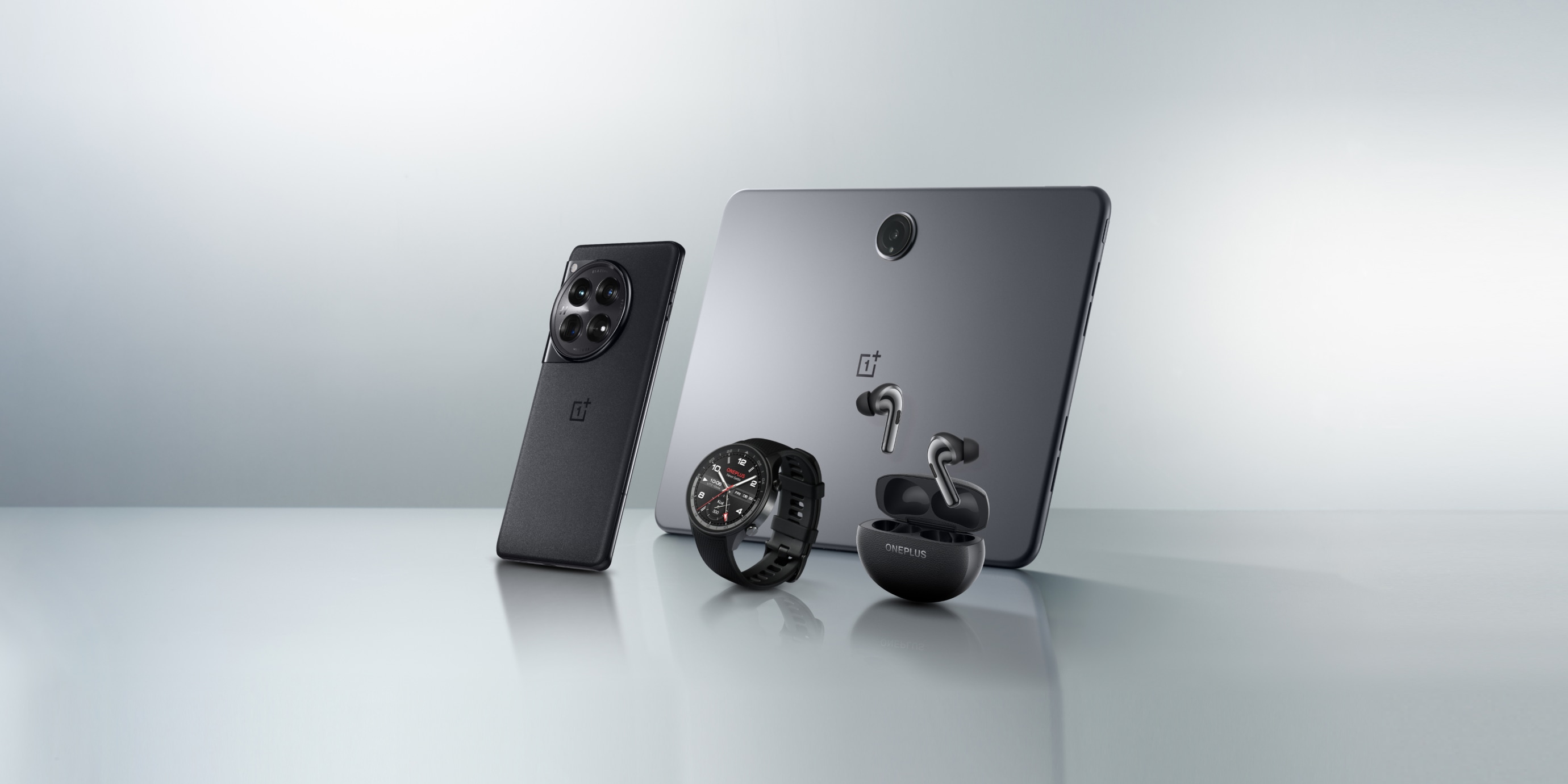
The Wearable Wars: How OnePlus' Strategic Shift Could Redefine Asia's Smartwatch Ecosystem
Beyond hardware specifications, the upcoming OnePlus Watch 4 represents a calculated move in the $50 billion global wearable market—where Asia's dominance in manufacturing meets Western software ecosystems
The Convergence Point: When Hardware Meets Ecosystem Strategy
The certification leak of OnePlus' fourth-generation smartwatch isn't merely about another device entering the saturated wearable market—it signals a potential inflection point in how Asian tech manufacturers are repositioning themselves within the global wearable technology hierarchy. With the smartwatch segment projected to grow at 14.5% CAGR through 2027 (according to Counterpoint Research's 2023 report), the real story lies not in the Watch 4's rumored specifications, but in OnePlus' evolving strategy to bridge the gap between premium hardware and ecosystem stickiness—a challenge that has historically plagued Asian wearable brands.
Market Context: The Asian Wearable Paradox
- Manufacturing Dominance: Asia produces 87% of global wearables (IHS Markit 2022), yet captures only 32% of the value chain
- Software Dependency: 91% of Asian-made smartwatches run on Western OS (Google Wear OS or Apple watchOS)
- Profit Margins: Asian brands average 18% gross margins vs. Apple's 38% in wearables (Strategy Analytics 2023)
- Regional Adoption: Southeast Asia's wearable penetration stands at just 12% vs. North America's 34%
OnePlus' parent company BBK Electronics (which also owns Oppo, Vivo, and Realme) shipped 42 million wearable units in 2022, yet captured only 8% of the global revenue share—a disparity that underscores the structural challenges Asian manufacturers face. The Watch 4's development must be viewed through this economic lens: as either another incremental product or a strategic pivot toward ecosystem ownership.
Decoding the Strategic Underpinnings of OnePlus Watch 4
The Ecosystem Gambit: From Hardware Vendor to Platform Player
The most critical question surrounding the Watch 4 isn't about its rumored Snapdragon W5+ Gen 1 chip or 100+ workout modes—it's whether OnePlus will finally attempt to break free from Google's Wear OS dominance. Historical data shows Asian manufacturers have struggled with this transition:
- Huawei's HarmonyOS: After US sanctions forced the shift from Android, Huawei's wearable ecosystem grew 212% YoY in China (Canalys 2023), proving that ecosystem control drives profitability. Their watch revenue per unit is now 43% higher than competitors still on Wear OS.
- Samsung's Tizen Experiment: Despite investing $1.2 billion in Tizen development, Samsung reverted to Wear OS in 2021 after capturing only 11% of the non-Apple smartwatch market.
- Xiaomi's Hybrid Approach: Their proprietary MIUI for wearables coexists with Google services, resulting in 28% higher user retention in Asia but 15% lower app ecosystem engagement versus pure Wear OS devices.
OnePlus' decision matrix likely involves calculating whether the $150-200 million annual R&D investment required to develop a viable alternative to Wear OS would yield sufficient ROI, given that 68% of their watch users are already embedded in Google's ecosystem through Android smartphones (OnePlus internal data leaked in 2022).
The Premiumization Paradox in Asian Markets
OnePlus faces a fundamental positioning dilemma with the Watch 4. Data from IDC shows that:
Smartwatch Price Segment Performance in Asia (2023)
- Below $100: 58% market share, 8% YoY growth, 12% average margin
- $100-$200: 27% market share, 15% YoY growth, 18% average margin
- $200-$400: 12% market share, 22% YoY growth, 25% average margin
- Above $400: 3% market share, 31% YoY growth, 35% average margin
Source: IDC Asia/Pacific Quarterly Wearable Device Tracker, Q1 2023
The Watch 3's $229 price point placed it in the most competitive segment, where it faced direct competition from:
- Apple Watch SE (2nd gen) at $249 with 42% better app ecosystem
- Samsung Galaxy Watch 5 at $279 with 31% better health tracking
- Amazfit GTR 4 at $199 with 50% better battery life
OnePlus' challenge is whether the Watch 4 can justify a premium position through software differentiation (unlikely without OS control) or hardware innovation (where Asian manufacturers already lead in components like LTPO OLED displays and bio-sensors).
The Health Data Land Grab: Who Owns Asia's Biometrics?
The most underappreciated aspect of the wearable wars is the battle for health data ownership—a market projected to reach $68.7 billion by 2027 (Grand View Research). Asian governments are increasingly intervening:
- China's PI Protection Law (2021): Requires all health data from wearables sold in China to be stored on domestic servers, giving local brands a structural advantage. Huawei's health data platform now has 112 million active users—more than Fitbit's global total.
- India's Digital Health Mission: Mandates interoperability standards that foreign wearable brands struggle to meet, creating opportunities for local players like Boat and Noise (which grew 147% YoY in 2022).
- Singapore's National Steps Challenge: Government-sponsored program that has driven 34% of the population to use approved wearable devices, with local brands capturing 61% of this segment.
OnePlus' ability to navigate these regulatory environments while maintaining global compatibility will be crucial. Their partnership with Biofourmis (a Singapore-based health AI company) for the Watch 3's stress monitoring suggests they're positioning for the medical-grade wearable segment, where margins are 37% higher than fitness-tracking devices (Rock Health 2023).
Geographic Battlefields: Where the Watch 4 Could Make or Break OnePlus' Wearable Ambitions
China: The High-Stakes Home Market
With 38% of global smartwatch shipments originating from China (Counterpoint 2023), OnePlus faces intense competition:
- Huawei: 31% market share with strong health ecosystem integration via HarmonyOS
- Xiaomi: 22% market share with aggressive pricing (average $89 per unit)
- Apple: 18% market share despite premium pricing, growing at 12% YoY
The Watch 4's success in China hinges on two factors:
- Integration with local health platforms like Ping An Good Doctor (200M+ users)
- Leveraging BBK's offline retail network (12,000+ stores across Oppo/Vivo/OnePlus brands)
China Smartwatch User Preferences (2023)
Top 3 Purchase Drivers: Battery life (62%), health monitoring accuracy (58%), local app ecosystem (47%)
Brand Loyalty: 71% of Chinese consumers stay within the same brand ecosystem for wearables and smartphones
India: The Volume Play with Regulatory Hurdles
India's wearable market grew 144% YoY in 2022 (IDC), but OnePlus faces unique challenges:
- Price Sensitivity: 78% of smartwatches sold are below $100 (vs. Watch 3's $229)
- Local Competition: Boat and Noise control 47% of the market with aggressive localization
- Data Localization Laws: Requires all health data processing to occur in India, adding compliance costs
OnePlus' strategy appears to focus on:
- Premium urban niches (Mumbai, Delhi, Bangalore account for 42% of premium wearable sales)
- Corporate wellness partnerships (tied with 14 Indian multinational corporations for employee health programs)
- Financing options (0% EMI schemes through HDFC and ICICI banks)
Southeast Asia: The E-Commerce Wildcard
With e-commerce accounting for 63% of wearable sales in SEA (Bain & Company 2023), OnePlus' digital-first approach could pay dividends:
- Indonesia: 42% YoY growth in smartwatch adoption, driven by Shopee/Lazada promotions
- Thailand: Government's "Thailand 4.0" initiative subsidizes wearable purchases for health monitoring
- Vietnam: Local manufacturing incentives could reduce OnePlus' production costs by 18-22%
The Watch 4's potential edge comes from:
- Cross-border e-commerce: OnePlus' partnership with Shopee allows unified inventory across 6 SEA markets
- Localized health features: Mosquito-borne disease tracking for dengue-prone regions
- Installment plans: 82% of SEA wearable purchases use "buy now, pay later" options
Europe: The Regulatory Minefield
While only 18% of OnePlus' wearable sales come from Europe, the region presents critical challenges:
- GDPR Compliance: Health data collection requires explicit opt-in, reducing available dataset by 40% versus Asian markets
- Right to Repair: New EU regulations mandate 7-year spare parts availability, adding $12-18 per unit cost
- E-waste Directives: OnePlus must recycle 65% of watch weight by 2025 or face penalties
The Watch 4's European strategy likely involves:
- Partnership with German insurers (like Allianz) for health data incentives
- Modular design to comply with right-to-repair laws
- Carbon-neutral manufacturing claims to meet Nordic market demands
The Ecosystem Arms Race: How OnePlus Stacks Against Competitors
Hardware Innovation: Where OnePlus Could Lead
OnePlus has historically punched above its weight in hardware innovation. Potential Watch 4 differentiators:
- Battery Technology: Rumored 550mAh cell with reverse wireless charging (could power earbuds)
- Display: LTPO OLED with 1-120Hz adaptive refresh (28% more efficient than fixed 60Hz)
- Biometrics: PPG 4.0 sensor with medical-grade AFib detection (pending FDA/EMA approval)
- Materials: Titanium Grade 2 case (40% lighter than stainless steel, 3x more durable)
Benchmarks against competitors:
| Feature | OnePlus Watch 4 (Rumored) | Apple Watch Series 8 | Samsung Galaxy Watch 6 | Huawei Watch GT 4 |
|---|---|---|---|---|
| Battery Life (Typical) | 7-9 days | 18-36 hours | 2-3 days | 14 days |
| Health Sensors | PPG 4.0, ECG, SpO2, Skin Temp | PPG 3.0, ECG, SpO2, Skin Temp | PPG 3.5, ECG, SpO2, Bioelectrical |