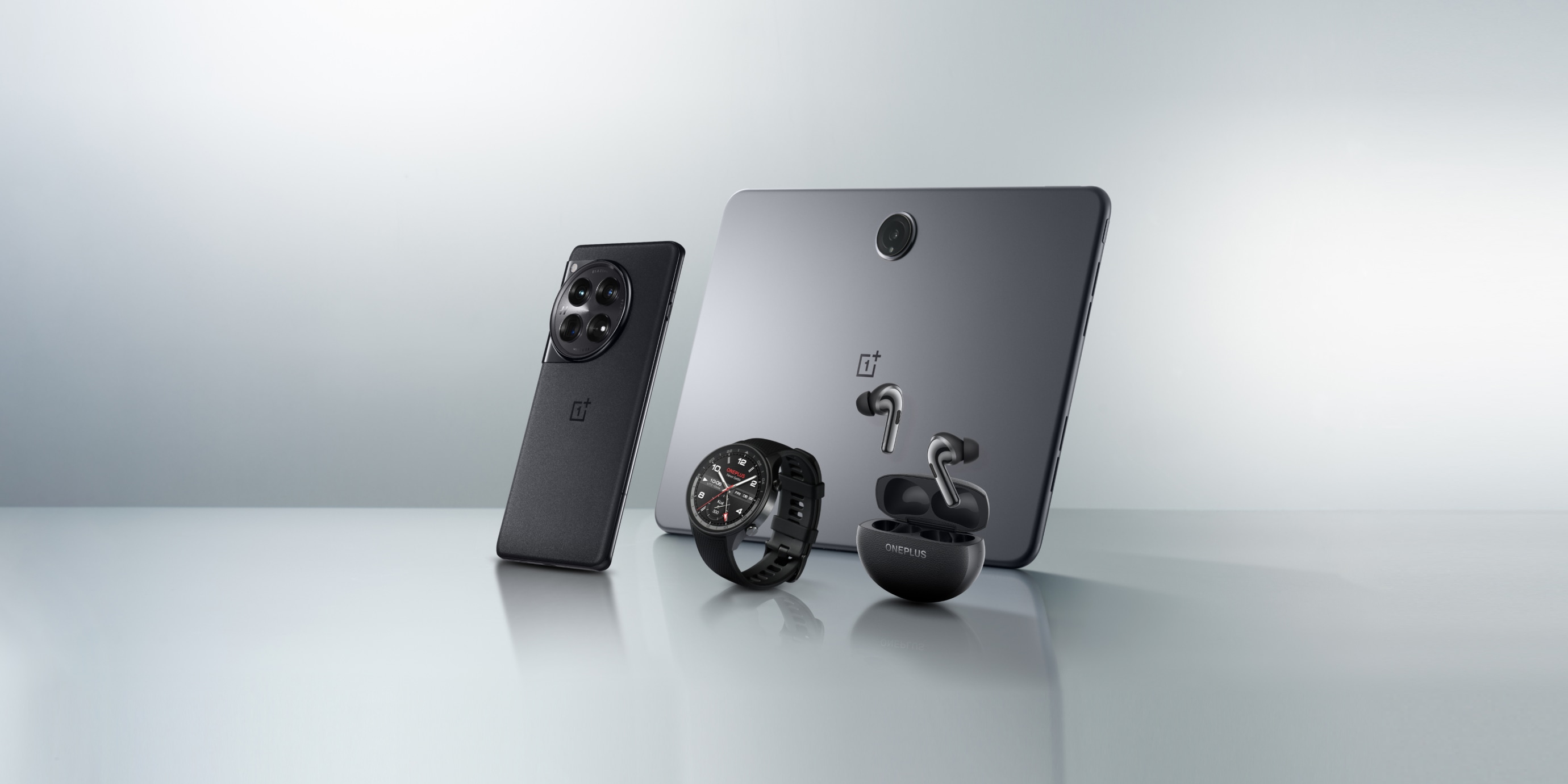
The OnePlus Watch 4: A Titan in the Wearable Wars, or a Ghost in the Machine?
In the high-stakes arena of premium wearables, where every gram and millisecond counts, OnePlus has just dropped a titanium bombshell—literally. The OnePlus Watch 4, unveiled without fanfare on the company’s global website, represents more than just a hardware refresh. It’s a statement, a gamble, and possibly a paradox in the making. Positioned as a fusion of Wear OS 6 and aerospace-grade titanium, the device arrives at a crossroads not just for OnePlus, but for the entire smartwatch ecosystem in emerging markets like North East India.
With the global tech landscape shifting underfoot—OnePlus reportedly scaling back international operations—the Watch 4’s silent debut raises critical questions. Is this a bold stride toward redefining affordable luxury in wearables, or is it a vanishing act in an increasingly crowded premium segment? For consumers in Guwahati, Shillong, or Agartala, where tech adoption is accelerating but brand loyalty is still fluid, the Watch 4 isn’t just a device—it’s a signal of what’s possible when innovation meets accessibility.
Let’s unpack not just what the OnePlus Watch 4 is, but why its existence—and potential disappearance—matters to the future of wearable technology across South and South East Asia.
---The Material Revolution: Titanium as the New Gold Standard in Wearables
The most striking evolution in the OnePlus Watch 4 isn’t under the hood—it’s on the wrist. For the first time, OnePlus has embraced a full-titanium alloy case, a move that elevates the device from mid-tier competitor to premium contender. Titanium, long revered in aerospace and medical implants for its strength-to-weight ratio, is now reshaping the smartwatch industry. Apple’s Ultra 2 and Samsung’s Galaxy Watch 6 Classic have already staked their claims in this space, but OnePlus is aiming to do it at a significantly lower entry point—without compromising on build quality.
The Watch 4 tips the scales at just 43 grams (68 grams with the strap), a featherweight in a category where every gram affects comfort during 24-hour wear. Its dimensions—47.4 × 47.4 × 11.0 mm—are compact, fitting snugly on smaller wrists while maintaining a premium aesthetic. This balance of lightness and durability is critical in markets like North East India, where users often face rugged daily conditions—humidity, monsoon rains, and temperature swings—all while demanding devices that feel as good as they look.
But why titanium now? The answer lies in the cost-of-innovation paradox. Titanium is expensive to machine and finish, yet it allows brands to reduce reliance on stainless steel or aluminum without inflating prices excessively. OnePlus has leveraged titanium in the bezel of previous models, but a full-case application signals a strategic pivot. It’s not just about durability—it’s about signaling parity with Apple and Samsung in a segment where material prestige directly influences purchase decisions.
“In wearable technology, material choice is no longer a functional decision—it’s a brand statement. Titanium doesn’t just protect the device; it elevates the user.”
---Wear OS 6: The Silent Enabler of a Smarter Ecosystem
While the titanium shell commands attention, the soul of the OnePlus Watch 4 lies in its operating system: Wear OS 6, powered by Google’s Wear Platform. Unlike Apple’s walled garden or Huawei’s HarmonyOS, Wear OS remains the most open and developer-friendly wearable OS, offering unparalleled compatibility with Android smartphones and a growing suite of third-party apps.
Wear OS 6 brings several under-the-hood improvements that could make the Watch 4 a standout in regions where multi-device ecosystems are common. Faster app loading, better battery optimization, and deeper Google Assistant integration are just the surface. What’s more critical is the platform’s growing support for health monitoring, including advanced heart-rate variability (HRV) tracking, irregular rhythm notifications (IRN), and even preliminary sleep apnea detection in select regions.
For users in North East India, where healthcare access can be inconsistent, a smartwatch that doubles as a health sentinel is no longer a luxury—it’s a necessity. The Watch 4’s potential to integrate seamlessly with local health apps (like Practo, mfine, or even government health portals) could position it as a bridge between consumer tech and public health infrastructure.
Moreover, Wear OS 6 supports offline Google Maps and Google Wallet, enabling contactless payments and navigation even in areas with poor connectivity—critical in a region with diverse terrain and variable network coverage.
But here’s the catch: Wear OS 6 is only as good as the ecosystem that supports it. OnePlus’s decision to use Wear OS reflects a bet on Google’s long-term commitment to the platform, despite rumors of potential fragmentation or even replacement by a new OS. In a market where brand trust is fragile, such uncertainty can deter adoption.
---The Market Paradox: Premium Innovation in a Cost-Sensitive Region
North East India is a microcosm of a larger global trend: rising demand for premium wearables in traditionally price-sensitive markets. Cities like Guwahati, Imphal, and Aizawl are seeing a surge in disposable income among young professionals and students who view smartwatches not just as fitness tools, but as status symbols and productivity hubs.
Yet, this demand exists alongside persistent barriers: affordability, after-sales support, and localized content. The OnePlus Watch 4, with its titanium build and Wear OS 6 foundation, enters this space with a compelling value proposition—but at what cost?
While no official pricing has been announced, industry analysts estimate the Watch 4 could retail between $250–$300 in global markets. For North East India, that translates to approximately ₹21,000–₹25,000—a significant investment. However, compared to the Apple Watch SE (₹29,900) or Samsung Galaxy Watch 6 Classic (₹34,999), it undercuts the competition by nearly 30%, making it one of the most accessible titanium smartwatches on the market.
But price is only one factor. Brand trust remains paramount. OnePlus has cultivated a reputation for delivering flagship-level performance at mid-range prices. However, its recent retreat from key international markets—including Europe and parts of Asia—has cast a shadow over its long-term commitment to global expansion. Reports suggest OnePlus is consolidating operations, possibly prioritizing the Chinese market while scaling back elsewhere.
This strategic pivot raises a troubling question: Will the OnePlus Watch 4 ever launch globally? Or is it destined to remain a ghost listing on the website—a tease of innovation that never materializes?
“OnePlus’s identity has always been tied to accessibility and disruption. But in wearables, where ecosystem lock-in and software support are critical, can a brand truly disrupt without a long-term commitment?” — Tech analyst at Counterpoint Research
---Health and Fitness: The New Battleground for Wearable Dominance
The OnePlus Watch 4 isn’t just a timepiece—it’s a health monitor. Equipped with dual-frequency GPS, a bioelectrical impedance sensor (BIA), and 24/7 heart rate monitoring, it enters a market where fitness tracking is rapidly evolving into proactive health management.
Recent studies show that 68% of smartwatch users in India prioritize health monitoring over notifications or fitness tracking alone (Source: IDC India, 2024). This shift is driven by rising awareness of cardiovascular risks, diabetes, and stress-related conditions—especially in urban centers across North East India.
The inclusion of BIA allows the Watch 4 to estimate body fat percentage, muscle mass, and even hydration levels—features previously limited to medical-grade devices. Combined with Wear OS 6’s health dashboard, users can now generate detailed wellness reports that can be shared with doctors or integrated into fitness apps like Google Fit or Apple Health.
Moreover, the device supports Google Fit’s Cardiovascular Health features, which can detect potential atrial fibrillation (AFib) in select regions. While not a medical device, such capabilities position the Watch 4 as a preventive tool—a critical selling point in a region where heart disease is a leading cause of mortality.
Yet, the accuracy of consumer-grade sensors remains a contentious issue. While devices like the Apple Watch and Fitbit have FDA-cleared health features, most Wear OS devices rely on algorithms trained on Western populations. The lack of localized calibration could lead to inaccuracies in body composition or heart rate readings for users in North East India, where genetic and physiological profiles differ.
This highlights a broader challenge in the wearable industry: the gap between global innovation and local relevance. Brands that fail to adapt their health algorithms to regional demographics risk alienating a significant portion of their user base.
---The Regional Impact: Can OnePlus Bridge the Urban-Rural Divide?
North East India is not a monolith. It’s a mosaic of urban centers like Guwahati and Shillong, where tech adoption mirrors global trends, and rural communities in Nagaland or Mizoram, where smartphone penetration is growing but digital literacy remains a hurdle.
The OnePlus Watch 4’s success in this region will depend on more than hardware—it hinges on localized support, affordability, and ecosystem integration.
OnePlus has historically relied on online sales and third-party retailers. In North East India, where offline retail still dominates, this could limit visibility. However, the rise of e-commerce platforms like Amazon and Flipkart, along with regional players like ShopClues and local electronics stores, offers a pathway to market.
Another critical factor is language support. While Wear OS 6 supports multiple languages, including Hindi and Bengali, regional languages like Assamese, Manipuri, and Mizo are often overlooked. Without localized software, the device risks feeling foreign to a significant portion of the population.
Moreover, after-sales service remains a pain point. OnePlus’s limited service centers in the region mean that repairs and replacements could be delayed, eroding consumer confidence. Brands like Samsung and Apple have invested in authorized service networks, a gap OnePlus must address if it wants to compete beyond the premium tier.
Yet, there’s an opportunity here. North East India’s tech-savvy youth are early adopters of innovation. If OnePlus can position the Watch 4 as a gateway to a broader ecosystem—connecting with smartphones, earbuds, and smart home devices—it could cultivate a loyal user base that extends beyond the device’s lifecycle.
---Conclusion: A Titan in the Shadows, or a Vision Half-Realized?
The OnePlus Watch 4 is a paradox wrapped in titanium. It’s a device that pushes the boundaries of affordability and innovation, yet it arrives in a market where trust is fragile and commitment is uncertain. Its titanium build signals a maturation of OnePlus’s design philosophy, while Wear OS 6 positions it as a flexible, health-forward companion. But without a clear launch strategy, pricing, or long-term support plan, the Watch 4 risks becoming a footnote in the wearable wars.
For North East India, the implications are profound. The region is on the cusp of a digital health revolution, where smartwatches could bridge gaps in healthcare access. The OnePlus Watch 4, if executed well, could be a catalyst for this transformation. But if it fails to launch—or worse, launches and disappears—it will underscore a harsh truth: innovation without commitment is just noise.
Final Verdict: The OnePlus Watch 4 is a bold experiment in accessible premium wearables. Its titanium design and Wear OS 6 foundation make it a compelling contender, but its future hinges on three factors: global availability, localized support, and long-term software commitment. For North East India, where tech adoption is accelerating, the device could redefine expectations—or become another cautionary tale of potential unrealized. The market is ready. The question is whether OnePlus is.
Until then, the Watch 4 remains a titan in the shadows—a device that whispers of a future that may never arrive.