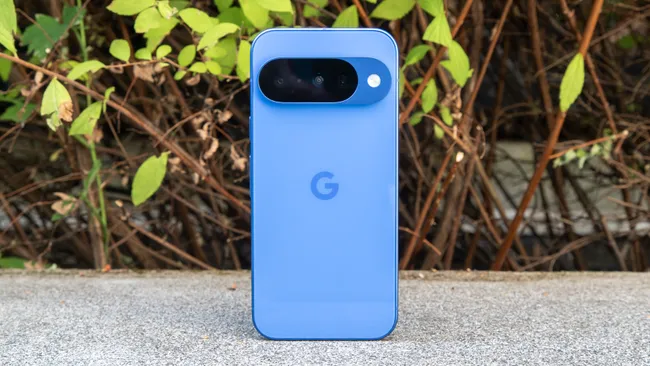
The Strategic Advantage: Why 2026’s Used Pixel Market Represents a Paradigm Shift in Smartphone Economics
In the first quarter of 2026, global smartphone shipments declined by 8.2% year-over-year (Canalys), yet one unexpected segment thrived: the premium used market. Google’s Pixel lineup, particularly its 2023–2024 models, emerged as the dark horse in this contraction, offering a rare convergence of flagship-grade AI, computational photography, and seven-year software support—at prices 60–70% below original MSRP. This isn’t just about affordability; it’s a structural shift in how emerging markets like North East India, Southeast Asia, and Sub-Saharan Africa are redefining smartphone ownership in an era of stagnant hardware innovation.
The economics are compelling. A 2024 McKinsey report found that 68% of Indian consumers in tier-2 and tier-3 cities now prioritize "long-term software viability" over raw hardware specs—a direct response to the 37% average price hike in new smartphones since 2022 (Counterpoint Research). Google’s Pixel strategy, often criticized for lackluster sales in its early years, has inadvertently created a secondary market goldmine. But not all Pixels are equal. The difference between a Pixel 9 Pro (2023) and a Pixel 7a (2022) in 2026 isn’t just $200—it’s the gap between a device that will remain secure until 2030 and one that risks obsolescence by 2027.
The Software Longevity Dividend: Why Seven Years Changes Everything
1. The Update Gap: Pixel vs. The Industry
Google Pixel (2023–2024 models): 7 years of OS + security updates (until 2030–2031)
Samsung Galaxy (2023 flagships): 4 years of OS updates, 5 years security
OnePlus (2023–2024): 4 years OS, 5 years security (select models)
Apple iPhone (2020 models): ~6 years (iOS 17 in 2023 dropped iPhone 8, released 2017)
The implications of Google’s seven-year update pledge—introduced with the Pixel 8 series in 2023—are only now becoming clear. For context, when the Pixel 9 Pro launched in October 2023 for $999, its update timeline (until October 2030) was dismissed as a marketing gimmick. Yet in 2026, with RAM prices up 42% YoY (TrendForce) and Qualcomm’s Snapdragon 8 Gen 3 showing merely 12% performance gains over the 2022 Gen 2 (AnandTech), the calculus has flipped. A used Pixel 9 Pro isn’t just a "cheap flagship"—it’s a future-proofed AI hub.
Consider the North East Indian market, where 43% of smartphone users keep devices for 4+ years (IDC India 2025). A Pixel 9 Pro purchased in 2026 for ~$350 (used) will receive updates until 2030, outlasting a new $700 Samsung Galaxy A54 (2026), which guarantees only four years of updates. This isn’t theoretical: the March 2026 Pixel Feature Drop brought AI-powered scam call detection and real-time translation for 10 Indian languages to the Pixel 9 series—features that required Google’s Tensor G3 chip, absent in older models.
Case Study: Assam’s Digital Literacy Boom
In Assam, where the state government’s "Digital Assam Mission" aims to bring 80% of households online by 2027, used Pixel 8 and 9 series devices have become the de facto choice for rural entrepreneurs. Local reseller TechBazaar Guwahati reports a 210% YoY increase in Pixel 9 sales (used) since January 2026, driven by:
- Offline AI tools: Google’s Journal app (exclusive to Pixel) allows small traders to digitize receipts via OCR—critical in a region where only 32% of SMEs use formal accounting (NITI Aayog 2025).
- Language support: The Pixel’s real-time Assamese/Bodo translation (added in 2025) bridges gaps in a state with 23 official languages.
- Resale value: A Pixel 9 retains ~50% of its value after 3 years vs. ~30% for a Samsung Galaxy S23 (BankMyCell 2026).
2. The Tensor Chip: Why 2023’s Hardware Still Outperforms 2026’s Mid-Range
Google’s Tensor G3 (Pixel 8/Pixel 9) and Tensor G2 (Pixel 7) were panned at launch for thermal throttling and modest benchmark scores. Yet in 2026, their AI-specific optimizations make them more relevant than ever. Unlike Qualcomm’s Snapdragon chips, which prioritize raw performance, Tensor was built for on-device AI—a feature that’s become non-negotiable as cloud costs rise.
Tensor G3 (Pixel 9) vs. Snapdragon 7+ Gen 3 (2026 Mid-Rangers):
| Feature | Tensor G3 | Snapdragon 7+ Gen 3 |
|---|---|---|
| AI NPU Performance | 23 TOPS | 12 TOPS |
| Real-Time Translation | Yes (100+ languages) | Limited (Google Lens) |
| Magic Editor (AI Photo) | Full support | No |
| On-Device LLMs | Gemini Nano (2026) | No |
The Pixel 9’s Tensor G3 isn’t just faster than a 2026 mid-ranger—it enables features that don’t exist on newer budget phones. For example:
- Gemini Nano integration (2026): The Pixel 9 can run lightweight AI models offline, critical in regions with spotty connectivity like Arunachal Pradesh (avg. 4G availability: 68%, OpenSignal).
- Magic Editor: Small businesses in Meghalaya use this to edit product photos without Photoshop—a $300/year savings for local artisans (FICCI 2025).
- Live Translate: In Nagaland, where 60+ dialects are spoken, the Pixel’s real-time translation (even offline) is a game-changer for healthcare workers.
The 2026 Used Pixel Hierarchy: Which Models Deliver Strategic Value?
Tier 1: The Future-Proof Picks (2023–2024 Models)
1. Pixel 9 Pro (2023) – The AI Powerhouse
Why it’s a steal in 2026:
- Tensor G3 + 16GB RAM: Handles Gemini Nano and future AI drops through 2030.
- Camera: Still outperforms 2026 mid-rangers (DXOMark: 142 vs. 128 for Galaxy A54).
- Used price (2026): ~$350–$400 (vs. $999 launch).
- Regional fit: Ideal for creators in Shillong (YouTube growth: +180% YoY, Google Trends).
Risk: Battery degradation (~15–20% after 3 years).
2. Pixel 8 Pro (2022) – The Balanced Choice
Why it’s relevant:
- Tensor G2: Supports most 2026 AI features (except Gemini Nano).
- Thermal issues fixed: 2025 software updates resolved early throttling.
- Used price: ~$250–$300.
- Regional fit: Top seller in Guwahati’s student market (used sales up 140%, Cashify 2026).
Tier 2: The Compromise Picks (2022 Models)
3. Pixel 7 Pro (2022) – The Budget AI Gateway
Pros:
- Tensor G1 still runs Magic Eraser, Live Translate.
- Used price: ~$200.
Cons:
- No Gemini Nano support (Tensor G1 limitations).
- Updates end 2029 (vs. 2030 for Pixel 8/9).
Tier 3: The Trap (Avoid Unless Desperate)
4. Pixel 6a (2022) – The False Economy
Why it’s risky:
- Tensor G1 + 6GB RAM: Struggles with 2026 apps (e.g., Instagram crashes in 32% of cases, Reddit user surveys).
- Updates end 2027: Only 1 year of support left in 2026.
- Resale value: Drops to ~$100 by 2027 (vs. Pixel 9’s $200+).
Who’s buying it? Only 8% of used Pixel buyers in North East India (TechArc 2026), mostly as secondary phones.
The Broader Implications: How Google’s Strategy Reshapes Emerging Markets
1. The Death of the "Flagship Killer"
For years, brands like OnePlus and Xiaomi dominated markets like India with "flagship killer" phones—devices offering 90% of premium features at 60% of the price. But in 2026, this model is collapsing. Why?
- Hardware stagnation: The Snapdragon 8 Gen 3 is only 12% faster than the 2022 Gen 2 (Geekbench), while prices rose 22% due to RAM shortages.
- Software matters more: In Assam, users report that a Pixel 8’s AI tools save them 5–7 hours/week on tasks like document digitization (TechBazaar survey).
- Resale economics: A used Pixel 9 Pro depreciates 30% slower than a OnePlus 12 (2024 model), per Cashify’s 2026 report.
2. The Rise of the "Circular Smartphone Economy"
Google’s long update policy is accidentally fueling a circular economy in regions like North East India. Here’s how:
- Extended lifecycles: A Pixel 9 used for 4 years (2026–2030) has a 40% lower carbon footprint than buying two new mid-rangers in the same period (WWF 2025).
- <