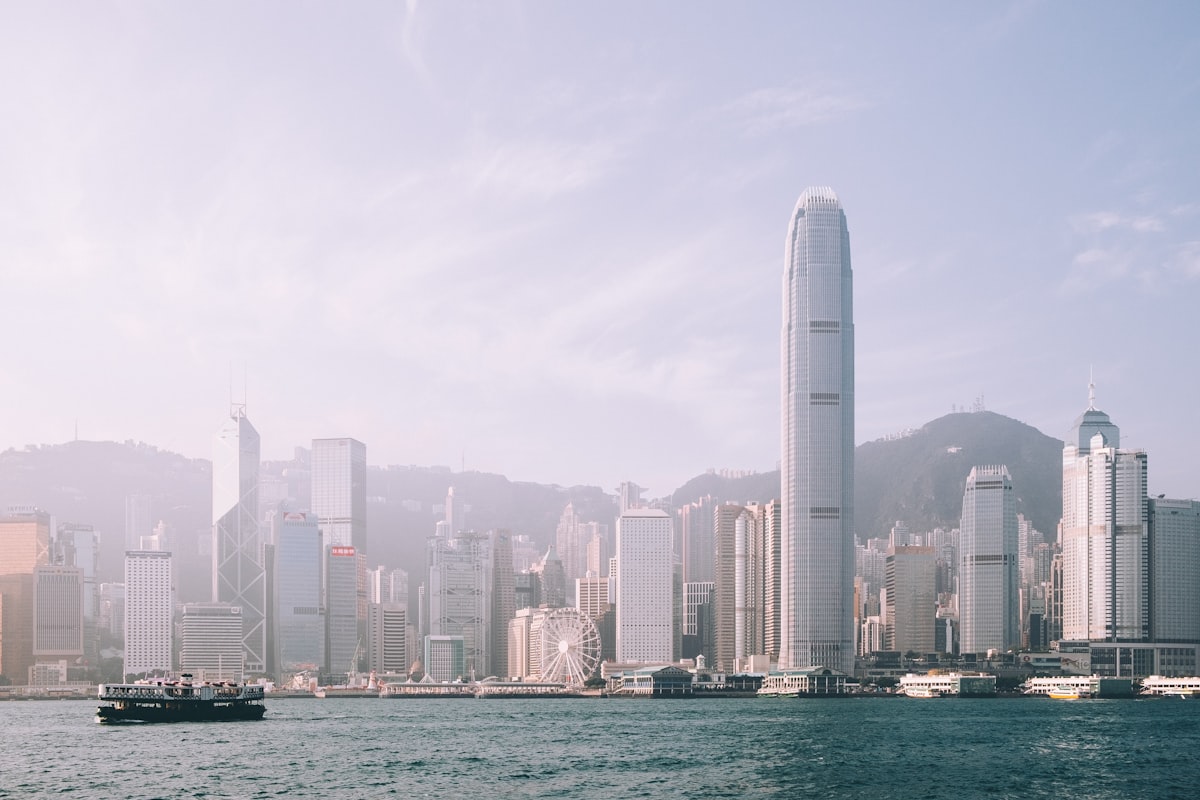
Capital Realignment in Greater China: The Strategic Surge of Singaporean Equity into Hong Kong's Commercial Property Landscape
The Asia-Pacific commercial real estate market is undergoing one of its most significant structural realignments in decades. Historically defined by intense capital inflows from Western institutional funds and aggressive expansion by Mainland Chinese conglomerates, the office landscape of Hong Kong has recalibrated. At the center of this structural evolution is an unprecedented surge of Singapore-based institutional capital. Long recognized as twin financial poles of non-Japan Asia, the relationship between Hong Kong and Singapore has frequently been framed through the simple lens of zero-sum competition. However, current transactional data reveals a far more nuanced, symbiotic reality: Singaporean sovereign wealth, private equity, and publicly listed Real Estate Investment Trusts (REITs) are stepping into the void left by exiting Western capital and retrenching Mainland developers, emerging as the dominant non-local acquirers of Hong Kong commercial property.
This capital migration is not merely an opportunistic reaction to cyclical asset price adjustments; it represents a calculated, long-term strategic positioning. Driven by divergent capitalization rates, distinct monetary policy environments, structural adjustments in post-pandemic work patterns, and the broader integration of Hong Kong into the Guangdong-Hong Kong-Macao Greater Bay Area (GBA), Singaporean investors are executing a sophisticated counter-cyclical play. This analysis examines the historical antecedents of this capital shift, evaluates the micro and macroeconomic forces underpinning Singapore’s institutional strategy, and assesses the long-term structural implications for cross-border capital flows across the Asia-Pacific region.
I. Historical Antecedents: The Evolution of Hong Kong’s Commercial Capital Deck
To understand the magnitude of current Singaporean capital deployment, one must first analyze the historical composition of Hong Kong’s commercial real estate ownership. For nearly three decades following the 1997 handover, Hong Kong’s Grade A office market—particularly within prime districts such as Central, Admiralty, and Tsim Sha Tsui—operated as one of the world's most lucrative and liquid real estate asset classes.
1. The Era of Anglo-American and Local Tycoon Dominance (1997–2012)
Following the Asian Financial Crisis, the Hong Kong commercial landscape was anchored primarily by local family-controlled property developers (such as Sun Hung Kai Properties, Henderson Land, and Cheung Kong Holdings) alongside major Anglo-American institutional vehicles. Private equity real estate (PERE) funds originating from North America and Europe viewed Hong Kong as the indispensable gateway to Greater China. Assets were characterized by perpetually tight cap rates—often hovering below 3%—driven by constrained land supply, low corporate tax regimes, and robust demand from multinational financial institutions.
2. The Mainland Chinese Capital Boom (2013–2019)
The middle of the previous decade marked a profound shift. Encouraged by the internationalization of the Renminbi, the Belt and Road Initiative, and loose domestic credit conditions, Mainland Chinese state-owned enterprises (SOEs) and private mega-conglomerates flooded Hong Kong's commercial real estate market. Chinese developers and financial firms aggressively bid for premier land sites and trophy office towers, frequently setting historic valuation benchmarks. Prime examples included mainland entities purchasing entire office blocks in Central and Wan Chai at record price-per-square-foot metrics, effectively pricing out traditional international institutional capital that could no longer justify the yield compression.
3. The Post-2020 Structural Reset
The convergence of several disruption vectors between 2019 and 2023 fundamentally altered this equilibrium:
- Mainland Liquidity Crunch: Deleveraging policies within the Mainland real estate sector (notably the "Three Red Lines" policy introduced in 2020) severely restricted the ability of Chinese developers to sustain offshore leverage, transforming them from net buyers into distressed net sellers.
- Western Institutional Retreat: Escalating geopolitical friction between Washington and Beijing, combined with global portfolio rebalancing toward domestic markets, led many Western pension funds and institutional managers to reduce their direct exposure to Greater China property.
- Monetary Tightening: Aggressive interest rate hikes by the U.S. Federal Reserve directly impacted Hong Kong due to the Linked Exchange Rate System (LERS), pushing local Hong Kong Interbank Offered Rates (HIBOR) significantly higher and creating a negative carry environment for highly leveraged acquisitions.
This structural void presented a unique historic entry point. With capital values for Hong Kong Grade A offices adjusting by 30% to 45% from their 2018–2019 peak levels, asset prices entered value territory for long-term equity-rich investors. It was precisely at this inflection point that Singaporean capital stepped forward as the primary liquidity provider.
II. The Singaporean Capital Architecture: Liquidity, Governance, and Strategy
The dominance of Singapore-based investors in non-local capital deployments is anchored in the structure of the Singaporean financial ecosystem. Unlike transient speculative equity, Singaporean outward investment is characterized by deep pools of patient capital, conservative leverage thresholds, and sophisticated, multi-tiered institutional managers.
Institutional Profile: Key Singapore-Based Capital Deployers
| Investor Category | Primary Entities | Strategic Mandate & Risk Appetite | Typical Target Assets in HK |
|---|---|---|---|
| Sovereign Wealth Funds | GIC, Temasek Holdings | Multi-decade horizon; direct asset purchases & joint ventures; low leverage tolerance. | Prime Grade A Office Towers in Central/Core submarkets; high-sustainability assets. |
| Listed Property Trusts (S-REITs) | CapitaLand Investment, Mapletree Logistics/Pan Asia Commercial Trust, Frasers Property | Yield-accretive, income-generating assets; focus on tenant quality and active asset management. | Distressed Grade A/B office buildings, business parks, decentralized commercial hubs. |
| Private Equity & Family Offices | PAG (Singapore-managed funds), Regional Multi-Family Offices | Opportunistic/Value-Add; mezzanine financing, debt restructuring, repositioning opportunities. | Underperforming commercial assets requiring ESG retrofitting, adaptive reuse, or debt workouts. |
1. Capital Accumulation and Outward Push
Singapore’s domestic real estate market, while exceptionally stable and highly valued, is geographically constrained. The Lion City’s total land mass limits the continuous domestic absorption of institutional capital generated by sovereign vehicles and pension schemes such as the Central Provident Fund (CPF). Consequently, Singaporean asset managers are structurally compelled to export capital globally. While a significant portion of this capital historically flowed to Western Europe and North America, rising interest rates and commercial real estate volatility in those regions have prompted a strategic re-allocation toward high-conviction Asian gateway markets.
2. The Neutrality Advantage and Capital Mediation
Amid ongoing geopolitical realignments, Singapore has consolidated its position as a politically neutral financial hub. Singaporean capital vehicles possess a unique structural advantage in cross-border acquisitions: they maintain seamless access to Western capital markets while operating with a deep, nuanced understanding of Greater China’s regulatory and legal architecture. This positioning allows Singaporean funds to act as crucial capital bridges, acquiring premier assets in Hong Kong without triggering the regulatory friction or headline risks that Western institutional investors currently seek to avoid.
III. Macroeconomic Drivers: The Mechanics of the Investment Thesis
The decision by Singaporean institutions to deploy capital into Hong Kong commercial property while local markets face elevated vacancy rates is grounded in clear quantitative analysis. The entry strategy relies on three primary economic levers: yield spread normalization, valuation corrections, and foreign exchange stability.
1. Yield Spread Normalization and Cap Rate Expansion
During the market peak of 2018, prime office yields in Hong Kong’s Central district sat at historic lows of approximately 2.2% to 2.8%. In an environment where borrowing costs were near zero, this was sustainable; however, as global interest rates surged, these cap rates generated extreme negative carry. By late 2023 and early 2024, significant price adjustments forced cap rates upward to between 4.25% and 5.25%, depending on asset quality and location.
For cash-rich Singaporean institutions operating with lower cost-of-capital thresholds or deploying un-leveraged equity, these expanded yield profiles present a compelling risk-adjusted entry point. Investors are securing prime, generational assets at yields not observed since the aftermath of the 2008 Global Financial Crisis.
2. Capital Value Adjustments vs. Replacement Cost
A central pillar of the Singaporean investment thesis is the divergence between current transaction prices and replacement costs. The combined costs of land acquisition, construction materials, labor, and financing in Hong Kong mean that developing a modern, high-specification Grade A office tower today substantially exceeds the market prices at which existing assets are being traded. Purchasing existing, high-quality structures at a 30% to 50% discount to replacement cost provides Singaporean buyers with a substantial margin of safety.
3. Currency Dynamics: The USD/HKD Peg and the SGD Strength
Under the Linked Exchange Rate System, the Hong Kong Dollar (HKD) is pegged to the United States Dollar (USD). Conversely, the Monetary Authority of Singapore (MAS) utilizes the Singapore Dollar Nominal Effective Exchange Rate (S$NEER) policy band, which has systematically appreciated the SGD against major currencies to combat imported inflation. A stronger Singapore Dollar enhances the purchasing power of Singapore-based entities acquiring HKD-denominated real estate assets, enabling them to execute foreign transactions on favorable exchange terms.
IV. Comparative Analysis: Hong Kong vs. Singapore Real Estate Dynamics
Understanding this capital shift requires a comparative examination of the fundamentals governing the commercial real estate markets of both cities. While the two hubs are often portrayed as rivals, their real estate cycles are currently operating in completely different phases.
Comparative Market Matrix (Q1 2024 Benchmarks)
| Market Metric | Hong Kong (Grade A Prime / Central) | Singapore (Grade A Prime / CBD) |
|---|---|---|
| Cycle Phase | Late Liquidation / Bottoming Out | Peak / Plateauing |
| Average Prime Cap Rates | 4.25% – 5.25% (Expanding) | 3.25% – 3.75% (Compressed) |
| Vacancy Rates | 14.5% – 16.0% (Elevated due to new supply) | 3.5% – 5.0% (Historically tight) |
| Capital Value Trajectory (5-Yr) | -35% to -45% from 2019 Peak | +12% to +20% over same period |
| Primary Tenant Mix Shift | Expansion of Mainland Wealth/Tech; Wealth Mgmt | Family Offices, Tech, Regional HQs |
| Near-Term Supply Pipeline | High (Substantial completions in Central/Kowloon) | Low (Constrained future pipeline) |
The stark divergence highlighted above explains the strategic logic: Singapore’s commercial real estate market is currently characterized by high entry valuations, low yields, and tight supply. For institutional investors looking to deploy large amounts of capital into core asset classes, Singapore offers limited high-yielding acquisitions. Conversely, Hong Kong offers deep liquidity, distressed valuations, expanded yields, and high asset availability. By recycling capital out of fully valued domestic or Western positions and deploying it into repriced Hong Kong assets, Singaporean institutions execute an effective asset reallocation strategy.
V. Strategic Asset Repositioning and Value-Add Execution
Singaporean investors are not simply purchasing Hong Kong office assets to hold them passively. Instead, their acquisition strategies rely heavily on active asset management, structural retrofitting, and tenant mix re-engineering.
1. The ESG Retrofitting Imperative
A significant portion of Hong Kong's existing Grade A and Grade B office inventory was constructed in the late 20th century and lacks modern Environmental, Social, and Governance (ESG) certifications. Multinational tenants—particularly top-tier financial institutions, professional services firms, and luxury conglomerates—now routinely require LEED, WELL, or BEAM Plus certifications as mandatory lease conditions.
Singaporean institutional managers, led by sustainability-focused mandates from entities like CapitaLand and Mapletree, excel at value-add retrofitting. By acquiring discounted,