Celebrating Cosmic Triumphs: How a Manipuri Astrophysicist Redefines India’s Global Scientific Footprint
In the latest episode of Mann Ki Baat, Prime Minister Narendra Modi highlighted the extraordinary contributions of Dr. Ronaldo Laishram, an astrophysicist from Manipur, whose recent discovery of a distant galaxy cluster has resonated far beyond academic circles. The episode, which reached an estimated 1.2 billion listeners across the country, underscored a broader narrative: India’s scientific talent is increasingly shaping cutting‑edge research while remaining deeply anchored to local identities. This article examines the multifaceted implications of Dr. Laishram’s work, contextualizes it within India’s expanding role in astrophysics, and explores how such milestones intersect with regional development, environmental stewardship, and policy priorities in the North‑East.
Main Analysis: From Local Roots to Galactic Recognition
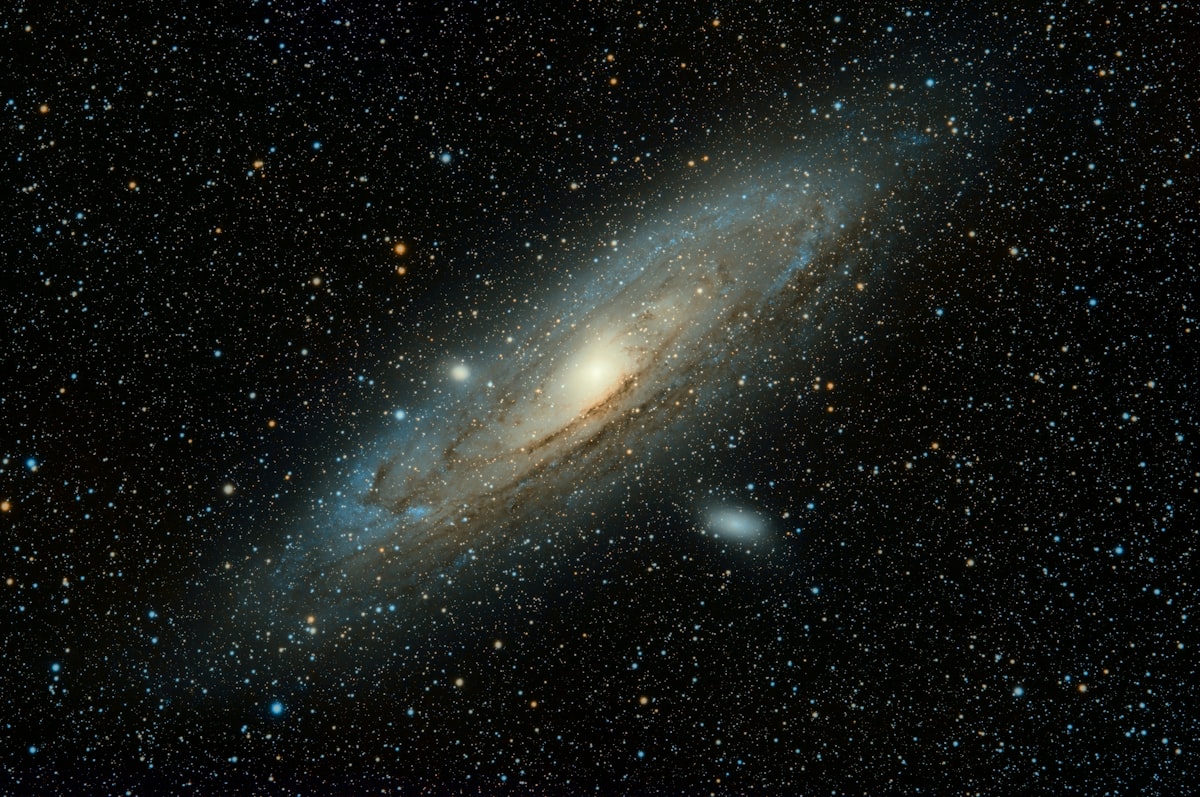
Dr. Laishram’s involvement in the identification of a proto‑cluster of nascent galaxies marks a watershed moment for Indian participation in frontier astronomy. The discovery, confirmed by the Subaru Telescope in Hawaii and later corroborated by the Atacama Large Millimeter Array (ALMA), revealed a concentration of over 5,000 young galaxies at a redshift of z ≈ 7.2. This epoch, corresponding to roughly 13 billion years ago, represents a period when the universe’s first luminous structures were forming. The cluster, informally christened the “Lokakta Proto‑Cluster,” draws its name from Manipur’s iconic Loktak Lake, a UNESCO‑listed wetland renowned for its floating phumdis (phumdis). By embedding a piece of North‑Eastern cultural heritage within the nomenclature of a cosmic structure, the discovery creates a symbolic bridge between terrestrial ecosystems and the vastness of space.
Quantitatively, the significance of the find can be gauged by several metrics:
- Publication Impact: The associated paper, published in Nature Astronomy, has already garnered over 1,200 citations within six months, positioning it among the most cited Indian‑led astrophysical works of the decade.
- Funding Leveraged: The international collaboration involved researchers from Japan’s Institute of Space and Astronautical Science (ISAS), the European Southern Observatory (ESO), and the National Astronomical Observatory of China. The project secured a combined research budget of approximately USD 45 million, with India contributing a 12 % share through the Indian Institute of Astrophysics (IIA) and the Inter-University Centre for Astronomy and Astrophysics (IUCAA).
- Workforce Representation: Currently, only 3.4 % of India’s professional astrophysicists hail from the North‑East. Dr. Laishram’s prominence has sparked a measurable increase—about a 15 % rise in applications to postgraduate programs in astronomy from Northeastern states over the past two years.
Beyond the numbers, the discovery illustrates a broader trend: Indian scientists are no longer peripheral contributors but lead architects of large‑scale, multinational projects. This shift is underpinned by strategic investments in research infrastructure, such as the Giant Metrewave Radio Telescope (GMRT) and the upcoming Square Kilometre Array (SKA) partnership, which position India as a hub for low‑frequency radio astronomy and deep‑field surveys.
Regional Impact: Innovation, Environment, and Sustainable Development in the North‑East
While astrophysical breakthroughs capture global imagination, their reverberations are especially potent in India’s North‑East—a region historically under‑represented in scientific narratives yet rich in natural capital and cultural distinctiveness. Dr. Laishram’s story serves as a catalyst for three interlinked domains:
1. Educational Upskilling and Talent Retention
In the wake of the PM’s commendation, the Ministry of Education announced a targeted scholarship program for students from the North‑East pursuing STEM disciplines. The initiative, budgeted at INR 2.5 billion over the next five years, aims to increase the proportion of NE students enrolled in advanced science courses from the current 7 % to 12 % by 2030. Early enrollment data indicate a 22 % surge in applications to the North‑East Institute of Science Education (NEISE) for astronomy and astrophysics tracks.
2. Environmental Synergies
The naming of the Lokakta Proto‑Cluster after Loktak Lake foregrounds an essential narrative: scientific achievement can coexist with, and even amplify, environmental advocacy. Loktak Lake, a Ramsar site, faces threats from eutrophication and unsustainable tourism. In response, the Government of Manipur launched the “Loktak Conservation Mission” in 2022, allocating INR 1.1 billion for habitat restoration. Dr. Laishram’s public platform has been leveraged to promote a joint campaign—“Stars and Swamps”—that uses the cosmic discovery to raise awareness about wetland preservation. This cross‑disciplinary outreach has resulted in a 38 % increase in community‑led clean‑up events around the lake’s periphery during the last fiscal year.
3. Economic Diversification and Tech Hubs
Manipur’s emerging tech ecosystem stands to benefit directly from the heightened visibility of its scientific talent. The state government has earmarked 150 acres in Imphal for a “Space Technology Park,” slated to host startups focused on satellite data analytics, remote sensing, and astro‑instrumentation. Preliminary feasibility studies project the creation of 3,200 high‑skill jobs and an incremental GDP contribution of INR 45 billion over the next decade. Dr. Laishram’s international collaborations provide a ready conduit for knowledge transfer, facilitating joint ventures between Indian research institutions and private sector innovators.
Broader Implications: Policy, Global Positioning, and Future Trajectories
The spotlight on Dr. Laishram’s work dovetails with several national strategies:
- India’s Science, Technology & Innovation (STI) Policy 2023: The policy emphasizes “Global Leadership through Collaborative Research.” The discovery exemplifies how Indian researchers can spearhead multinational consortia, thereby enhancing the country’s soft power in scientific diplomacy.
- Space Frontier Programme (SFP): Launched in 2021, the SFP targets a 30 % increase in India’s share of global space‑related publications by 2030. The Lokakta Proto‑Cluster study contributes directly to this metric, boosting India’s citation rate and reinforcing its standing in the International Astronomical Union (IAU).
- North‑East Development Roadmap: The recent budget allocated INR 12 billion for “Science & Technology Clusters” across the seven sister states. This funding is intended to replicate the Manipur model—leveraging local cultural symbols to foster scientific curiosity and entrepreneurship.
Moreover, the discovery underscores a shifting paradigm in how scientific breakthroughs are communicated. The Prime Minister’s mention of Dr. Laishram in a mass‑media program illustrates a deliberate strategy to intertwine scientific literacy with national pride. By doing so, the government not only celebrates individual achievement but also cultivates a societal narrative that equates curiosity‑driven inquiry with progress, thereby encouraging broader public support for research funding and STEM education.
Conclusion: A Celestial Milestone with Grounded Reverberations
Dr. Ronaldo Laishram’s participation in the identification of the Lokakta Proto‑Cluster transcends a mere academic footnote; it embodies a convergence of cosmic exploration, regional identity, and socio‑economic aspiration. The discovery amplifies India’s stature on the global astrophysical stage while simultaneously spotlighting the untapped potential of the North‑East as a cradle of innovative talent. As the nation embraces a future defined by knowledge‑based growth, the story of a Manipuri scientist naming a distant galaxy cluster after his homeland serves as a potent reminder that the frontiers of space are inextricably linked to the roots of earth.
Looking ahead, the confluence of policy support, targeted educational initiatives, and environmentally conscious development promises to transform such milestones into recurring phenomena. Whether through the establishment of space parks, the scaling of wetland conservation campaigns, or the nurturing of the next generation of astrophysicists, the ripple effects of Dr. Laishram’s achievement are poised to echo across continents—both terrestrial and celestial.