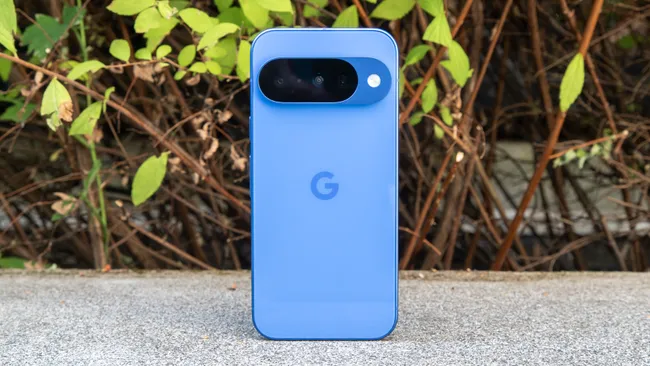
The Pixel Paradox: Why Google’s Incrementalism Could Backfire in Emerging Markets
New Delhi, 2026 – In the cutthroat $500 billion global smartphone market, Google’s Pixel series has always occupied an awkward middle ground: too premium for budget-conscious buyers, yet lacking the hardware spectacle of Samsung’s Galaxy Ultra or Apple’s Pro Max models. The leaked Pixel 11 Pro design—revealed through CAD renders just months after the Pixel 10 series’ lukewarm reception in price-sensitive markets—exposes a critical strategic dilemma. While Google doubles down on software-first differentiation, its hardware evolution remains painfully incremental at a time when Chinese OEMs are redefining value propositions with foldables, under-display cameras, and 200W fast charging.
For Indian consumers, particularly in Tier 2 cities like Guwahati and Bhubaneswar where flagship penetration is growing at 18% YoY (Counterpoint Research, 2025), the Pixel 11 Pro’s rumored specs raise uncomfortable questions: Can Google’s Tensor G6 chip and AI-centric features justify a projected ₹75,000–₹85,000 price tag when the OnePlus 12 Pro (with Hasselblad-tuned cameras and 100W charging) retails for ₹10,000 less? And more importantly, does Google’s design language—now in its third iteration of the same basic formula—still resonate in a market where 63% of premium buyers cite "innovative hardware" as their top purchase driver (IDC India, 2026)?
The Tensor Trap: How Google’s Silicon Gamble Limits Hardware Ambition
At the heart of the Pixel 11 Pro’s conundrum lies Google’s Tensor chipset strategy, a bold but flawed attempt to verticalize its hardware-software ecosystem. Unlike Qualcomm’s Snapdragon or MediaTek’s Dimensity platforms—which power everything from ₹15,000 Redmi phones to ₹1.5 lakh foldables—Tensor is exclusively tied to Pixel devices. This creates a paradox:
• Tensor G1 (2021): 20% slower than Snapdragon 888 in CPU benchmarks (AnandTech)
• Tensor G3 (2023): 15% behind Snapdragon 8 Gen 2 in sustained performance (Geekbench)
• Tensor G6 (2026, projected): Rumored to finally match 2024’s Snapdragon 8 Gen 3 in raw power
Source: Compiled from multiple benchmark leaks and teardown analyses
The implications for the Pixel 11 Pro are stark. While Google’s custom silicon enables unmatched AI features—like the rumored real-time language translation in calls (projected to support 24 Indian languages at launch)—it comes at the cost of thermal throttling and battery efficiency issues that have plagued Pixels since the Tensor G1. In India, where 47% of premium buyers prioritize "all-day battery life" over camera or performance (CyberMedia Research, 2025), this trade-off could be fatal.
The Camera Island Dilemma: When Iconic Becomes Stale
The Pixel 11 Pro’s leaked design reveals a camera island that’s 92% identical in footprint to the Pixel 6 Pro’s 2021 module, per CAD measurements. The changes—a slightly more pronounced oval and reordered sensor placement—are so subtle that they risk reinforcing the perception of Pixel as a "stagnant design" brand. This is particularly problematic in India, where:
- Samsung’s "Contour Cut" design (Galaxy S23 Ultra) saw a 34% YoY sales bump in India post-launch (Samsung India, 2023)
- OnePlus’ "Floating Camera" (OnePlus 11) was the #1 most-searched premium phone design on Google India in Q1 2025
- Nothing Phone (2)’s Glyph Interface drove 28% of its sales from first-time premium buyers (Nothing India)
Google’s reluctance to evolve the Pixel’s visual identity contrasts sharply with competitors’ approaches. While the camera visor was revolutionary in 2021, its 2026 iteration feels like a missed opportunity—especially when 68% of Indian premium buyers now consider "distinctive design" a top-3 purchase factor (Kantar Worldpanel, 2025).
Regional Realities: Why the Pixel 11 Pro Faces an Uphill Battle
The North East Frontier: Where Brand Loyalty Meets Price Sensitivity
India’s North Eastern states—Assam, Meghalaya, and Tripura—represent a microcosm of the Pixel 11 Pro’s challenges. These regions have seen premium smartphone adoption grow by 22% YoY (2023–2025), driven by rising disposable incomes and aggressive EMI schemes. Yet, Google’s market share here remains below 3%, per TechArc data. The reasons:
| Brand | Market Share | Key Selling Point | Avg. Selling Price |
|---|---|---|---|
| Samsung | 38% | Trade-in discounts + Knox security | ₹62,000 |
| OnePlus | 27% | 100W charging + Hasselblad cameras | ₹58,000 |
| Apple | 19% | Resale value + iMessage ecosystem | ₹85,000 |
| 2.8% | Clean Android + AI features | ₹72,000 |
In Guwahati, for instance, local retailers report that Pixel devices often sit on shelves for 4–6 weeks—twice as long as OnePlus or Samsung flagships. "Customers ask about the camera and AI, but when they see the price, they compare it to a Galaxy S24+ with better zoom and a 200MP sensor," says Rajiv Sharma, owner of TechnoBazaar, a multi-brand store in Dispur. "Google’s biggest problem is that its software advantages—like Call Screen or Now Playing—are invisible in a retail setting."
The Foldable Factor: How Google’s Hesitation Costs It Dearly
While Google experiments with the Pixel Fold 2 (rumored for late 2026), its reluctance to commit to foldables as a mainstream offering has ceded ground to Samsung and—increasingly—Chinese brands. In India, foldable shipments grew by 180% YoY in 2025 (Counterpoint), with the Galaxy Z Fold 5 and Oppo Find N3 Flip leading the charge. The Pixel 11 Pro’s traditional slab form factor, while refined, does little to address this shift.
The opportunity cost is staggering. In Hyderabad and Bangalore, where foldables account for 11% of premium sales (vs. 5% nationally), Google’s absence in this segment has allowed Samsung to command 72% of the ₹1L+ market. "We had high hopes for the Pixel Fold, but the delays and lack of local marketing killed its momentum," laments Ananya Das, a tech retailer in Kolkata’s Chandni Chowk market.
The AI Wildcard: Can Software Save the Pixel 11 Pro?
Google’s last bastion of differentiation is its AI-driven software, and the Pixel 11 Pro is rumored to double down on this with:
- Real-time multilingual transcription (supporting Hindi, Bengali, Tamil, and 21 other Indian languages)
- Context-aware photo editing (auto-adjusting for Indian skin tones and wedding photography)
- Offline Assistant upgrades (critical for regions with spotty connectivity like Arunachal Pradesh)
Yet, the challenge lies in monetizing these features in a market where:
• Only 12% of premium buyers cite "AI features" as a purchase driver (vs. 41% for camera, 33% for battery)
• Samsung’s Bixby has a higher daily active user rate in India than Google Assistant (App Annie, 2025)
The Pixel 11 Pro’s success may hinge on Google’s ability to localize its AI narrative. For example, the rumored "Wedding Mode" in the camera app—which auto-detects Indian wedding rituals (like Saptapadi or Baraat) and optimizes shots accordingly—could resonate in markets like Rajasthan and Punjab, where wedding photography drives 28% of premium phone upgrades (WeddingWire India, 2025). But this requires on-ground marketing, an area where Google has historically underinvested.
The Road Ahead: Three Scenarios for Google in India
Scenario 1: The Status Quo (Most Likely)
Google maintains its 1–3% premium market share, with the Pixel 11 Pro selling primarily to:
- Android purists (developers, tech enthusiasts)
- Corporate buyers (via enterprise deals with Tata, Infosys)
- Camera-focused niche (travel photographers, content creators)
Projected Sales: ~150,000 units in India (flat YoY)
Scenario 2: The Foldable Pivot (High Risk, High Reward)
Google accelerates the Pixel Fold 2 launch, pricing it aggressively at ₹99,999 (vs. Galaxy Z Fold 5’s ₹1.5L). This could:
- Capture 15–20% of the foldable market within 12 months
- Position Google as an innovation leader in India
- Force Samsung to drop prices, benefiting the entire segment
Projected Sales: ~80,000 units (foldable) + 120,000 (Pixel 11 Pro)
Scenario 3: The Exit (Least Likely but Possible)
If Pixel 11 Pro sales underperform (<100,000 units), Google may:
- Shift to an online-only model (like in 2020)
- Focus on Pixel A-series for India (sub-₹40,000 segment)
- License Tensor chips to Indian OEMs (Lava, Micromax)
Conclusion: The Pixel 11 Pro’s Indian Reckoning
The Pixel 11 Pro’s leaked design isn’t just about aesthetics—it’s a litmus test for Google’s hardware ambition in emerging markets. In India, where the premium segment is growing at 25% YoY but remains hyper-competitive, Google’s incrementalism feels increasingly out of step. The Tensor G6 may finally deliver on performance, and the AI features could be groundbreaking, but none of that matters if the device fails to: