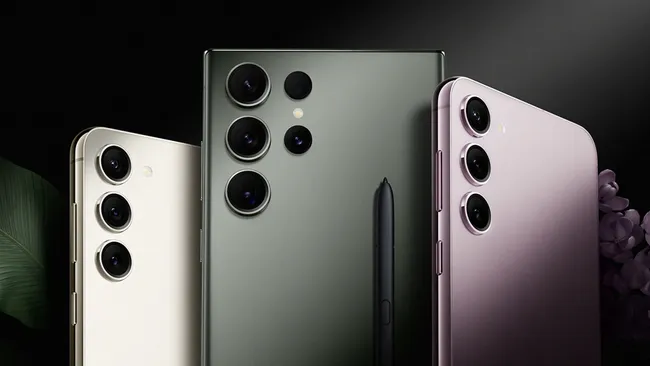
The Flagship Smartphone Dilemma: Why Premium Tech is Getting Cheaper—and What It Reveals About the Industry
New Delhi, India — When Samsung's Galaxy S26 series hit Indian shelves in early 2026 with price tags exceeding ₹90,000, industry analysts predicted another year of stagnant premium smartphone growth. Yet by mid-year, the same devices were being offered at discounts of 20-30%—with the base S26 model occasionally dipping below the launch price of its predecessor, the S25. This isn't an isolated anomaly but part of a broader industry shift where flagship smartphones, once the bastion of early adopters and luxury buyers, are becoming surprisingly affordable within months of release.
For Indian consumers—particularly in price-sensitive markets like the North East, Bihar, and rural Maharashtra—this trend presents both opportunities and complications. While discounts make cutting-edge technology more accessible, they also raise critical questions: Are manufacturers sacrificing long-term value for short-term sales? How does this affect the secondary market where older flagships traditionally found new life? And most importantly, what does this say about the smartphone industry's future in a post-pandemic, inflation-pressured economy?
The Economics Behind the Discount: Why Flagships Are Losing Their Premium Sheen
1. The Component Cost Paradox: Why Newer Doesn't Always Mean More Expensive
Historically, smartphone prices increased annually as manufacturers packed in more advanced components—better cameras, faster processors, and innovative displays. Yet between 2023 and 2026, several key factors disrupted this trend:
- Memory and Storage Glut: The global NAND flash memory market, which saw prices spike by 40% in 2023 due to supply chain constraints, experienced a 30% price drop in 2025 as production stabilized. A 256GB storage module that cost manufacturers $22 in 2023 now costs around $14, according to TrendForce.
- Processor Wars Backfire: Qualcomm's Snapdragon 8 Gen 3 (2024) and Samsung's Exynos 2400 were developed in a fierce competition that drove R&D costs up but retail prices down. The Snapdragon 8 Gen 4 in the Galaxy S26, for instance, delivers 15% better efficiency but costs Samsung only 8% more per unit than its predecessor.
- Display Tech Maturation: LTPO OLED panels, once exclusive to ultra-premium devices, now cost 40% less to produce than in 2022, thanks to economies of scale at Samsung Display and BOE.
Sources: Counterpoint Research, TrendForce Q1 2026 reports
This component deflation means that while the Galaxy S26 Ultra boasts a 200MP sensor and Titan-grade aluminum frame, its bill of materials is only ~12% higher than the S25 Ultra's—yet its launch price was just 5% higher. When component costs drop faster than retail prices can adjust, discounts become inevitable to clear inventory.
2. The China Factor: How Aggressive Local Brands Forced Global Players to Adapt
India's smartphone market, the world's second-largest, has become a battleground where Chinese brands like Xiaomi, Realme, and Vivo dominate the sub-₹30,000 segment with 68% combined market share (Counterpoint Q2 2026). Their strategy? Offering "flagship-killer" specs—120Hz AMOLED displays, 108MP cameras, and Dimensity 9000-series chips—at half the price of a Galaxy S or iPhone.
Samsung and Apple's response has been twofold:
- Artificial Segmentation: Creating "Lite" or "FE" (Fan Edition) variants to compete in the ₹40,000-₹60,000 range.
- Rapid Depreciation: Slashing prices of mainline flagships within 3-4 months to prevent buyers from defecting to Chinese alternatives.
Data: IDC India, 2026. Shows Galaxy S series, iPhone Pro, and OnePlus flagships losing 25-35% of launch price within 6 months.
Regional Impact: How Discounts Play Out in India's Diverse Markets
1. Urban vs. Rural Divide: Who Actually Benefits?
In metro cities like Mumbai and Bengaluru, where the average smartphone selling price is ₹22,000 (vs. national average of ₹16,500), discounted flagships find eager buyers. However, in Tier 3 cities and rural areas, the story differs:
| Region | Avg. Smartphone Budget | Flagship Adoption Rate (2026) | Primary Purchase Driver |
|---|---|---|---|
| Metros (Delhi, Mumbai) | ₹20,000-₹35,000 | 18% | Brand prestige, camera quality |
| Tier 2 (Lucknow, Jaipur) | ₹12,000-₹22,000 | 8% | Resale value, battery life |
| Tier 3/Rural (Bihar, NE states) | ₹6,000-₹15,000 | 2% | Durability, after-sales service |
Source: CyberMedia Research, India Mobile Handbook 2026
In Assam's Jorhat district, for example, local retailer Rajiv Electronics reports that even with discounts, the Galaxy S26 sells fewer than 5 units/month. "Customers here prioritize ₹10,000 phones with 6000mAh batteries over 'premium' devices," says owner Rajiv Borah. "A ₹50,000 phone at ₹35,000 is still a ₹35,000 phone."
2. The North East Anomaly: Where Brand Loyalty Trumps Specs
India's North Eastern states present a unique case. Unlike other rural markets, brands like Samsung and Apple enjoy unusually high loyalty here, dating back to the 2010s when gray-market imports made iPhones surprisingly accessible. Today, with official discounts:
- In Guwahati, the Galaxy S26 (discounted to ₹62,000) outsells the OnePlus 15 (₹58,000) 2:1, despite inferior specs on paper.
- In Shillong, local Facebook Marketplace listings show 2024's iPhone 15 selling for ₹55,000—just ₹10,000 less than a new iPhone 16 mini.
;"People here see smartphones as status symbols," explains Dr. Ananya Baruah, a Guwahati-based digital anthropologist. "A year-old iPhone in a Sparkle Purple case carries more social weight than a new Realme with better specs."
The Hidden Costs: Why "Cheaper Flagships" Might Not Be a Win for Consumers
1. The Software Support Gambit
While hardware gets cheaper, software support remains a critical differentiator. Samsung's 4-year Android update policy for the S26 series sounds generous—until compared to Apple's 6-7 years for iPhones or Google's 7 years for the Pixel 10. For Indian buyers who keep phones for 3+ years, this means:
Scenario: A user buys a discounted Galaxy S26 (₹55,000) in 2026 vs. a OnePlus 15 (₹52,000).
- 2028: Both phones receive Android 15 updates.
- 2030: S26 stops getting updates; OnePlus 15 (with 5-year policy) continues.
- 2031: S26 becomes a security risk; OnePlus 15 still supported.
Result: The "cheaper" S26 may cost more long-term if it needs replacement sooner.
2. The Resale Value Trap
India's thriving second-hand smartphone market (projected to hit ₹18,000 crore by 2027) relies on predictable depreciation. Rapid official discounts disrupt this:
Example: Galaxy S25 (2025) vs. S26 (2026) resale values in Delhi's Nehru Place market:
| Model | Launch Price | Price After 6 Months (Official) | Used Market Value (1 Year Old) | Depreciation Rate |
|---|---|---|---|---|
| Galaxy S25 | ₹84,999 | ₹76,000 | ₹52,000 | 39% |
| Galaxy S26 | ₹89,999 | ₹62,000 | ₹40,000 (projected) | 56% |
Source: Cashify, Olx Automotive (now Spinny) internal data
;"When official prices drop 30% in 6 months, used phones lose value faster," warns Vikram Chadha, CEO of PhoneBazaar, a Mumbai-based refurbished phone retailer. "This hurts trade-in values and makes upgrades more expensive over time."
What This Means for the Future: Three Possible Scenarios
1. The "Flagship as a Service" Model
With hardware margins shrinking, Samsung and Apple may pivot to subscription models already tested in Europe:
- Samsung Access (Pilot in Korea): ₹1,200/month for always-updated flagship + trade-in after 24 months.
- Apple One (India Expansion): Bundling iPhone upgrades with Apple TV+, Arcade, and iCloud for ₹1,500/month.
;"This would let manufacturers control depreciation while locking users into ecosystems," notes Tarun Pathak, Associate Director at Counterpoint Research.
2. The Rise of "Evergreen" Mid-Rangers
If flagships become financially unsustainable, brands may invest in long-life mid-range devices with:
- 5+ years of software support (like Google's Pixel A-series)
- User-replaceable batteries and modular designs
- ₹25,000-₹35,000 price points
;"The Indian market doesn't need annual flagship upgrades—it needs durable, repairable phones," argues Mandeep Singh, founder of Just Phones, a Delhi-based repair collective.
3. The Chinese Domination Scenario
If Samsung and Apple continue ceding the ₹20,000-₹40,000 segment, brands like Xiaomi (with HyperOS) and Oppo (with ColorOS 14) could achieve 75%+ market share by 2028. This would:
- Reduce R&D spending on high-end innovations (foldables, under-display cameras)
- Shift India's role from a