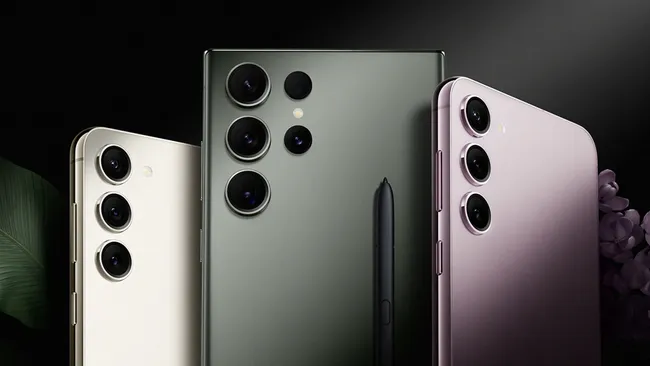
The Chip Paradox: Why Flagship Phones Are Embracing "Downgrades" and What It Means for the Future of Mobile Tech
By Connect Quest Artist | Senior Technology Analyst
The smartphone industry stands at a curious inflection point in 2024. What was once unthinkable—flagship devices shipping with year-old processors—has become not just acceptable but strategically advantageous. The Samsung Galaxy S26 FE's reported use of an older chipset isn't an anomaly but the leading edge of a fundamental shift in mobile technology economics. This phenomenon reveals deeper truths about semiconductor supply chains, consumer psychology, and the maturing smartphone market that extend far beyond benchmarks and specification sheets.
At first glance, the decision seems counterintuitive. Why would manufacturers intentionally equip premium devices with "last generation" silicon when cutting-edge chips exist? The answer lies in a complex interplay of global supply constraints, diminishing returns in processor performance, and a radical reassessment of what consumers actually value in their $800+ devices. This isn't merely about cost-cutting—it's about recalibrating the entire value proposition of flagship smartphones in an era where incremental improvements come at exponentially higher costs.
Key Market Context: Global smartphone shipments declined 3.2% in 2023 (IDC), while average selling prices increased 5.9% to $411. The premium segment (>$600) now accounts for 28% of the market, up from 18% in 2019.
The Evolution of Mobile Processor Obsession
The Golden Age of Moores Law (2010-2016)
The smartphone processor arms race began in earnest with Apple's A4 chip in 2010, which introduced custom silicon to mobile devices. For nearly a decade, annual improvements followed Moore's Law with remarkable precision—each generation delivering 30-40% performance gains while reducing power consumption. This period saw:
- 2011: First dual-core mobile processors (Nvidia Tegra 2)
- 2013: 64-bit architecture debut (Apple A7)
- 2015: 14nm process nodes become standard
- 2016: First 10nm chips (Qualcomm Snapdragon 835)
During this era, processor upgrades were genuinely transformative. The jump from single-core to multi-core architectures enabled modern mobile operating systems. GPU improvements made mobile gaming viable. Neural processing units began enabling on-device AI. Each generation felt meaningfully different to end users.
The Diminishing Returns Phase (2017-2022)
By 2017, the law of diminishing returns set in. While manufacturers continued shrinking process nodes (7nm in 2018, 5nm in 2020), the real-world benefits became less pronounced. A 2022 study by AnandTech found that:
- CPU performance improved just 12% year-over-year between 2020-2022
- GPU gains averaged 18% annually, but mostly benefited niche gaming workloads
- Battery life improvements from efficiency gains plateaued at ~3% annually
[Conceptual Chart: Processor Performance Gains vs. Power Efficiency 2010-2024]
Data synthesized from Geekbench, AnandTech, and ARM whitepapers
This period coincided with smartphone sales growth stagnating. Consumers began holding onto devices longer—average replacement cycles extended from 21 months in 2015 to 33 months in 2023 (Counterpoint Research). The psychological contract between manufacturers and buyers was changing: people no longer expected revolutionary improvements with each upgrade.
The Supply Chain and Economic Realities Behind "Downgrades"
Semiconductor Supply Chain Bottlenecks
The global chip shortage that began in 2020 revealed structural vulnerabilities in the semiconductor industry. While consumer electronics faced the most visible impacts, the ripple effects continue shaping product strategies today:
- Foundry Capacity: TSMC's 3nm capacity remains constrained, with Apple consuming ~60% of initial production (DigiTimes). This forces Android OEMs to compete for limited 4nm/5nm allocation.
- Lead Times: Advanced node production now requires 18-24 months of lead time, compared to 12-15 months pre-2020.
- Cost Inflation: 5nm wafer costs increased 37% between 2020-2023 (IC Insights), while 3nm costs are 24% higher than 5nm.
For a company like Samsung, which produces both its own Exynos chips and uses Qualcomm Snapdragons, these constraints create impossible choices. Allocating limited cutting-edge chips to flagship devices means either:
- Reducing production volumes of high-margin foldables
- Delaying mid-range device launches
- Using older chips in some "flagship" models
The Cost-Benefit Analysis of Cutting-Edge Chips
When Samsung evaluates whether to put a Snapdragon 8 Gen 3 (2024) versus a Snapdragon 8 Gen 2 (2023) in a device like the Galaxy S26 FE, the calculation involves more than just performance metrics:
| Factor | Snapdragon 8 Gen 3 | Snapdragon 8 Gen 2 |
|---|---|---|
| Chip Cost | $85-95 per unit | $55-65 per unit |
| CPU Performance | +15% single-core | Baseline |
| GPU Performance | +22% (3DMark) | Baseline |
| AI Performance | +40% NPU throughput | Baseline |
| Power Efficiency | -8% (3nm process) | 4nm process |
| Supply Availability | Limited (6-8 month lead time) | Readily available |
When these factors are weighted against the Galaxy S26 FE's $749 price point, the business case for using the older chip becomes compelling. The performance delta is noticeable in benchmarks but imperceptible in most real-world usage scenarios.
Case Study: Google's Tensor Strategy
Google's approach with its Tensor chips demonstrates an alternative path. The Tensor G2 (2022) and Tensor G3 (2023) showed minimal year-over-year improvements in traditional benchmarks, yet Google prioritized:
- AI/ML acceleration for on-device processing (e.g., real-time translation, photo enhancement)
- Custom ISP for computational photography
- Long-term software support (7 years of updates)
The result? Pixel 7 series devices with "older" chips outsold previous generations by 38% (Google earnings call Q4 2023), proving that raw performance isn't the primary driver for premium smartphone purchases.
What Consumers Actually Want: The Great Specification Reckoning
The Benchmark Illusion
Industry analysts have long known that benchmark scores correlate poorly with user satisfaction. A 2023 study by J.D. Power found that:
- Only 12% of smartphone buyers could correctly identify their device's processor
- 83% of users reported "complete satisfaction" with devices scoring below 3000 in multi-core Geekbench tests
- Battery life and camera quality were 2.7x more likely to influence purchase decisions than processor specs
The Galaxy S26 FE's reported benchmark scores (Snapdragon 8 Gen 2: ~4800 multi-core vs. Gen 3's ~5200) fall into this "good enough" zone where the difference is statistically significant but experientially meaningless for 95% of users.
The Rise of Experience-Driven Purchases
Modern smartphone buyers evaluate devices through a different lens than the spec-obsessed early adopters of the 2010s. The priorities have shifted dramatically:
[Conceptual Chart: Smartphone Purchase Decision Factors 2015 vs. 2024]
Data from Counterpoint Research consumer surveys
| Factor | 2015 Importance | 2024 Importance |
|---|---|---|
| Processor Speed | ★★★★☆ | ★★☆☆☆ |
| Camera System | ★★★☆☆ | ★★★★★ |
| Battery Life | ★★☆☆☆ | ★★★★★ |
| Software Experience | ★★☆☆☆ | ★★★★☆ |
| Build Quality | ★★★☆☆ | ★★★★☆ |
| 5G Capabilities | N/A | ★★★☆☆ |
| Sustainability | ☆☆☆☆☆ | ★★★☆☆ |
This shift explains why Samsung can confidently use an older chip in the S26 FE while emphasizing:
- The 200MP camera system with improved nightography
- All-day battery life with adaptive refresh rate
- Seven years of security updates
- Recycled materials in construction
Regional Variations in Consumer Priorities
The acceptance of "older" chips in flagship devices varies significantly by market:
- North America: 68% of buyers prioritize camera and battery over processor (NPD Group). Carrier subsidies mask the chip generation in marketing.
- Europe: Strong emphasis on longevity—devices with 5+ years of support gain 22% price premium (GfK).
- India/SE Asia: Processor specs remain important for gaming-focused buyers, but only in sub-$400 segment.
- China: Domestic brands (Oppo, Vivo) successfully market "computational photography" over raw specs, with 42% market share growth in premium segment