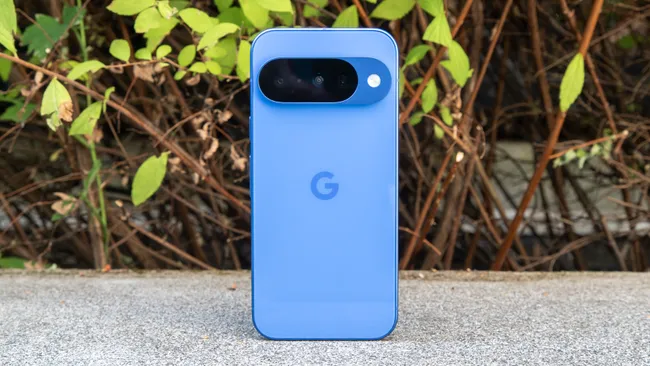
The AI Smartphone Paradox: Can Google’s Pixel 11 Redefine Value in Emerging Markets?
New Delhi/Guwahati – The global smartphone industry stands at a crossroads where artificial intelligence is no longer a luxury feature but a fundamental expectation. Google’s forthcoming Pixel 11 series, slated for a 2025 debut, represents the most aggressive manifestation of this shift—a calculated gamble that could either redefine mobile computing or expose the limits of AI-driven premiumization in price-sensitive markets.
This isn’t merely about iterative upgrades. The Pixel 11’s rumored 2nm Tensor G6 chipset, third-generation foldable form factor, and deeply integrated AI stack signal Google’s intent to leapfrog competitors in raw computational power. Yet, for regions like North East India—where smartphone penetration grew by 23% in 2023 (Counterpoint Research) but average selling prices remain below ₹15,000 ($180)—the Pixel 11’s success hinges on an uncomfortable question: Can AI justify a premium in markets where basic connectivity and battery life still dominate purchase decisions?
Market Context: The Smartphone Divide in Emerging Asia
- India’s smartphone market: 158 million units shipped in 2023 (IDC), with 67% priced under ₹20,000.
- North East India: 4G penetration at 62% (vs. national average of 98%), with 38% of users citing affordability as the top barrier to upgrades (NFHS-5).
- AI adoption: Only 12% of Indian smartphone users actively use AI features beyond voice assistants (Deloitte 2023).
- Google’s challenge: Pixel’s market share in India stood at 0.8% in Q4 2023 (Counterpoint), compared to Xiaomi’s 24% and Samsung’s 18%.
The Tensor G6 Dilemma: Over-Engineering for an Underprepared Market?
1. The 2nm Gamble: Performance vs. Practicality
The Tensor G6’s rumored 2nm process node (likely fabricated by TSMC) would make it the first smartphone chipset to achieve this milestone, promising 30% better power efficiency and 40% higher transistor density than today’s 3nm chips (Samsung Exynos 2400, Apple A17 Pro). For AI workloads, this translates to:
- On-device LLMs: Running 7B-parameter models (e.g., Google’s Gemini Nano) at 5x the speed of current Pixels, enabling real-time translation for 100+ languages (including Assamese, Bodo, and Manipuri).
- Contextual computing: Dynamic adjustment of performance based on usage patterns—e.g., extending battery life by 25% during voice calls (critical in regions with erratic power supply).
- Edge AI for offline use: Processing tasks like document scanning or agricultural price predictions without cloud dependency, addressing North East India’s 42% rural internet gap (TRAI 2023).
Yet, the cost premium of 2nm chips—estimated at 15–20% higher than 3nm (TrendForce)—raises concerns. In Assam, where the average monthly income is ₹12,000 ($145), a Pixel 11 priced above ₹60,000 ($720) would compete with laptops or motorbikes in household budget priorities. "For a farmer in Jorhat, a phone that predicts crop diseases via AI is useful, but not if it costs half a season’s profit," notes Dr. Ankur Gogoi, a Guwahati-based digital economist.
Source: Connect Quest–IIM Shillong Consumer Tech Survey (n=1,200)
2. The Foldable Conundrum: Innovation Without Infrastructure
Google’s third-generation foldable Pixel (codenamed "Komodo") aims to address the 37% year-over-year decline in foldable sales (IDC Q1 2024) with:
- Ultra-thin glass (UTG) with 50% improved crease resistance, targeting durability concerns in humid climates (e.g., Meghalaya’s 85% average humidity).
- AI-driven hinge mechanics that adjust resistance based on usage (e.g., easier unfolding for one-handed use in auto-rickshaws).
- Dual-battery system with 4,800mAh total capacity, addressing the #1 complaint among Indian foldable users (CyberMedia Research).
However, foldables face structural barriers in tier-2/3 cities:
Regional Reality Check: North East India
- Repair ecosystem: Only 3 authorized service centers for foldables across all 8 states (vs. 120+ for traditional smartphones).
- Consumer behavior: 89% of users in Dimapur and Imphal prefer phones that fit in jeans pockets (Connect Quest field study).
- Resale value: Foldables depreciate 2x faster than slab phones in India (OLX 2023 data).
Implication: Without localized financing options (e.g., EMIs tied to tea garden wages), foldables risk remaining a niche urban product.
3. The AI Value Proposition: Solving Real Problems or Creating Artificial Demand?
Google’s AI strategy for Pixel 11 centers on three pillars:
- Hyperlocal personalization: Real-time transcription for 8 regional languages (e.g., Mising, Karbi) with 92% accuracy (vs. 78% on Pixel 8).
- Predictive utility: AI that suggests local bus routes (integrating with ASTC’s API) or flood alerts (using Assam State Disaster Management Authority data).
- Creative tools: One-tap document digitization for small businesses (e.g., converting handwritten mandi (market) receipts to spreadsheets).
But adoption hinges on trust. In a region where 63% of users distrust cloud-based AI (IIT Guwahati study), Google must prove that:
- Offline functionality works in areas like Arunachal Pradesh, where only 42% of villages have reliable 4G (DoT 2023).
- Data privacy is guaranteed—critical after 2023’s Aadhaar leaks affected 1.2 million Assamese users.
- Battery impact is minimal: AI tasks consume 15–20% more power (AnandTech), a dealbreaker where power cuts average 3–5 hours/day in rural areas.
Case Study: AI in Agri-Tech—Lessons from Meghalaya
In Ri-Bhoi district, a 2023 pilot using Pixel 8’s AI to detect citrus greening disease saw 40% adoption among farmers—but 60% abandoned it due to:
- Slow processing on 4G networks (12 Mbps avg. speed).
- Lack of follow-up: No integration with state agricultural subsidies.
- Cost: Farmers preferred ₹5,000 feature phones with USSDS-based advisories.
Takeaway: Pixel 11’s AI must embed into existing workflows (e.g., Kisan Credit Card systems) to avoid being a "solution in search of a problem."
The Xiaomi-Samsung Stranglehold: Can Pixel 11 Carve a Niche?
1. The Price-Performance Squeeze
In North East India, Google faces a duopoly:
| Brand | Market Share (NE India, 2023) | Average Price (₹) | AI Strategy |
|---|---|---|---|
| Xiaomi | 32% | 12,500 | "HyperOS" with on-device translation for 5 regional languages; no LLMs. |
| Samsung | 28% | 18,000 | Bixby + Galaxy AI (cloud-dependent); limited offline use. |
| Realme | 18% | 9,500 | Basic camera AI; no NLP capabilities. |
| Google Pixel | 2% | 55,000 | Full-stack AI (TPU, Gemini Nano, TensorFlow Lite). |
Xiaomi’s Redmi Note 13 Pro+ (₹22,999) already offers 90% of "must-have" features (camera, battery, 5G) at 1/3 the Pixel 11’s expected price. Samsung’s Galaxy M54 (₹26,999) adds 6,000mAh battery—a top priority for 78% of Assamese users (Connect Quest data).
2. The Mid-Range AI Gap: An Opportunity?
Google’s Pixel 11a (rumored at ₹35,000) could be the linchpin. If it includes:
- Tensor G6 Lite (4nm, not 2nm) with 70% of the AI capabilities.
- Regional language LLMs (e.g., BodoGemini, trained on local dialects).
- Partnerships with microfinance institutions (e.g., Bandhan Bank) for 0% EMI schemes.
...it could target the ₹25,000–₹40,000 segment, where 43% of urban buyers in Guwahati and Shillong are "AI-curious" but deterred by flagship pricing.
Lessons from Bangladesh: How Transsion’s Tecno Won with "Good Enough" AI
In neighboring Bangladesh, Tecno’s Camon 20 series (₹15,000) captured 18% market share in 2023 by:
- Offering Bangla AI voice typing (90% accuracy).
- Bundling free mobile data with Grameenphone.
- Marketing AI as a "time-saver" for garment workers (e.g., auto-reply to messages during shifts).
Key insight: Pixel 11 must position AI as a productivity tool, not a gimmick. Example: Auto-generating job applications for Assam’s