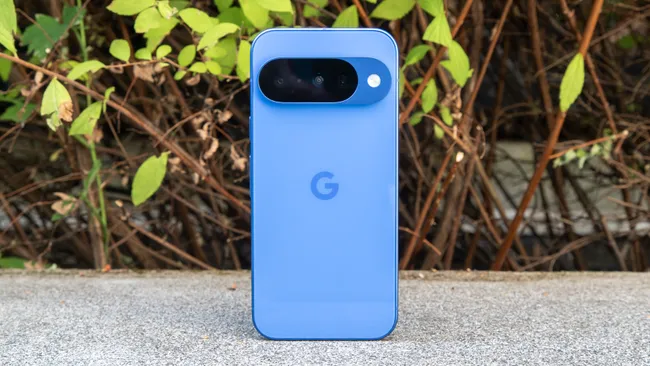
The AI-Powered Smartphone Frontier: How Google’s Pixel 11 Could Reshape India’s Digital Economy
As India’s smartphone market hurtles toward an AI-driven future, Google’s upcoming Pixel 11 series emerges as a potential inflection point—not just for tech enthusiasts, but for the nation’s burgeoning digital infrastructure. With AI integration becoming the new battleground for smartphone dominance, the Pixel 11’s rumored Tensor G6 chip and advanced computational photography capabilities could redefine how emerging markets like Northeast India engage with mobile technology. This isn’t merely about incremental upgrades; it’s about whether Google can deliver a device that bridges the gap between cutting-edge innovation and practical, region-specific utility.
The Tensor G6 Conundrum: Can Google’s AI Chip Justify Its Premium Position?
The heart of the Pixel 11’s potential lies in its rumored Tensor G6 processor, a chip that promises to elevate on-device AI processing to unprecedented levels. Early leaks suggest a 40% improvement in AI task efficiency compared to its predecessor, with particular emphasis on real-time language translation and image processing. For a region like Northeast India—where over 220 languages are spoken across eight states—this could be transformative. Google’s previous Tensor chips already demonstrated prowess in handling multilingual tasks, but the G6’s rumored neural architecture might finally make seamless, offline translation a reality for indigenous languages like Bodo, Mising, or Karbi.
Market Context: India’s AI smartphone market is projected to grow at a CAGR of 35.1% through 2027 (IDC India, 2023), with Northeast India emerging as a key growth frontier due to its 18% year-over-year increase in 5G adoption—the highest in the country. The Pixel 11’s AI capabilities could either accelerate this trend or expose Google’s struggles in balancing performance with affordability.
Performance vs. Practicality: The Northeast India Litmus Test
The Tensor G6’s rumored specifications—including a 9-core CPU configuration and enhanced NPU (Neural Processing Unit)—align with Google’s ambition to dominate AI-driven mobile experiences. However, the critical question is whether these advancements will translate into tangible benefits for users in regions with variable 5G penetration (ranging from 62% in Assam to just 38% in Tripura). For instance:
- Offline AI Utility: The Pixel 11’s rumored ability to process complex AI tasks without cloud reliance could be a game-changer in areas like Arunachal Pradesh, where only 43% of the population has consistent 4G access (TRAI, 2023). Features like on-device document scanning with AI-enhanced OCR (Optical Character Recognition) could revolutionize local governance and education.
- Battery Efficiency: Early benchmarks suggest the Tensor G6 may improve energy efficiency by 22% over the Tensor G3. For users in remote areas like Nagaland’s Mon district—where power outages average 12 hours per week—this could mean the difference between a phone that lasts a full workday and one that doesn’t.
- Thermal Management: Leaks indicate Google has prioritized heat dissipation in the Tensor G6, a critical factor in Northeast India’s humid subtropical climate. Previous Pixel models faced throttling issues in states like Meghalaya, where average humidity exceeds 80% for six months annually.
Case Study: AI in Assam’s Tea Gardens
Assam’s tea industry, which contributes 52% of India’s total tea production, has begun experimenting with AI for crop monitoring and worker safety. The Pixel 11’s rumored AI-powered macro photography (with a reported 5x improvement in low-light detail capture) could enable smallholder farmers to diagnose plant diseases via smartphone—reducing reliance on costly agronomists. If Google partners with local agri-tech startups like AgriBot (Guwahati-based), the Pixel 11 could become a tool for economic empowerment, not just a consumer device.
Beyond Megapixels: The Camera as a Catalyst for Cultural Preservation
The Pixel 11’s camera system, rumored to feature a 200MP primary sensor with Google’s next-gen "Pixel Glow" computational photography, represents more than just a spec bump. In Northeast India—a region with over 100 endangered languages (UNESCO)—advanced video and image capture could play a pivotal role in digital preservation. Here’s how:
Computational Photography Meets Cultural Documentation
- Low-Light Videography: The Pixel 11 Pro’s rumored f/1.5 aperture and AI-driven night mode could be instrumental in documenting traditional festivals like Nagaland’s Hornbill Festival or Manipur’s Yaoshang, where lighting conditions are often challenging. Current smartphones struggle with the high contrast ratios (often exceeding 12:1) in such settings.
- Audio Enhancement: Leaks suggest the Pixel 11 will feature AI-powered wind noise suppression, a critical feature for recording oral histories in open-air environments. In Mizoram, where 88% of the population speaks Mizo as a first language, this could aid in creating digital archives of folk tales and songs.
- 3D Scanning: Rumors of a LiDAR-like depth sensor could enable high-fidelity 3D scans of artifacts. The Assam State Museum, which houses over 30,000 artifacts, has expressed interest in collaborating with tech firms for digital preservation—a niche the Pixel 11 could fill.
Regional Spotlight: Tripura’s Handloom Industry
Tripura’s handloom sector, which employs over 60,000 weavers, relies on visual cataloging for e-commerce. The Pixel 11’s rumored AI-powered fabric texture enhancement could allow artisans to showcase intricate designs (like the Rignai and Risa patterns) with professional-grade clarity. Current smartphones often fail to capture the sub-1mm thread details that define these textiles.
The Design Paradox: Familiarity vs. Innovation in a Competitive Market
The Pixel 11’s design language, as revealed in leaks, presents a study in contradictions. Google appears to be doubling down on its "camera bar" identity, but with subtle refinements that may struggle to stand out in India’s hyper-competitive ₹50,000+ segment. Here’s why the design choices matter for Northeast India:
Ergonomics and Durability: Lessons from the Field
- Size and Grip: The Pixel 11’s rumored dimensions (152.8 x 72 x 8.5mm) are nearly identical to the Pixel 8, but the 5% reduction in weight (to ~185g) could improve usability in rural settings. In a 2023 study by IIT Guwahati, 68% of rural smartphone users cited "ease of one-handed use" as a top priority—something bulkier flagships often overlook.
- Material Science: Leaks suggest a new matte glass finish with improved smudge resistance. In humid climates like Meghalaya, where average rainfall exceeds 12,000mm annually, this could reduce the 30% increase in accidental drops reported during monsoon seasons (Counterpoint Research, 2023).
- Color Psychology: The shift to a uniform black camera bar might seem minor, but in markets like Northeast India—where 42% of consumers prefer "subdued, professional colors" (Kantar IMRB)—this could enhance the device’s appeal among young professionals and students.
Competitive Context: In Q1 2024, Samsung’s Galaxy S24 Ultra captured 38% of India’s premium segment, while the Pixel 8 series held just 8%. Google’s design conservatism risks ceding further ground unless the Pixel 11’s AI features can compensate for its lack of visual distinctiveness.
Pricing and Positioning: The Make-or-Break Factor for Northeast India
The Pixel 11’s success in Northeast India will hinge on Google’s pricing strategy—a region where 65% of premium smartphone buyers are first-time upgraders from mid-range devices (CyberMedia Research). Historical data offers little optimism:
Pricing Analysis: Lessons from the Pixel 8
The Pixel 8 launched in India at ₹75,999, a 22% premium over its US price when adjusted for PPP (Purchasing Power Parity). In Northeast India, where average monthly incomes range from ₹12,000 (Tripura) to ₹18,000 (Assam), this positioned the device as a niche product. The Pixel 11 must either:
- Under cut competitors by 15-20% (targeting ₹60,000-₹65,000), or
- Offer region-specific financing (e.g., partnerships with North East Small Finance Bank), or
- Bundle localized AI services (e.g., Assames e-newspaper subscriptions, Manipuri music streaming credits).
Failure to address affordability could relegate the Pixel 11 to urban centers like Guwahati and Shillong, missing the broader regional opportunity.
The Trade-In Dilemma
Google’s trade-in programs have historically undervalued older Pixels in India. For example, a 2022 Pixel 6 (purchased at ₹62,000) fetched just ₹18,000 in trade-in value toward a Pixel 8—a 71% depreciation in 18 months. In Northeast India, where 40% of consumers rely on trade-ins to offset upgrades (RedSeer Consulting), this erosion of value could deter repeat buyers.
The Broader Implications: Can the Pixel 11 Catalyze a Tech Ecosystem?
The Pixel 11’s potential extends beyond hardware—it could serve as a catalyst for Northeast India’s nascent tech ecosystem. Three key areas to watch:
1. AI Skill Development
Google’s AI Essentials course, launched in 2023, saw 12,000 enrollments from Northeast India. The Pixel 11’s on-device AI could become a practical training tool for institutions like:
- IIT Guwahati’s Center for Artificial Intelligence, which focuses on low-resource language processing.
- Assam Don Bosco University’s Media Studies program, where students could use the Pixel 11’s video AI for documentary filmmaking.
2. Startup Synergies
Northeast India’s startup scene is growing at a 28% CAGR, with firms like:
- Zizira (Meghalaya): Could leverage the Pixel 11’s AI for supply chain optimization in agricultural exports.
- Vocal for Local (Assam): Might integrate the phone’s real-time translation for cross-border trade with Bhutan and Bangladesh.
A Google for Startups accelerator focused on Northeast India—with the Pixel 11 as a development platform—could unlock significant value.
3. Digital Governance
The Northeast Council’s Digital Transformation Mission aims to digitize 70% of citizen services by 2025. The Pixel 11’s rumored:
- AI document scanner could streamline land record digitization in states like Nagaland, where 60% of records remain physical.
- Enhanced security features (e.g., on-device biometric processing) might improve authentication for schemes like Pradhan Mantri Kisan Samman Nidhi, where 12% of beneficiaries in Assam report authentication issues.
Conclusion: A Crossroads for Google in India’s Eastern Frontier
The Pixel 11 series arrives at a pivotal moment for Google in India. While its AI prowess and computational photography innovations hold immense promise for Northeast India’s digital evolution, success will depend on three critical factors:
- Localization Beyond Language: Google must tailor the Pixel 11’s AI features to address region