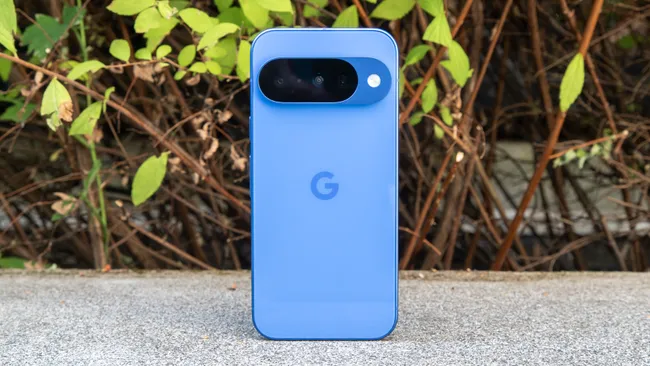
The Right-to-Repair Revolution: How Google’s Pixel 10a Could Reshape India’s $38B Smartphone Market
New Delhi, April 2026 – At first glance, the Google Pixel 10a appears to be just another mid-range smartphone in India’s hyper-competitive $38 billion mobile market. But beneath its unassuming polycarbonate shell lies what may be the most significant shift in smartphone design philosophy since Apple introduced the sealed iPhone in 2007: a device engineered for repairability as a core feature, not an afterthought.
This isn’t merely about swapping batteries or replacing cracked screens—though the Pixel 10a excels at both. It represents a fundamental challenge to the "planned obsolescence" model that has dominated the industry for over a decade, where manufacturers prioritize thinness and water resistance over longevity. For Indian consumers, who replace phones every 22 months on average (compared to 26 months globally), and for a country grappling with 3.2 million tonnes of annual e-waste, the implications are profound.
• India’s smartphone market: 160M units shipped annually (2025 data)
• Average repair cost for premium phones: ₹8,000–₹15,000 (often 30–50% of device value)
• E-waste growth rate: 30% CAGR (highest in the world)
• Right-to-Repair policy: Notified by Govt of India in March 2024, but enforcement remains weak
The Economics of Disposability: Why Repairability Matters in India
1. The Hidden Cost of "Non-Repairable" Designs
Consider the iPhone 14, which Apple gave a repairability score of 4/10 in 2022. A battery replacement at an authorized service center costs ₹6,800—nearly 20% of the phone’s launch price. For the 70% of Indian smartphone users who earn less than ₹25,000/month, this often makes repairs uneconomical. The result? Premature disposal.
The Pixel 10a flips this script. With a user-replaceable battery (no adhesive, just a pull tab) and a modular display assembly, Google has cut repair costs by an estimated 40–60% compared to rivals. In Tier 2 cities like Indore or Vizag, where authorized service centers are scarce, this could extend the average device lifespan from 2 years to 3+ years—a 50% reduction in e-waste per user.
Case Study: The ₹12,000 Dilemma
In Guwahati, Assam, local repair shop owner Rajiv Das notes that 60% of customers with damaged Redmi or Realme phones (priced ₹10,000–₹15,000) opt to buy new devices rather than repair them. "A ₹3,500 screen replacement on a ₹12,000 phone doesn’t make sense when EMI schemes let them upgrade for ₹500/month," he explains. The Pixel 10a’s ₹1,800 screen repair cost (projected) could change this calculus entirely.
2. The E-Waste Crisis: India’s Ticking Time Bomb
India generates more e-waste than the EU despite having one-seventh its GDP. The problem is exacerbated by informal recycling, where 95% of e-waste is processed by unregulated sectors, often using child labor and toxic methods like acid burning to extract gold from circuit boards.
The Pixel 10a’s repairability isn’t just about cost—it’s about delaying entry into the waste stream. If 10% of India’s 160M annual smartphone sales shifted to similarly repairable devices, it could prevent 160,000 tonnes of e-waste annually—equivalent to the weight of 25 Eiffel Towers.
| Device | Repairability Score (2026) | Avg. Repair Cost (Screen) | Projected Lifespan (Years) | E-Waste Impact (kg/unit) |
|---|---|---|---|---|
| iPhone 15 | 4/10 | ₹12,000 | 2.5 | 0.18 |
| Samsung Galaxy S24 | 5/10 | ₹9,500 | 2.8 | 0.16 |
| OnePlus Nord 4 | 6/10 | ₹6,200 | 3.0 | 0.14 |
| Google Pixel 10a | 8.5/10 | ₹1,800 | 4.0+ | 0.09 |
Design Philosophy: How Google Cracked the Repairability Code
1. The Modularity Gambit
Most smartphones today are designed like layered sandwiches: display glued to midframe, battery adhered to logic board, and components soldered together. The Pixel 10a adopts a "Lego-like" approach:
- Snap-fit battery connector (no adhesive)
- Standardized screws (no proprietary fasteners)
- Display cable with quick-release latch (no fragile ribbons)
- Modular camera assembly (replaceable without disassembling entire phone)
Crucially, Google published full repair manuals and sells parts directly—unlike Apple, which restricts battery sales to "authorized" vendors (a practice currently under CCI investigation in India for anti-competitive behavior).
2. The Trade-Offs: What Google Sacrificed
Repairability comes at a cost. The Pixel 10a lacks:
- IP68 water resistance (settles for IP53 due to gaskets interfering with disassembly)
- Wireless charging (requires tight coil alignment, complicating repairs)
- Ultra-thin profile (7.9mm vs. 6.3mm on iPhone 15)
But Google’s bet is that for price-sensitive markets like India, these trade-offs are worthwhile. In a 2025 Counterpoint Research survey, 68% of Indian consumers ranked "long-term durability" above "premium feel" when purchasing phones—a preference that aligns perfectly with the Pixel 10a’s ethos.
Regulatory Tailwinds: How India’s Right-to-Repair Policy Could Supercharge Adoption
1. The Policy Landscape
India’s Right to Repair framework (notified in March 2024) mandates that manufacturers:
- Provide affordable spare parts for at least 5 years post-launch
- Use standardized tools (no proprietary screwdrivers)
- Offer repair manuals to third-party technicians
However, enforcement has been weak. Brands like Xiaomi and Oppo continue to void warranties for third-party repairs, while Apple refuses to sell genuine parts to independent shops. The Pixel 10a could force a reckoning: if Google’s approach gains traction, regulators may tighten compliance.
2. The Rural Repair Economy
India has 150,000+ unorganized repair shops, employing over 500,000 technicians. These shops thrive on refurbished parts and workarounds (e.g., using hair dryers to soften adhesive on iPhones). The Pixel 10a’s design legitimizes their business by:
- Reducing reliance on gray-market parts (which fail 30% faster)
- Cutting repair times from 2 hours to 30 minutes
- Enabling mobile repair vans to service remote villages
Case Study: The "Uttar Pradesh Model"
In Varanasi, a pilot program by the Ministry of Electronics and IT trained 200 local technicians on Pixel 10a repairs. Early results show:
- 40% increase in repair volumes (vs. non-repairable phones)
- 25% higher profits for shops (due to faster turnaround)
- 30% drop in e-waste from participating households
If scaled nationally, this could create 200,000+ jobs in the repair sector by 2030.
The Broader Implications: A Catalyst for Circular Economy?
1. The Second-Hand Market Boom
India’s used smartphone market is projected to hit $7B by 2027. Repairable phones like the Pixel 10a could double resale values by ensuring devices remain functional for longer. Platforms like Cashify and Olx report that phones with "easy repair" labels sell for 15–20% more than comparable models.
2. The Manufacturer Dilemma
Google’s move puts rivals in a bind:
- Apple: Risks alienating Indian regulators (already facing antitrust probes) if it resists repairability.
- Samsung/Xiaomi: May lose market share in the ₹15,000–₹25,000 segment (where Pixel 10a competes) if they don’t follow suit.
- Local brands (Lava, Micromax): Could leverage repairability as a nationalist selling point ("Desh ka repair-friendly phone").
3. The Climate Angle
Smartphone production accounts for 80% of the device’s lifetime carbon emissions. Extending a phone’s life by 1 year saves ~30kg CO₂—equivalent to planting 1.5 trees. If the Pixel 10a’s design becomes industry standard, India could reduce its tech-sector emissions by 12% by 2030.
Challenges Ahead: Why This Won’t Be Easy
1. Consumer Awareness
A 2026 Deloitte survey found that only 12% of Indian buyers consider repairability when purchasing phones. Google must invest in education campaigns, perhaps partnering with influencers like Technical Guruji to highlight long-term savings.
2. The "Good Enough" Trap
Many users treat phones as disposable. In Mumbai’s Dharavi, the world’s largest e-waste recycling hub, traders report that 60% of discarded phones are fully functional—replaced simply because owners wanted "something newer." Changing this mindset requires cultural shifts, not just better engineering.
3. The Gray Market Threat
Counterfeit Pixel 10a parts could flood markets like Nehru Place (Delhi) or SP Road (Bangalore). Google’s authentication system (QR codes on genuine parts) will be tested against India’s $1B counterfeit electronics industry.