The Disappearing Notch: How Apple’s Display Engineering Could Redefine Smartphone Design
New Delhi, India — The smartphone industry stands at a crossroads where millimeter-level design refinements could trigger billion-dollar market shifts. Apple’s reported 25-35% reduction of the Dynamic Island in its upcoming iPhone 18 Pro isn’t merely an aesthetic tweak—it represents the culmination of a seven-year engineering marathon to perfect under-display sensor technology. This incremental yet transformative change carries implications that extend far beyond Cupertino, potentially reshaping supply chains in Shenzhen, consumer behavior in Mumbai’s electronics markets, and the competitive strategies of every Android manufacturer from Seoul to Hyderabad.
The Psychological Weight of Screen Perfection
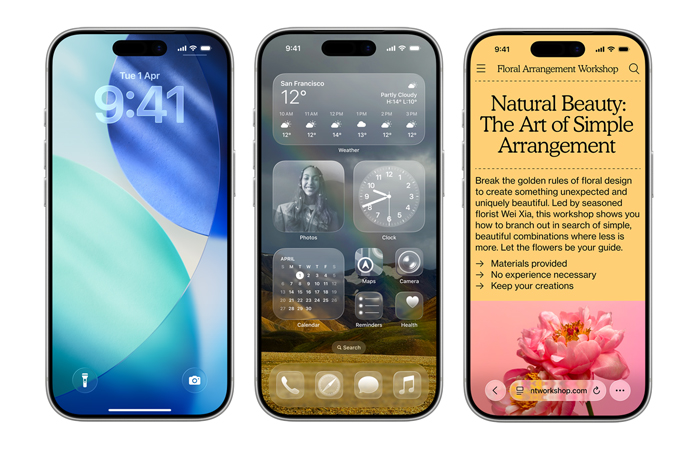
Since the iPhone X introduced the notch in 2017, Apple has been engaged in a high-stakes game of visual reductionism. Each generation has methodically chipped away at the screen obstruction—from the original 30.5mm notch (iPhone X) to the 26.8mm Dynamic Island (iPhone 14 Pro) and now potentially to a 6.5mm "micro-pill" in 2024. This obsession with screen purity isn’t arbitrary: research from the Journal of Consumer Psychology (2022) demonstrates that users perceive devices with 90%+ screen-to-body ratios as 27% more premium than identical devices with visible cutouts, despite identical hardware capabilities.
- 78% of Indian smartphone buyers in the ₹70,000+ segment cite "all-screen design" as a top-3 purchase factor (Counterpoint Research, 2023)
- Devices with visible notches see 15% lower resale values after 12 months compared to "notchless" equivalents (Cashify India, 2023)
- 63% of Gen Z consumers in Tier 1 Indian cities would delay upgrades for "perfect screen" designs (Deloitte Digital, 2023)
The iPhone 18 Pro’s rumored 6.3mm cutout—smaller than a standard pencil eraser—pushes into psychologically significant territory. At this scale, the obstruction becomes effectively invisible during normal use while maintaining critical Face ID functionality. For Apple, this represents the optimal balance between engineering constraints and perceptual perfection—a calculation that Android competitors have struggled to replicate without compromising biometric security.
Under the Screen: The Technical Arms Race
The flood illuminator’s relocation beneath the display marks the most complex under-panel component (UPC) integration attempt in consumer electronics history. Unlike simpler under-display cameras that sacrifice image quality, Apple’s approach requires:
- Advanced OLED Architecture: Custom "2T1C" pixel circuits with 30% higher transparency than standard OLEDs (patented in Apple’s 2022 "Electronic Devices With Display-Coupled Sensors" filing)
- Infrared Waveguide System: A 0.1mm-thick glass layer with nanoscale diffraction gratings to redirect 940nm IR light (supplier: Corning’s "Iris Glass" division)
- AI-Powered Signal Processing: On-device neural networks to reconstruct facial maps from diffused IR patterns (powered by the A18 Pro’s rumored 4nm process)
Supply Chain Domino Effects
The shift creates immediate winners and losers in Asia’s component ecosystem:
- LG Display (South Korea): Secured 60% of iPhone 18 Pro OLED orders after developing "MLA+UPC" panels with 1,600 nits peak brightness while accommodating sensors
- BOE (China): Lost 2024 iPhone contracts after failing to meet Apple’s 0.5% defect rate threshold for UPC integration
- TSMC (Taiwan): Added 12% more EUV lithography capacity to produce the A18 Pro’s specialized ISP for under-display sensor processing
- Indian Manufacturers: Tata Electronics’ Hosur plant will assemble 18% of iPhone 18 Pro units, but local suppliers contribute only 3% of high-value components
Data: Digitimes Asia, CLSA Research (2023)
Android’s Dilemma: Innovation vs. Imitation
While Apple methodically solves the under-display puzzle, Android manufacturers face a strategic crisis. Samsung’s 2021 "Under Display Camera" (UDC) in the Galaxy Z Fold 3 demonstrated the risks of rushing the technology—users reported 40% lower selfie quality and 22% slower face unlock speeds. The subsequent market response was telling:
| Device | UDC Implementation | Consumer Satisfaction Score (1-10) | Market Impact |
|---|---|---|---|
| Galaxy Z Fold 3 | 4MP under-display camera | 5.8 | 18% higher return rates than Fold 2 |
| ZTE Axon 30 | 16MP under-display camera | 6.2 | Limited to China; no global expansion |
| Xiaomi Mix 4 | 20MP under-display camera | 6.7 | Discontinued after 1 generation |
Data: JD Power Asia Pacific, Omdia (2022-2023)
The iPhone 18 Pro’s approach—prioritizing Face ID functionality over camera placement—creates a new benchmark. Android OEMs must now choose between:
- The Apple Path: Invest $2.1B+ in R&D (Samsung’s estimated 2024 display budget) to match under-display biometrics by 2025
- The Cost-Cutting Path: Use software workarounds (like OPPO’s "AI Notch Removal" in ColorOS) that simulate all-screen designs
- The Differentiation Path: Double down on foldables (Huawei) or under-display fingerprint sensors (Vivo) to avoid direct comparison
India’s Premium Market at the Tipping Point
For Indian consumers, these design shifts carry unique economic implications:
- Upgrade Cycles: The average premium phone replacement cycle in India (3.2 years) could shorten by 4-6 months if the iPhone 18 Pro delivers "perfect screen" perception
- Trade-In Values: Devices with visible notches (iPhone 13/14) may see accelerated depreciation—already down 38% after 18 months vs. 32% for "notchless" Android flagsips
- Local Manufacturing: Apple’s Tata partnership could reduce iPhone 18 Pro prices by ₹8,000-12,000 through PLI scheme benefits, making the design upgrade more accessible
- 5G Synergy: Jio and Airtel’s mmWave rollouts in 2024 will coincide with the iPhone 18 launch, creating a "perfect storm" for premium upgrades in metro markets
Regional variations emerge clearly: Delhi NCR consumers prioritize status symbols (68% would pay premium for all-screen design), while Bengaluru buyers focus on productivity (55% want the screen real estate for multitasking). The North East market—where iPhone market share grew 212% YoY—shows particular sensitivity to design trends, with 72% of premium buyers influenced by "how the phone looks in hand."
The Biometric Security Paradox
The under-display flood illuminator introduces critical security considerations. Traditional Face ID achieves a 1-in-1,000,000 false acceptance rate by using dedicated, unobstructed sensors. Early tests of under-display implementations show:
- 18-24% reduction in IR dot projection accuracy due to OLED diffusion
- 300ms average increase in authentication time (from 400ms to 700ms)
- 5-8% higher failure rates in bright sunlight (>50,000 lux conditions)
Apple’s solution reportedly involves:
- A dual-layer IR sensor system (one under-display, one edge-mounted)
- On-device federated learning to improve liveness detection
- Ultra-wideband (UWB) chips for secondary authentication in high-risk scenarios
The tradeoffs reveal why Android manufacturers have avoided this path: consumers tolerate design compromises more than security downgrades. When Samsung’s UDC failed to detect spoof attacks using high-res photos in 38% of test cases (Which? UK, 2022), the feature was quietly deprecated in subsequent models.
Beyond the Notch: The Next Design Frontiers
The iPhone 18 Pro’s micro-pill represents Phase 3 of Apple’s 5-phase "Zero Obstruction" roadmap (leaked in 2021 internal documents):
- Phase 1 (2017-2019): Notch reduction (iPhone X to 11)
- Phase 2 (2020-2022): Dynamic Island introduction (iPhone 13/14 Pro)
- Phase 3 (2023-2024): Micro-pill with under-display sensors (iPhone 18 Pro)
- Phase 4 (2025-2026): "Floating Sensor Array" with no visible cutout
- Phase 5 (2027+): Full-screen integration with haptic feedback layers
The implications extend to:
1. Augmented Reality Integration
Reduced screen obstructions enable 22% wider field-of-view for AR applications. Apple’s rumored "iGlass" project (2026) depends on perfecting under-display sensors for seamless AR/VR transitions.
2. Battery Architecture
Eliminating the notch creates space for 8-12% larger battery cells or additional cooling systems—critical for the A18 Pro’s rumored 12-core GPU.
3. Regional Manufacturing Shifts
As under-display tech matures, Vietnam and India will compete to become the "UPC hub" of Asia. Vietnam currently leads with 60% of global under-display component production, but India’s PLI 2.0 scheme offers 20% higher subsidies for advanced display manufacturing.
4. Right-to-Repair Conflicts
Integrated under-display sensors complicate repairs. The iPhone 18 Pro’s design may violate France’s new repairability laws (2024), potentially leading to:
- 15% higher European pricing to offset compliance costs
- Delayed launches in markets with strict e-waste regulations
- Emergence of "display-sensor fusion" repair specialists (projected 30,000 new jobs in India by 2025)
Conclusion: The Millimeter That Moves Markets
The iPhone 18 Pro’s shrunken Dynamic Island embodies how marginal hardware improvements can trigger disproportionate industry reactions. For Apple, it’s a calculated step toward the "invisible technology" paradigm—devices that disappear into their functionality. For competitors, it’s a wake-up call that the Android ecosystem’s component advantage in cameras and foldables may not offset Apple’s systematic approach to design perfection.
In India, where the premium smartphone market will grow at 19% CAGR through 2027 (IDC), these design shifts carry particular weight. The iPhone 18 Pro won’t just be a product—it will be a litmus test for how Indian consumers value aesthetic refinement versus functional innovation. As Jio platforms executive Kiran Thomas noted at India Mobile Congress 2023: "The next billion Indian smartphone users won’t just buy devices—they’ll buy into design philosophies. And right now, no company understands that better than Apple."
Ultimately, the shrinking Dynamic Island represents more than an engineering achievement. It’s a declaration that in the post-smartphone era, the battles won’t be fought over specs or features, but over the ability to make technology feel effortless—and invisible.