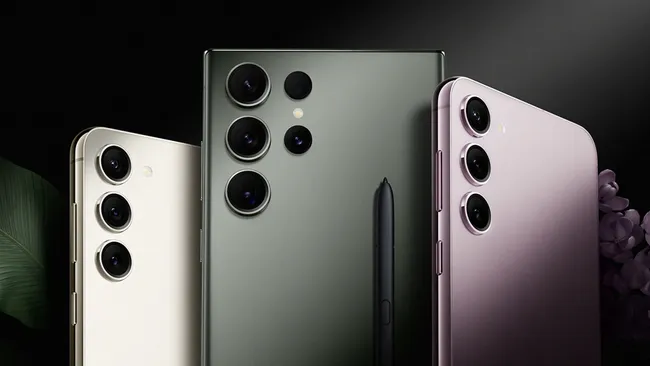
The Resurgence of Compact Flagships: A Deep Dive into the Galaxy S26 Phenomenon
Introduction
In the rapidly evolving landscape of smartphone technology, the trend has long been towards larger, more feature-packed devices. However, the Samsung Galaxy S26 has emerged as a surprising contender, defying conventional wisdom by prioritizing compactness and usability over raw specs. Priced at $899, the Galaxy S26 has faced criticism for its modest camera hardware, slower charging speeds, and incremental upgrades. Yet, it has managed to carve out a unique niche, particularly in regions like Northeast India, where practicality and mobility are highly valued.
Main Analysis: The Allure of Simplicity
The Galaxy S26's appeal lies not in its cutting-edge features but in its return to the basics of mobile design. In an era where smartphones are increasingly resembling mini-tablets, the S26 stands out for its compact form factor. Weighing just 167 grams and boasting a slim footprint, the device is a refreshing departure from the bulky "phablets" that dominate the market.
This focus on compactness is not just a matter of aesthetics; it has practical implications as well. For consumers in Northeast India, where urban mobility is a significant concern, the S26's smaller size makes it easier to use one-handed, fitting comfortably in pockets and bags. This practicality is a major selling point in a region where commuting often involves crowded public transportation and narrow streets.
The Case for Compact: Why Size Still Matters in 2026
A Return to Mobile Fundamentals
The Galaxy S26's most compelling feature isn't its processor or display; it's its size. In a market dominated by large screens and heavy devices, the S26 revives the idea of a phone as a truly mobile device. This return to fundamentals is particularly appealing to users who value convenience and portability over flashy features.
Historically, the trend towards larger screens was driven by the desire for better multimedia experiences and more productive use cases. However, as screens have grown, so have the devices themselves, leading to a trade-off in usability. The S26 challenges this trend by offering a high-quality display in a compact package, proving that size doesn't have to compromise on experience.
Regional Impact: Northeast India
Northeast India, with its dense urban areas and challenging commuting conditions, is a prime example of a region where the Galaxy S26's compact form factor shines. According to a recent survey by the Indian Institute of Urban Affairs, over 60% of commuters in major Northeast Indian cities use public transportation daily. For these users, a compact phone that can be easily used with one hand and stored in a pocket is a significant advantage.
Moreover, the region's unique cultural and economic landscape also plays a role. Northeast India is known for its vibrant street markets and bustling commercial hubs, where space is at a premium. A smaller phone is less likely to be damaged or lost in these crowded environments, adding to its practical appeal.
Examples: Real-World Use Cases
The Daily Commuter
For daily commuters, the Galaxy S26's compact size is a game-changer. Imagine a typical day for a commuter in Guwahati, the largest city in Northeast India. They might spend hours on crowded buses or trains, where a larger phone would be cumbersome to use. The S26's one-handed usability makes it ideal for checking emails, messaging, or even watching videos during the commute.
A real-world example is Ravi, a software engineer who commutes daily from his suburban home to his office in the city center. "I used to have a larger phone, but it was always a hassle to use on the bus," he says. "With the S26, I can easily hold it in one hand and use it without worrying about dropping it or bumping into other passengers."
The Street Vendor
For street vendors, who often operate in cramped spaces, a compact phone is a practical necessity. Take the case of Priya, a street food vendor in Shillong. She uses her phone to take orders, process payments, and manage her inventory. "A larger phone would just get in the way," she explains. "The S26 is perfect because it fits in my apron pocket, and I can quickly pull it out to check orders or take a call."
The compact form factor also reduces the risk of damage. In the bustling markets of Northeast India, accidents are common. A smaller phone is less likely to be knocked off a counter or dropped, making it a more reliable tool for vendors like Priya.
Conclusion
The Samsung Galaxy S26's success in defying its perceived flaws highlights an important shift in consumer preferences. In a world where bigger and faster are often seen as better, the S26 proves that there is still a place for simplicity and practicality. Its compact form factor, while not revolutionary, meets a real-world need that is often overlooked in the race for more impressive specs.
For regions like Northeast India, where mobility and practicality are paramount, the S26's design choices resonate deeply. As smartphone manufacturers continue to push the boundaries of what a phone can do, the Galaxy S26 serves as a reminder that sometimes, less is indeed more.
Looking ahead, the success of the S26 could influence future design trends. As more consumers recognize the value of compact, usable devices, we may see a resurgence of smaller flagships that prioritize practicality over raw power. This shift could have significant implications for the smartphone market, encouraging diversity in design and catering to a broader range of user needs.
In the end, the Galaxy S26's appeal is not about groundbreaking innovation but about meeting the everyday needs of its users. It's a testament to the enduring value of simplicity in a world that often prizes complexity. As we look to the future of smartphone design, the S26 stands as a compelling example of how sometimes, the most innovative thing a device can do is simply fit into our lives.