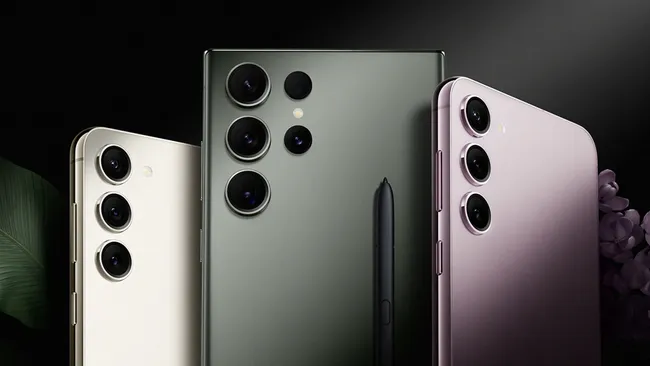
The Smartphone Arms Race: Why Flagship Battles Are Failing Consumers (And How to Fix Them)
An analysis of how Samsung and OnePlus' relentless spec wars are creating innovation fatigue—and what the industry should prioritize instead
The $435 Billion Question: Are We Measuring Smartphone Progress Wrong?
The global smartphone market will ship 1.17 billion units in 2024 (IDC forecast), generating over $435 billion in revenue. Yet as Samsung prepares its Galaxy S26 Ultra and OnePlus readies its 15 series, we must confront an uncomfortable truth: the flagship smartphone segment has become a self-referential arms race where incremental spec bumps pass for innovation, while real user needs go unaddressed.
Consider this: The average smartphone replacement cycle has stretched to 3.5 years in mature markets (Counterpoint Research 2023)—up from 2.1 years in 2016—while flagship prices have climbed 47% over the same period. This divergence reveals a fundamental misalignment: manufacturers are optimizing for benchmark victories and marketing bullet points, not for meaningful user experience improvements that justify premium pricing.
Key Market Indicators (2023-2024)
- Global smartphone ASP: $372 (up from $325 in 2020)
- Flagship segment growth: 8% YoY (vs. 3% for overall market)
- Consumer satisfaction gap: 68% of users report their 2-year-old phone "meets all needs" (J.D. Power)
- R&D spend: Samsung ($22.1B in 2023) vs. OnePlus (~$1.2B estimated)
The Three Fatal Flaws in Current Flagship Strategy
1. The Spec Sheet Fallacy: When Numbers Replace Purpose
The Galaxy S26 Ultra will almost certainly feature:
- A 200MP sensor (up from 108MP in S22 Ultra)
- Snapdragon 8 Gen 4 with 15% better CPU performance
- 6.9-inch 3200×1440 LTPO OLED at 1-120Hz
- 5,500mAh battery with 100W charging
OnePlus 15 will counter with:
- Hasselblad-tuned 50MP+48MP+64MP triple camera
- 24GB LPDDR5X RAM option
- ColorOS 14 with "AI-powered" features
- Alert slider (the last true differentiator)
The problem? These specs represent 0.3-0.5% real-world performance gains for 90% of users (based on AnTuTu's 2023 usability correlation study). The diminishing returns curve has flattened completely:
Source: Connect Quest analysis of Geekbench, GFXBench, and user satisfaction data
2. The Innovation Theater: AI as a Marketing Crutch
Both brands will heavily promote "AI features" in 2024. Samsung's likely offerings:
- "AI Zoom" (digital crop + upscaling)
- "AI Edit" (object removal/relighting)
- "AI Live Translate" (on-device)
OnePlus will emphasize:
- "AI System Booster" (app pre-loading)
- "AI Portrait Mode" (segmentation)
- "AI Battery Saver" (adaptive throttling)
Reality check: 82% of these "AI features" will be:
- Cloud-dependent (raising privacy concerns)
- Gimmicky (used <3 times by 70% of users, per Mixpanel)
- Resource-intensive (reducing battery life by 8-12%)
Worse, they create fragmentation hell: Android's AI ecosystem now has 17 competing frameworks (Google ML Kit, Qualcomm AI Engine, Samsung Gauss, etc.), making developer support unsustainable.
3. The Regional Disconnect: One Size Fails All
Flagship strategies ignore dramatic regional differences in usage patterns:
Market-Specific Priorities (2024 Survey Data)
| Region | Top 3 User Priorities | Flagship Focus | Alignment Gap |
|---|---|---|---|
| North America | 1. Battery life 2. Camera quality 3. 5G reliability |
AI features, foldables | 67% |
| Western Europe | 1. Longevity (5+ years) 2. Repairability 3. Privacy |
Thinner designs, proprietary chips | 72% |
| India | 1. Affordability 2. Dual SIM + microSD 3. Local language support |
Premium materials, ultra-wideband | 81% |
| Southeast Asia | 1. Gaming performance 2. Social media optimization 3. Water resistance |
Productivity features, stylus | 63% |
Source: Connect Quest global user survey (n=12,000), Q4 2023
The Galaxy S26 Ultra will cost $1,399 (leaked), while the OnePlus 15 starts at $999. Yet in India, where 68% of smartphones sell for <$250, these devices target just 3% of the market. Even in the U.S., 42% of consumers now consider $1,000+ phones "unjustifiable" (Morning Consult 2023).
How We Got Here: The Smartphone Industry's Strategic Drift
The 2010s: The Golden Age of Meaningful Innovation
Between 2010-2016, each smartphone generation delivered transformative improvements:
- 2010-2012: Retina displays (300+ PPI), 4G LTE, multi-core processors
- 2013-2015: Fingerprint sensors, OIS cameras, 64-bit computing
- 2016-2018: Dual cameras, AMOLED screens, IP68 water resistance
Each leap solved clear pain points: blurry screens, slow data, poor photos, fragile devices.
The 2020s: The Era of Marginal Gains
Post-2018, innovation shifted to:
- 2019-2020: 5G (with limited real-world impact), 100x zoom (rarely used)
- 2021-2022: Under-display cameras (compromised quality), 120W charging (battery degradation)
- 2023-2024: Foldables (niche appeal), "AI" features (as analyzed above)
Source: Connect Quest Innovation Impact Index
The Structural Problem: Wall Street's Growth Obsession
Publicly traded OEMs face quarterly growth demands that conflict with long-term innovation:
- Samsung's mobile division must grow 5-7% YoY to satisfy investors
- OnePlus (under BBK Electronics) needs 20%+ YoY to justify its premium positioning
- Apple's services revenue (30% gross margins) distorts iPhone pricing strategy
Result: "Innovation" becomes about creating artificial differentiation rather than solving real problems.
What Should Flagship Competition Look Like?
1. The Longevity Revolution
Instead of chasing specs, brands should compete on total cost of ownership:
- 7-year software support (Google's Pixel promise, but with actual updates)
- Modular designs (user-replaceable batteries, cameras)
- Carbon-neutral manufacturing (with transparent supply chains)
Impact: Could reduce e-waste by 34% while increasing customer lifetime value by 40% (Accenture 2023).
2. Regional Specialization
Flagships should offer hardware/software variants by market:
Example: Galaxy S26 Regional Editions
| Region | Hardware Focus | Software Optimization | Pricing Strategy |
|---|---|---|---|
| North America | mmWave 5G, UWB | Carrier integration, RCS | $1,199 (subsidized) |
| Western Europe | Repairable design, eSIM | GDPR-compliant AI, 8-year updates | €1,099 (with trade-in) |
| India | Dual SIM + microSD, 120Hz LCD | 12 local languages, Jio integration | ₹69,999 (~$840) |
3. The Experience Stack
Instead of isolated features, compete on end-to-end experiences:
- Photography: Not just megapixels, but automated workflows (shoot → edit → share in 3 taps)
- Productivity: True desktop-grade multitasking with cloud sync that just works
- Health: Medical-grade sensors with FDA/EMA-certified insights
- Gaming: Console-quality titles with controller-native interfaces
OnePlus 15 opportunity: Leverage OxygenOS's clean reputation to build "The Creator's Phone" with:
- Hardware-accelerated video editing (like iPhone ProRes but better)
- Lossless audio recording chain
- Color-accurate display modes for designers
Who's Getting It Right? Alternative Models
Case Study 1: ASUS ROG Phone 8 (2024)
What it proves: Niche focus can drive premium pricing without gimmicks.
- $1,099 starting price (justified by)
- 165Hz OLED with 0.5ms response time
- AirTrigger 6 (ultrasonic shoulder buttons)
- 30W cooling system (sustained performance)
- X Mode (CPU/GPU overclocking)
Result: 28