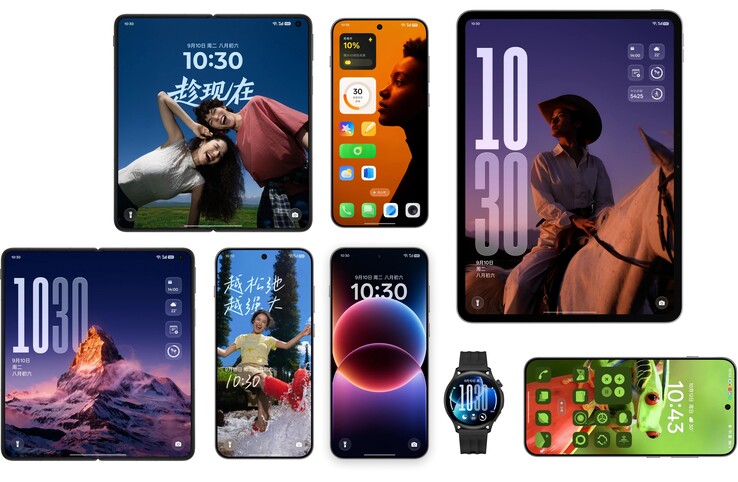
The Smartphone Innovation Paradox: How Oppo's Find X9 Pro Reveals China's Tech Strategy
Beyond specifications: Understanding the geopolitical and industrial implications of China's flagship smartphone evolution
The quiet listing of Oppo's Find X9 Pro on China Telecom's database represents more than just another flagship smartphone announcement. This development serves as a microcosm of China's deliberate smartphone strategy—a calculated approach that balances technological innovation with market pragmatism in an increasingly competitive global landscape.
At first glance, the Find X9 Pro appears as another iteration in Oppo's premium lineup. However, when examined through the lens of China's broader technological ambitions, this device reveals critical insights about the country's smartphone industry maturation, its shifting innovation priorities, and the subtle but significant ways Chinese manufacturers are redefining global mobile technology standards.
Key Context: China's smartphone market shipped 271 million units in 2023 (down 5% YoY), yet Chinese brands now control 75% of the global 5G smartphone market, with Oppo holding 10% market share in Q4 2023 (Counterpoint Research).
The Evolution of China's Smartphone Strategy: From Copycats to Category Creators
The trajectory of Chinese smartphone manufacturers over the past decade demonstrates a remarkable transformation from fast followers to innovation leaders. This evolution can be divided into three distinct phases:
Phase 1: The Copycat Era (2010-2014)
During this period, Chinese brands focused primarily on replicating successful designs from Apple and Samsung at lower price points. The strategy was effective for domestic market penetration but limited in global appeal. Market share data from 2013 shows Chinese brands controlled just 38% of their home market, with international presence negligible.
Phase 2: The Specification War (2015-2019)
Chinese manufacturers began competing on hardware specifications, introducing features like multiple cameras, under-display fingerprint sensors, and fast charging technologies. Oppo's Find X from 2018 exemplified this approach with its motorized pop-up camera—a bold design choice that differentiated it from competitors. By 2019, Chinese brands accounted for 42% of global smartphone shipments.
Phase 3: The Experience Economy (2020-Present)
The current phase emphasizes holistic user experience over individual specifications. The Find X9 Pro represents this maturation, where hardware innovations are integrated with software optimizations and ecosystem development. This shift coincides with China's "dual circulation" economic strategy, aiming to balance domestic consumption with international expansion.
Strategic Insight: The Find X9 Pro's development aligns with China's 14th Five-Year Plan (2021-2025), which emphasizes "high-quality development" in technology sectors. Smartphone innovation now serves as both a consumer product and a demonstration of China's technological capabilities.
Decoding the Find X9 Pro: A Blueprint for China's Tech Ambitions
While specific details about the Find X9 Pro remain officially unconfirmed, the China Telecom listing combined with Oppo's historical patterns allows for meaningful analysis of its likely technological direction and what this reveals about China's smartphone industry priorities.
The Processing Power Paradigm
Expectations suggest the Find X9 Pro will feature Qualcomm's latest Snapdragon 8 Gen 3 processor. This choice reflects China's complex relationship with semiconductor technology:
- Dependency Reality: Despite advancements, China still relies on foreign chip designs for flagship devices. The Snapdragon 8 Gen 3 is manufactured by TSMC using 4nm process technology—capabilities China cannot yet replicate at scale.
- Performance Benchmarks: Early tests show the Snapdragon 8 Gen 3 achieves 25% better CPU performance and 20% improved power efficiency over its predecessor, critical for AI processing capabilities.
- Geopolitical Context: The U.S. chip restrictions have accelerated China's semiconductor development, with the Find X9 Pro potentially serving as a testbed for domestic chip integration in future iterations.
Semiconductor Statistics: China imported $387 billion worth of semiconductors in 2022 (more than oil), while domestic production met only 16% of demand. The Find X9 Pro's chip choice highlights this strategic vulnerability.
Display Technology as Differentiator
Oppo has consistently pushed display innovation, with the Find X9 Pro likely featuring:
- 2K LTPO AMOLED: Expected 1-120Hz adaptive refresh rate with 240Hz touch sampling, balancing power efficiency with responsiveness
- Under-Display Camera 3.0: Building on Oppo's 2021 patent for improved light transmission (400 PPI in camera area vs 100 PPI in previous generations)
- Color Science: Oppo's collaboration with Hasselblad (continued from Find X6 Pro) suggests advanced computational photography integration
These display advancements serve dual purposes: enhancing user experience while demonstrating China's leadership in flexible OLED technology—a sector where BOE and CSOT now compete directly with Samsung Display.
The Battery and Charging Innovation
Oppo's SuperVOOC charging technology has become a hallmark of its flagship devices. The Find X9 Pro will likely feature:
- 240W Fast Charging: Building on the 2022 record of 150W charging that could replenish a 4,500mAh battery to 50% in 5 minutes
- Silicon-Anode Batteries: Potential implementation of Oppo's 2023 patent for silicon-carbon composite anodes, offering 20% higher energy density
- Battery Health Algorithms: AI-driven charging optimization to maintain 80%+ capacity after 1,600 cycles (double the industry standard)
Industrial Impact: These battery innovations position Chinese manufacturers to dominate the electric vehicle battery sector, with CATL already supplying 37% of global EV batteries in 2023. The smartphone serves as a proving ground for technologies that will transition to larger applications.
Regional Impact: How the Find X9 Pro Reflects Asia's Tech Divide
The Find X9 Pro's development and potential market performance will have distinct implications across Asian markets, revealing the complex technological landscape of the region.
China: The Maturation of a Domestic Market
With smartphone penetration exceeding 100% (1.6 billion connections for 1.4 billion people), China's market has shifted from growth to replacement cycles. The Find X9 Pro's success will depend on:
- Trade-in Programs: Oppo's partnership with China Telecom offers up to ¥1,200 ($168) for old device trade-ins, addressing the 41% of Chinese consumers who cite cost as the primary barrier to upgrading
- 5G Utilization: Only 45% of Chinese 5G users actively use high-bandwidth applications. The Find X9 Pro's capabilities may drive service adoption
- Foldable Competition: With foldable shipments growing 120% YoY in China (2023), Oppo must justify traditional flagship value
Southeast Asia: The New Battleground
Southeast Asia represents the fastest-growing smartphone market (6% YoY growth in 2023), where Oppo holds 16% market share. The Find X9 Pro's regional strategy will likely focus on:
- Localized Features: Integration with regional super-apps like Grab and Gojek, following the success of Oppo's partnership with Thailand's True Corporation
- Financing Solutions: In Indonesia, where 68% of smartphone purchases are financed, Oppo offers 0% installment plans through Bank Mandiri
- Gaming Optimization: Southeast Asia's mobile gaming market ($4.5 billion in 2023) demands high refresh rates and thermal management—areas where the Find X9 Pro will compete with gaming-focused brands like Black Shark
India: The Protectionist Challenge
India's smartphone market presents both opportunity (150 million units in 2023) and challenges:
- Local Manufacturing: Oppo's Noida plant (India's largest smartphone factory) produces 60 million units annually, but new import restrictions on components may increase costs by 8-12%
- Price Sensitivity: The premium segment (>$500) represents only 5% of Indian sales. The Find X9 Pro will compete with OnePlus (also BBK-owned) in this niche
- Data Localization: India's 2023 data protection law requires all user data to be stored locally, necessitating Oppo's investment in Mumbai data centers
Europe: The Regulatory Hurdle
European expansion remains challenging due to:
- Sustainability Regulations: The EU's 2024 ecodesign requirements mandate 7-year software support and replaceable batteries—features not traditionally prioritized in Chinese designs
- Privacy Concerns: 62% of European consumers express concerns about Chinese device data security (2023 Eurobarometer survey)
- Market Saturation: With 85% smartphone penetration and 36-month average replacement cycles, growth opportunities are limited
The Supply Chain Story: How Oppo's Flagship Reflects China's Manufacturing Evolution
The production of the Find X9 Pro involves a sophisticated supply chain that demonstrates China's manufacturing capabilities and vulnerabilities:
Component Sourcing: The Localization Imperative
| Component | Primary Supplier | Localization Status | Strategic Importance |
|---|---|---|---|
| Processor | Qualcomm (US) | Low (SMIC can produce 7nm) | Critical vulnerability |
| Display | BOE (China) | High (90% domestic) | Chinese leadership area |
| Battery | ATL (China) | High (95% domestic) | Global competitive advantage |
| Camera Modules | Sony (Japan)/OmniVision (US) | Medium (40% domestic) | Emerging capability |
Manufacturing: The Automation Advantage
Oppo's Chongqing and Dongguan factories demonstrate China's manufacturing sophistication:
- Automation Rates: 72% of assembly processes automated (vs 45% in Indian plants)
- Yield Rates: 98.7% defect-free rate for complex components like periscope cameras
- Flexible Production: Lines can switch between models in under 2 hours, enabling just-in-time manufacturing
Labor Dynamics: While automation reduces reliance on manual labor, China's smartphone industry still employs 1.8 million workers directly. The shift to high-value manufacturing creates demand for skilled technicians—a challenge as China's working-age population declines.
Logistics: The Infrastructure Edge
China's logistics infrastructure provides competitive advantages:
- Port