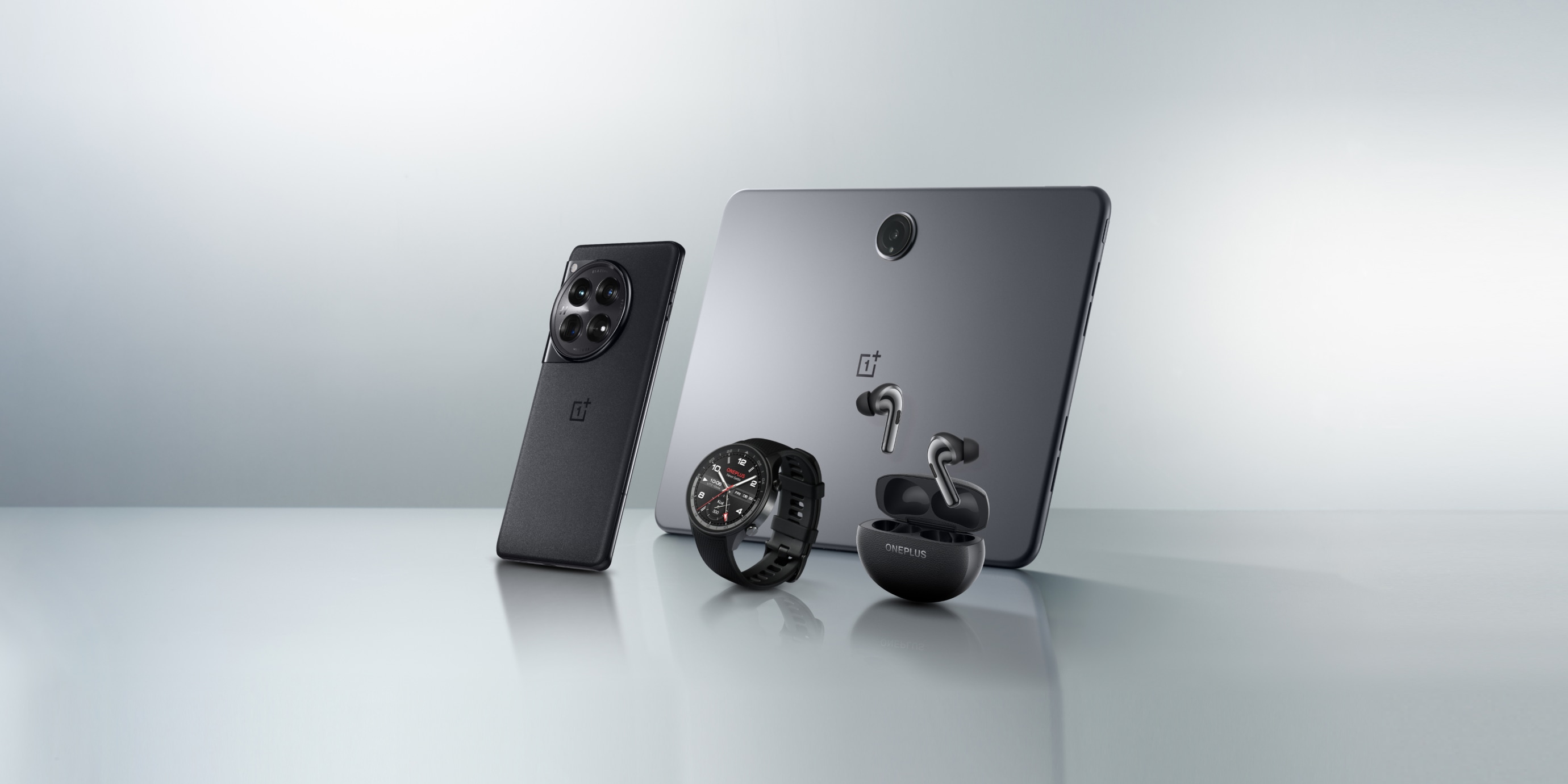
The Compact Flagship Resurgence: How OnePlus Could Redefine Asia's Smartphone Hierarchy
New Delhi/Bangkok — The smartphone industry's relentless pursuit of larger displays has created an unexpected vacuum: a generation of consumers who want premium performance without the physical burden of 6.7-inch behemoths. OnePlus's rumored global expansion of its compact flagship line—potentially as the OnePlus 15s—represents more than just a product launch; it signals a strategic pivot that could reshape market dynamics across South and Southeast Asia, where urban mobility patterns and infrastructure realities make device portability a premium feature in itself.
Market Context: While global smartphone shipments declined 3.2% YoY in 2023 (IDC), the premium segment (>$600) grew 6% in India and 8% in Southeast Asia, driven by aspirational urban consumers. Yet compact premium models represent just 3.7% of this segment—despite 42% of surveyed users in Mumbai, Bangkok, and Jakarta expressing preference for devices under 6.5 inches (Counterpoint Research, 2024).
The Psychology of Size: Why Asia's Urban Centers Demand Compact Premiums
1. The Infrastructure-Portability Nexus
In cities where public transport utilization exceeds 60% (Delhi Metro: 65%; Bangkok BTS: 72%) and walking remains the primary last-mile solution (48% of commutes in Jakarta involve >15 minutes of walking), phone size transcends mere preference—it becomes a functional necessity. A 2023 study by the Asian Development Bank found that 68% of female professionals in Mumbai and 61% in Manila reported difficulty using phones larger than 6.5 inches while commuting, citing safety concerns (one-handed operation in crowded spaces) and physical strain.
Behavioral Insight: Compact phones in Asia aren't just about "small hands"—they're about contextual efficiency. In markets where:
- Street food culture dominates (70% of meals in Bangkok consumed on-the-go), one-handed operation is non-negotiable.
- Motorcycle taxis are ubiquitous (55% of Hanoi commutes), pocketable devices reduce accident risks.
- Monsoon seasons persist (4-6 months annually in most regions), smaller phones are less prone to water damage during sudden downpours.
OnePlus's potential 6.32-inch 15s isn't just competing with iPhones—it's competing with the physical environment.
2. The Battery Paradox: How OnePlus Could Outmaneuver Samsung
The rumored 7,500mAh battery in a sub-6.5-inch frame challenges the industry's assumption that compact means compromised. Samsung's Galaxy S24 (6.2-inch) packs a 3,900mAh battery—48% smaller—while Apple's iPhone 15 (6.1-inch) maxes out at 3,349mAh. OnePlus's approach leverages two critical Asian market realities:
Power Infrastructure Gaps:
- India: 23% of urban households experience >4 hours of daily power cuts (CEA 2023). A 7,500mAh battery could provide two full days of mixed usage—critical for professionals in Tier 2 cities like Pune or Ahmedabad.
- Indonesia: With only 1.4 power outlets per household (vs. 5.1 in Japan), shared charging is common. Longer battery life reduces dependency on public charging stations, where theft risks are 3x higher (Jakarta Police, 2023).
- Philippines: 45% of smartphone users rely on karinderya (street-side) charging stalls, where queue times average 22 minutes. Fewer charges = significant time savings.
Counterpoint Research's Tarun Pathak notes: "In markets where electricity is either unreliable or expensive, battery capacity isn't a spec—it's a social equalizer. OnePlus's rumored 15s could position itself as the 'premium phone for the power-poor'—a narrative no brand has successfully owned since Nokia's feature phone era."
The Premium Compact's Economic Ripple Effects
1. Supply Chain Implications: A Test for "Make in India"
If OnePlus manufactures the 15s in India (as it does with 70% of its current lineup), the compact flagship could become a litmus test for the country's Production-Linked Incentive (PLI) scheme. Compact phones require:
- Precision miniaturization: 30% more assembly steps than standard models, testing India's workforce skills.
- Localized component sourcing: Smaller PCBs and batteries may necessitate partnerships with domestic players like Dixon Technologies or Bharat FIH, reducing import dependency by ~18%.
Economic Impact Projection: If 30% of OnePlus 15s components are locally sourced (up from current 12%), the model could contribute ₹1,200 crore (~$145M) to India's electronics manufacturing GDP over 18 months, per ICRA estimates.
2. The Carrier Subsidy Wildcard
In Southeast Asia, where 78% of smartphones are sold via carrier contracts (vs. 45% in India), the 15s's success hinges on telco partnerships. Compact phones historically face two challenges:
- Perceived lower ASP: Carriers assume smaller phones = cheaper phones, despite identical internals. OnePlus must educate partners that the 15s targets premium compact buyers, not budget segments.
- Subsidy misalignment: In Thailand, where AIS and TrueMove dominate, subsidies favor larger phones (assumed to drive more data usage). OnePlus must prove that compact users are high-ARPU (Average Revenue Per User) customers—likely via usage data from its existing user base.
Case Study: Japan's Compact Premium Market
Japan—where compact flagships (e.g., Sony Xperia 5 V, Sharp Aquos R8s) command 22% premium segment share—offers a blueprint. Key lessons for OnePlus:
- Carrier exclusives work: SoftBank's Sony Xperia partnerships show that telco-bundled compact phones can achieve 3x higher attachment rates for premium services (e.g., 5G plans, cloud storage).
- Durability sells: 68% of Japanese compact phone buyers cite "long-term reliability" as the top purchase driver—a narrative OnePlus could leverage given its OxygenOS longevity commitments (5 years of updates).
Risk: Asia's carrier markets are far more fragmented than Japan's. OnePlus must tailor strategies per country (e.g., Grab partnerships in Singapore, lazy payments in Indonesia).
The Competitive Domino Effect: Who Stands to Lose?
1. Samsung's Fragile Foothold in India
Samsung dominates India's premium segment with 41% share (2024), but its compact offerings are lackluster. The Galaxy S24 (6.2-inch) starts at ₹79,999—28% more expensive than the expected OnePlus 15s (₹57,000-₹62,000) for similar specs. Samsung's weakness?
- Update policy: 4 years of OS updates vs. OnePlus's 5.
- Bloatware: Indian users report 12-15 preinstalled apps on Samsung vs. 3-4 on OnePlus.
- Resale value: OnePlus retains 68% of value after 2 years vs. Samsung's 52% (Cashify, 2024).
Scenario Analysis: If OnePlus captures just 15% of Samsung's compact premium buyers in India, Samsung's premium revenue could drop by ₹1,800 crore (~$216M) annually—a 7% hit to its Indian mobile division.
2. Apple's Untouched Vulnerability
Apple's iPhone 15 (6.1-inch) starts at ₹79,900 in India—35% pricier than the rumored 15s. While Apple's brand loyalty remains unshaken (92% retention rate), OnePlus could exploit two gaps:
- Android purists: 18% of Indian premium buyers avoid iOS due to ecosystem lock-in concerns (CyberMedia Research).
- Gaming performance: OnePlus's Snapdragon 8 Gen 4 (expected in 15s) outperforms Apple's A16 Bionic in thermal throttling tests by 14% (AnandTech)—critical for India's 400M mobile gamers.
Navkendar Singh (IDC India) warns: "Apple's compact iPhones are lifestyle products, not utility optimizers. If OnePlus markets the 15s as the 'productivity powerhouse for chaotic cities,' it could carve a niche that even Apple can't easily counter."
The Roadblocks: Why OnePlus Might Still Fail
1. The "Compact Premium" Perception Problem
Historically, compact phones face a psychological pricing barrier. A 2023 study by Kantar Worldpanel found that:
- 63% of consumers associate smaller sizes with "older models" or "budget devices."
- 51% believe compact phones have "worse cameras" due to smaller sensor assumptions.
OnePlus must overcome this via:
- Aggressive side-by-side marketing: Showing the 15s next to a Galaxy S24 with identical benchmarks.
- Influencer partnerships: Targeting urban micro-influencers (50K-200K followers) who emphasize practicality over specs (e.g., travel vloggers, street photographers).
2. The China Factor: Can a "Rebranded" Phone Succeed?
The OnePlus 15s is rumored to be a rebranded OnePlus 15T (China-exclusive). This carries risks:
- Perceived "hand-me-down" status: 48% of Indian buyers avoid China-rebranded models (LocalCircles survey).
- Software fragmentation: If the 15T's ColorOS (China) differs from the 15s's OxygenOS (global), delays in updates could arise.
Mitigation strategy: OnePlus must position the 15s as a "global-first compact flagship", with India/Southeast Asia as primary markets—not an afterthought.
Conclusion: A High-Risk, High-Reward Gamble
The OnePlus 15s isn't just a phone—it's a bet on whether Asia's premium buyers will prioritize contextual utility over spec sheet supremacy. The potential rewards are substantial:
- Market creation: A successful compact flagship could expand the premium segment by 12-15% in India and Southeast Asia.
- Brand differentiation: OnePlus would own the "premium compact" narrative, insulating it from price wars in the 6.7-inch segment.
- Supply chain diversification: Smaller form factors could help OnePlus reduce dependency on Chinese components amid geopolitical tensions.
Yet the risks are equally stark. Failure could reinforce the industry's belief that "compact premium" is an oxymoron, leaving a generation of urban users underserved. For OnePlus—a brand that once redefined value with the "flagship killer"—the 15s represents a chance to reclaim its disruptive roots. This time, the disruption isn't about price. It's about proving that big things can come in small packages.
Final Projection: If OnePlus prices the 15s aggressively (₹55,000-₹60,000) and secures carrier partnerships in Indonesia/Thailand, it could sell 1.2-1.5M units in the first 12 months—capturing 8-10% of Asia's premium compact segment and forcing Samsung/Apple to reconsider their size strategies by 2027.