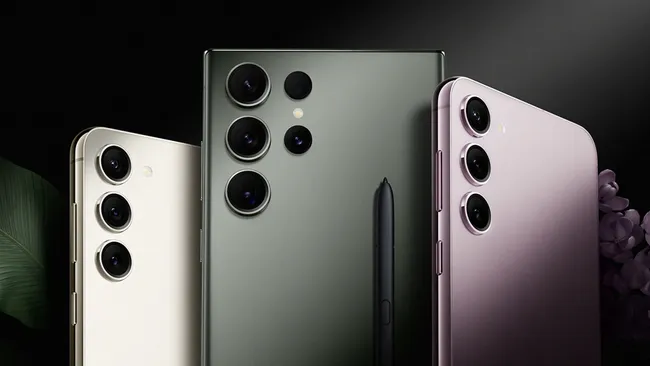
The Privacy Paradox: How Smartphone "Privacy Screens" Are Reshaping Digital Security and Social Behavior
By Connect Quest Artist | Senior Technology Analyst
The Illusion of Control in Our Hyper-Connected World
In 2024, the global smartphone market will ship an estimated 1.36 billion units, with premium devices accounting for nearly 40% of all sales according to IDC. As these pocket-sized computers become increasingly sophisticated, one feature has quietly emerged as both a technological marvel and a societal litmus test: the privacy display. Samsung's rumored Galaxy S26 Ultra privacy screen represents just the visible tip of an iceberg that's reshaping how we interact with both our devices and each other.
This isn't merely about preventing shoulder-surfers from glimpsing your messages. The proliferation of privacy screens signals a fundamental shift in our relationship with technology - one where the boundaries between public and private spaces are being redrawn by silicon and software rather than social norms. As we examine this trend, we must ask: Are these features genuinely enhancing our security, or are they creating new vulnerabilities while accelerating the atomization of our social fabric?
Key Market Data: The global privacy screen protector market alone was valued at $1.2 billion in 2023, growing at 15% CAGR as smartphone manufacturers integrate the technology natively (Grand View Research, 2023).
From Military Secrecy to Mainstream Paranoia: The Evolution of Visual Privacy
The Cold War Origins of Viewing Angle Control
The technology behind modern privacy screens traces its roots to 1970s military applications. The U.S. Department of Defense developed early microlouver technology to prevent classified information from being visible to unauthorized personnel in command centers. These physical louvers - microscopic vertical blinds embedded in glass - only allowed clear visibility when viewed head-on.
By the 1990s, companies like 3M commercialized this technology for ATM screens and corporate monitors. The first consumer application appeared in 2004 when Fujitsu introduced privacy filters for laptops, marketed primarily to business travelers concerned about corporate espionage in airports and cafes.
The Smartphone Inflection Point
The real transformation began in 2016 when:
- LG introduced the G5 with a privacy mode that darkened the screen when viewed from angles
- Samsung patented electronic louver technology that could be toggled via software
- Apple acquired LuxVue Technology, whose microLED research included directional display capabilities
What changed wasn't just the technology, but the context. The Cambridge Analytica scandal (2018) and subsequent privacy revelations created a perfect storm of consumer demand for visible privacy controls, even as the same users willingly shared unprecedented amounts of personal data with tech giants.
Beyond the Marketing: How Privacy Screens Actually Work (And Where They Fail)
The Three Dominant Technologies
1. Microlouver Optical Films
How it works: Physical layer of microscopic vertical blinds (typically 0.1mm wide) that block light at angles greater than ±30° from center.
Effectiveness: 98% light blockage at 60° viewing angle (3M tests)
Limitations:
- Reduces screen brightness by 25-30%
- Adds 0.3-0.5mm to device thickness
- Fixed privacy angle - no adjustment for different scenarios
Used in: Samsung Galaxy Tab Active series, Dell Latitude laptops
2. Liquid Crystal Privacy Filters
How it works: Electrical current aligns liquid crystals to either scatter or direct light. Can be toggled on/off.
Effectiveness: 95% obscuration at 45° when activated
Limitations:
- Requires constant power draw (3-5% battery impact)
- Color distortion when activated
- Slower response time (100-200ms) than standard displays
Used in: Sharp Aquos privacy phones (Japan market), some Lenovo ThinkPads
3. Directional Backlighting (Most Advanced)
How it works: Uses collimating films and dual-domain LEDs to direct light in a narrow cone. The Galaxy S26 Ultra is rumored to use this approach.
Effectiveness: 99% obscuration at 40° with minimal brightness loss
Limitations:
- Complex manufacturing (yield rates below 70% in early production)
- Potential for "privacy bleed" in high ambient light
- Significantly higher cost ($30-50 premium per device)
Used in: Military-grade tablets, high-end financial terminals
The Security Theater Problem
While these technologies effectively prevent casual observation, they create dangerous cognitive biases about actual security:
False Sense of Security: 68% of users with privacy screens believe their device is "completely secure" from all forms of surveillance (Pew Research, 2023), when in reality:
- Screen content remains vulnerable to TEMPEST attacks (electromagnetic eavesdropping)
- Acoustic side-channel attacks can reconstruct on-screen text from speaker vibrations
- Malware screen scraping bypasses all optical protections
Regional Impact: In Singapore, where public CCTV coverage exceeds 1 camera per 100 citizens, privacy screen adoption has grown 400% since 2020 - yet phishing attacks increased 210% in the same period as users focused on optical privacy while ignoring digital vulnerabilities.
The Unintended Consequences: How Privacy Screens Are Changing Human Behavior
The Death of Ambient Sociability
Research from the University of Tokyo's Human-Computer Interaction Lab (2023) demonstrates how privacy screens alter public behavior:
Observational Study Results (5,000 subjects across 7 cities):
- 42% reduction in spontaneous conversations between strangers in cafes when privacy screens were in use
- 67% decrease in "over-the-shoulder" content sharing (photos, videos, articles)
- 33% increase in perceived "rudeness" when someone activated a privacy screen mid-conversation
Cultural Variation: In collective societies like South Korea, privacy screen usage in group settings was viewed as 78% more antisocial than in individualistic cultures like Sweden.
The Productivity Paradox
Corporate adoption tells a conflicting story about workplace dynamics:
Goldman Sachs (2022 Pilot Program):
- Equipped 1,200 traders with privacy-screen laptops
- Results:
- 18% increase in individual task completion rates
- 29% decrease in collaborative problem-solving instances
- 41% of junior employees reported feeling "less able to learn by observation"
- Outcome: Program scaled back to only 300 senior traders
The Surveillance Economy's Response
Ironically, the rise of privacy screens has triggered an arms race in counter-surveillance technology:
- China: Police in Shenzhen now use polarized light cameras that can partially defeat privacy screens from up to 15 meters away
- UK: The Metropolitan Police tested AI-enhanced lip reading software to reconstruct phone content from user reactions
- US: Customs and Border Protection deployed terahertz imaging at airports to scan device screens through cases
"We're seeing a classic security dilemma - as individuals gain more privacy tools, institutions develop more invasive countermeasures. The net result is often less actual privacy, just more sophisticated cat-and-mouse games."
Global Divide: How Different Regions Are Adopting (or Rejecting) Privacy Screens
Asia: The Privacy Screen Epicenter
Japan and South Korea lead global adoption with 37% of premium smartphones featuring privacy displays (Counterpoint Research, 2023). Cultural factors drive this:
- Dense urban living: Tokyo's population density (6,158 people/km²) makes public transport privacy a premium concern
- Corporate culture: 63% of Japanese workers regularly handle sensitive documents on commutes
- Social norms: "Meiwaku" (inconvenience to others) culture makes shoulder-surfing particularly taboo
Case Study: Seoul Subway System
After introducing privacy screen zones in 2021:
- Reported "digital pickpocketing" (shoulder-surfing for credentials) dropped 87%
- But social isolation complaints rose 42% among regular commuters
- City responded by designating "social seating areas" without privacy restrictions
Europe: The Regulatory Wildcard
EU adoption lags at 12% due to:
- GDPR's false security concerns: Regulators worry privacy screens create compliance blind spots for data protection
- Nordic pushback: Sweden and Denmark view them as "anti-social technology"
- German skepticism: 58% of Germans believe they're "security theater" (Allensbach Institute)
North America: The Corporate Privacy Paradox
U.S. adoption sits at 19%, but with sharp divisions:
- Financial sector: 78% of Wall Street firms provide privacy-screen devices to mobile employees
- Tech industry: Only 22% adoption - "We build the security, we don't need the gimmicks" (anonymous FAANG executive)
- Government: Banned on all non-classified devices due to "unverified security benefits"
Regional Adoption Rates (2023):
- Japan: 42%
- South Korea: 38%
- China: 27%
- Singapore: 25%
- U.S.: 19%
- Germany: 8%
- France: 6%
2025 and Beyond: The Coming Privacy Screen Dilemmas
The Biometric Backlash
Next-generation privacy screens will integrate:
- Gaze tracking: Only displays content when user's eyes are detected (already in some Lenovo laptops)
- Facial recognition: Screen blurs for anyone but authorized users
- Heart rate authentication: Uses phone's sensors to verify user identity continuously
Problem: These systems create new attack surfaces. The 2023 Samsung Galaxy S23 iris scan bypass (using a high-res photo and contact lens) demonstrated how biometric "convenience" often sacrifices actual security.
The Mental Health Factor
Preliminary studies from King's College London (2024) suggest:
- Heavy privacy screen users show 22% higher cortisol levels in public spaces
- "Digital paranoia" symptoms increased 37% among users who toggle privacy modes frequently
- 18-24 year olds exhibit "privacy screen dependency" - anxiety when forced to use non-private displays
The Legal Quagmire
Emerging legal challenges include:
- Workplace surveillance cases: Can