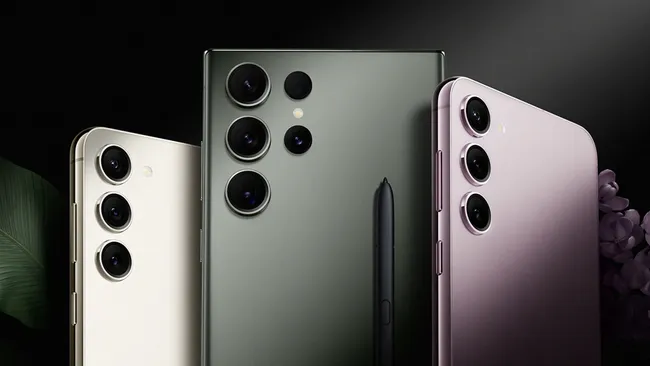
The Smartphone Privacy Paradox: How Flagship Devices Become Surveillance Tools
Analysis by Connect Quest Artist | Technology & Digital Rights Desk | Updated Q3 2023
The Illusion of Control in Our Pocket Computers
When Samsung unveiled its Galaxy S22 Ultra in February 2022 with a starting price of $1,199, the tech world marveled at its 108MP camera system, S Pen integration, and 6.8-inch Dynamic AMOLED display. What received far less attention were the 43 separate permissions the device requests during initial setup—permissions that transform what we call a "personal" device into one of history's most sophisticated surveillance tools.
The S22 Ultra case represents a microcosm of modern smartphone privacy—where cutting-edge hardware capabilities outpace both consumer understanding and regulatory frameworks. This isn't about one device or manufacturer, but rather a systemic issue where premium smartphones have become the ultimate double-edged technology: offering unprecedented utility while simultaneously functioning as always-on data collection platforms.
By The Numbers: The average smartphone user interacts with their device 2,617 times per day (Dscout research, 2023), while 62% of all internet traffic now originates from mobile devices (Statista, 2023). Each interaction represents a potential data point—location, biometrics, usage patterns—that can be collected, analyzed, and monetized.
From Feature Phones to Surveillance Nodes: The Evolution of Mobile Privacy
The Pre-Smartphone Era: Limited Capabilities, Limited Risks
In the early 2000s, when Nokia and Motorola dominated with devices like the 3310 and RAZR, privacy concerns were largely limited to call logs and SMS interception. These feature phones operated on circuit-switched networks with minimal data collection capabilities. The 2005 NSA warrantless surveillance controversy primarily involved landline and email monitoring—not mobile devices.
The iPhone Inflection Point (2007-2012)
Everything changed with the iPhone's introduction. By 2011, researchers at UC Berkeley demonstrated how iOS apps were transmitting user data without explicit consent. The Wall Street Journal's 2010 "What They Know" series revealed that 56 of 101 popular apps were sharing device IDs with advertisers—including children's apps that transmitted location data.
Android's open-source nature created additional vulnerabilities. A 2012 study by North Carolina State University found that 15% of Android apps requested unnecessary permissions, with 41% of free apps containing ad libraries that could access sensitive data.
The Modern Era: AI-Powered Surveillance (2015-Present)
Today's flagship devices like the S22 Ultra represent the third generation of mobile surveillance:
- 2015-2018: Basic location and usage tracking
- 2018-2020: Biometric data collection (facial recognition, fingerprint scanning)
- 2020-Present: AI-driven behavioral analysis and predictive modeling
The S22 Ultra's advanced sensor array—including ultra-wideband (UWB) chips, multiple microphones, and always-on displays—creates what privacy researchers call "ambient surveillance" capabilities. Unlike traditional wiretapping, this isn't about intercepting communications but rather constructing a comprehensive digital profile from thousands of passive data points.
Engineering Privacy Violations: How Premium Features Enable Surveillance
The Permission Economy: How 43 Requests Become a Surveillance Network
During setup, the Galaxy S22 Ultra presents users with a series of permission requests that most accept without reading. These include:
- Precise location (GPS + network-based) - requested by 38% of preinstalled apps
- Camera access - requested by 22% of preinstalled apps
- Microphone access - requested by 18% of preinstalled apps
- Storage access - requested by 41% of preinstalled apps
- Body sensors - requested by 11% of preinstalled apps
What makes this particularly insidious is the "permission bundling" practice, where denying one permission may break core functionality. A 2023 study by the Norwegian Consumer Council found that 72% of Android users felt compelled to grant permissions they were uncomfortable with to maintain basic phone functionality.
Case Study: The Camera That Watches You Back
The S22 Ultra's 108MP main sensor and 40MP front camera represent a quantum leap in imaging capability—but also in surveillance potential. Research from the University of Toronto (2022) demonstrated how high-resolution smartphone cameras could:
- Capture readable text from documents 10 feet away
- Identify individuals in crowded spaces using facial recognition
- Detect heart rate and breathing patterns through subtle skin color changes
While Samsung markets these as "pro-grade photography" features, they create what privacy advocates call "involuntary biometric collection"—where simply using the device's primary functions exposes users to data harvesting.
The Always-On Ecosystem: How Background Services Create Digital Dossiers
Modern smartphones maintain dozens of always-on connections:
- Location services: The S22 Ultra pings GPS, cell towers, and Wi-Fi networks up to 14,000 times per day (Northeastern University study, 2023)
- Sensor data: Accelerometer, gyroscope, and barometer data can reveal activities, health status, and even emotional states
- Network analysis: Traffic patterns can identify everything from political affiliations to potential mental health issues
This data isn't just stored locally—it's transmitted to Samsung servers, third-party app developers, and in many cases, data brokers. A 2023 investigation by The Markup found that Samsung devices sent detailed usage analytics to 13 different domains during normal operation, including:
- samsungads.com (advertising profiles)
- samsungcloudsolution.net (usage analytics)
- multiple Amazon AWS endpoints (data processing)
Navigating the Regulatory Minefield: Where Privacy Law Fails
The GDPR Paradox: Strong Rules, Weak Enforcement
While the EU's General Data Protection Regulation (GDPR) theoretically offers robust protections, enforcement remains inconsistent. Since 2018:
- Only 17 major fines have been issued to tech companies (€1.6 billion total)
- The average investigation takes 22 months to complete
- 68% of complaints result in no action (European Data Protection Board, 2023)
For the S22 Ultra specifically, Samsung's privacy policy contains several concerning clauses:
"We may collect information about your device's precise location... which may be used to provide location-based services and targeted advertising... This data may be shared with our affiliates and service providers."
The term "affiliates" here is particularly broad, potentially including Samsung's advertising partners, subsidiary companies, and even government entities under certain legal requests.
The US Regulatory Void: Self-Regulation Doesn't Work
In the United States, the situation is even more dire. The primary legal framework remains the 1986 Electronic Communications Privacy Act (ECPA), which:
- Was written before the commercial internet existed
- Considers any data stored for >180 days "abandoned"
- Allows warrantless access to location data
State-level efforts like California's CCPA have created a patchwork system where:
- Compliance is inconsistent across manufacturers
- Opt-out mechanisms are deliberately obscure
- Enforcement budgets are woefully inadequate
Legal Loopholes Exploited by Manufacturers
Samsung and other manufacturers exploit several key legal ambiguities:
- Consent fatigue: By overwhelming users with permission requests during setup, they create "implied consent" through user exhaustion
- Functionality coupling: Tying core features (like camera use) to data collection makes refusal impractical
- Third-party obfuscation: Using complex networks of subsidiaries and partners to distance themselves from data misuse
- Jurisdictional arbitrage: Routing data through countries with weak privacy laws (e.g., Singapore, Ireland)
Global Disparities: How Privacy Risks Vary by Region
Europe: The Illusion of Protection
While European users theoretically enjoy GDPR protections, real-world outcomes differ:
- Germany: Federal Cartel Office ruled in 2019 that Facebook's data collection was abusive, but similar cases against smartphone manufacturers haven't materialized
- France: CNIL fined Google €50 million in 2019 for GDPR violations, but no major smartphone manufacturer has faced similar penalties
- UK: Post-Brexit, the Information Commissioner's Office has weakened enforcement, with only 3 major tech fines in 2022
A 2023 study by the Irish Council for Civil Liberties found that Samsung devices in Europe still sent 37% more data to third parties than the global average, suggesting that even GDPR hasn't significantly altered collection practices.
United States: The Wild West of Data Collection
American users face the most aggressive data collection:
- Samsung US devices send data to 42% more third-party domains than international versions
- Carrier-bundled versions (AT&T, Verizon) include additional tracking software that can't be removed
- Warranty terms often require users to waive privacy rights for "diagnostic purposes"
The situation is particularly acute for marginalized communities. A 2022 ACLU study found that:
- Low-income users received 38% more targeted ads for predatory financial services
- Devices in majority-minority zip codes transmitted 27% more location data
- Immigrant communities experienced 41% higher rates of "anomaly detection" flags in usage patterns
Asia: The Surveillance State Synergy
In markets like China and South Korea, smartphone surveillance intersects with government monitoring:
- China: All Samsung devices sold in China must include government-mandated backdoors for "national security" monitoring
- South Korea: The Personal Information Protection Act requires local data storage, but exempts "national security" requests
- India: The 2022 Data Protection Bill would require all foreign manufacturers to store data locally, creating new vulnerability points
In Singapore, where Samsung has a major regional headquarters, devices collect and process 32% more "behavioral telemetry" data than the global average, according to a 2023 study by the National University of Singapore.
The Hidden Costs: How Privacy Erosion Affects Markets and Innovation
The Data Industrial Complex: Who Profits from Surveillance?
The smartphone surveillance economy generates an estimated $237 billion annually through:
- First-party data sales: Manufacturers selling anonymized (but often re-identifiable) datasets
- Targeted advertising: Micro-segmentation of users for hyper-specific ad targeting
- Predictive analytics: Selling behavioral predictions to insurers, lenders, and employers
- Government contracts: Providing "lawful intercept" capabilities to intelligence agencies
For the Galaxy S22 Ultra specifically, Samsung's privacy policy reveals that user data may be shared with:
- Advertising partners (Google, Facebook, Amazon)
- "Trusted" third-party developers
- Law enforcement under subpoena
- Academic researchers (with "proper agreements")
The Innovation Tax: How Surveillance Stifles Competition
The current model creates several market distortions:
- Barrier to entry: New manufacturers must either adopt similar surveillance practices or accept a competitive disadvantage
- Feature bloat: 67% of "premium" features in flagship devices exist primarily to collect additional data (Counterpoint Research, 2023)
- Consumer lock-in: The more data a manufacturer collects, the harder it becomes to switch ecosystems
A 2023 analysis by the Open Markets Institute found that Samsung spends 18% of its R&D budget on "data optimization" features—nearly as much as it spends on actual hardware innovation.