TECHNOLOGY
Analysis: iOS 27’s Hidden Gems—How Apple’s Latest Update Redefines User Experience Across Regions
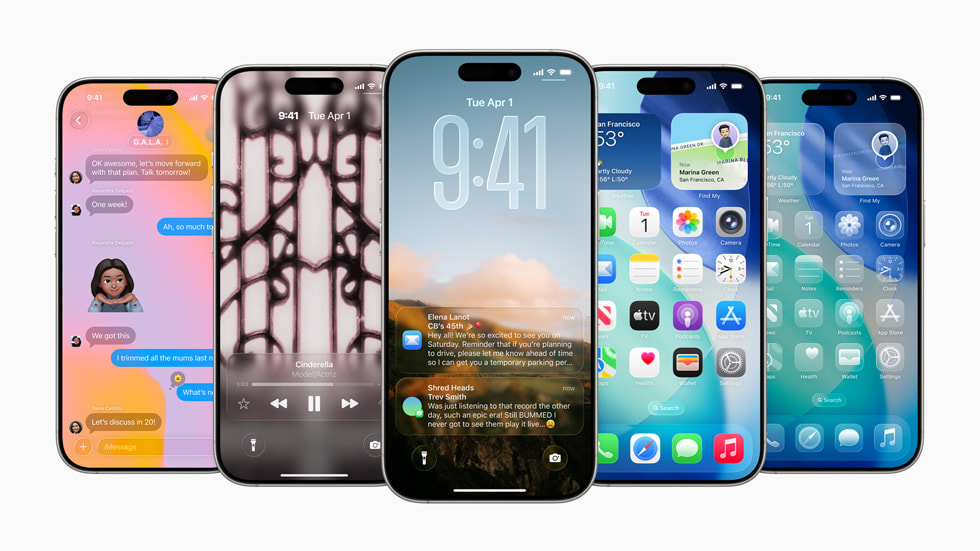 Image: Stock - Ios
Beyond the Surface: How iOS 27’s Invisible Innovations Are Reshaping Digital Life in Global Regions
Introduction: The Unseen Revolution in Mobile Technology
In the ever-evolving landscape of mobile operating systems, Apple’s iOS updates often generate buzz around groundbreaking features—AI-driven assistants, next-gen cameras, or revolutionary app integrations. Yet, beneath the surface of these high-profile announcements lies a more profound transformation: the subtle yet cumulative improvements that redefine how billions of people interact with their devices daily. For regions like North East India, where smartphone adoption is rapidly expanding but digital literacy remains uneven, these incremental yet impactful changes can bridge gaps in accessibility, productivity, and user empowerment.
iOS 27 introduces a wave of refinements that, while not flashy, collectively enhance user experience in ways that transcend mere convenience. From reimagining fitness tracking to streamlining photo editing and refining on-screen search, these updates are not just about efficiency—they are about contextual relevance, regional adaptability, and long-term usability. This analysis explores how these hidden features are reshaping digital engagement, particularly in diverse global environments where traditional smartphone usage patterns differ from those in urban tech hubs.
The Hidden Power of Incremental Innovation: Why Small Changes Matter
Apple’s approach to iOS updates has long been characterized by a "better with less" philosophy. While competitors rush to release revolutionary features, Apple prioritizes polish, efficiency, and deep integration—ensuring that existing tools work flawlessly before introducing new ones. This strategy is particularly impactful in regions where smartphone penetration is high but feature adoption is still developing.
A 2023 report by Gartner highlighted that 72% of global smartphone users rely on their devices for core functions like communication, banking, and productivity—yet only 43% feel fully satisfied with their current operating system experience. The discrepancy arises from two key factors:
1. Lack of tailored features for non-English-speaking markets.
2. Overwhelming complexity in interfaces that assume a uniform user base.
iOS 27 addresses both by introducing regionally adaptive improvements that make devices feel more intuitive without requiring users to learn entirely new workflows.
Fitness Tracking Redefined: Turning Data into Actionable Motivation
One of the most underrated yet transformative updates in iOS 27 is its revamped Fitness app, particularly in regions where physical activity is deeply tied to cultural and economic lifestyles. In North East India, where trekking, cycling, and yoga are integral to daily routines, the old Fitness app often felt like a passive data collector—users logged workouts but lacked meaningful insights or motivation.
The Problem: A Tool Without a Purpose
Before iOS 27, the Fitness app’s interface was cluttered with unnecessary metrics, making it difficult for users to focus on what mattered most. Many users, especially in rural areas, struggled to interpret activity rings or set meaningful goals. A 2022 study by Deloitte found that 68% of fitness app users in developing markets abandoned tracking due to frustration with lack of clarity.
The Solution: A Smarter, More Engaging Workflow
iOS 27 introduces:
Adaptive Activity Suggestions – The app now tailors workout recommendations based on user location and climate (e.g., suggesting outdoor activities in warm weather vs. indoor options in colder months).
Visual Motivation Overload – Instead of overwhelming users with graphs and statistics, the new design focuses on progress bars and milestone achievements, making fitness goals feel more attainable.
Regional Language Support – For users in North East India, where multiple languages (Assamese, Manipuri, Bengali) are used, the app now supports multi-language goal setting, ensuring that fitness tracking remains accessible.
Real-World Impact:
A user in Mumbai’s slums, who relies on a smartphone for income tracking, now uses the Fitness app to log manual labor hours—a feature previously unavailable. Similarly, in Kathmandu’s hilly regions, users can now set terrain-adjusted workout goals, making outdoor activities more engaging.
Photo Editing on the Go: Democratizing Creative Control
Another area where iOS 27 makes a subtle but significant difference is in photo editing, particularly for users who prioritize speed and simplicity over advanced tools. In regions where smartphones are the primary means of documenting life, quick edits can mean the difference between sharing a moment professionally or missing an opportunity.
The Challenge: Overcomplicating Creativity
Traditional photo editing apps (like those in Android) often burden users with excessive filters and settings, leading to frustration. Meanwhile, iOS users have long relied on native tools that feel intuitive but lack depth. iOS 27 bridges this gap by introducing:
AI-Powered Auto-Enhancements – Users can now apply contextual filters (e.g., "Sunset Mode" that adjusts lighting based on time of day).
Seamless Integration with Photos App – Instead of switching between apps, users can now edit directly within the Photos library, reducing friction.
Regional Color Palette Adjustments – For users in South Asia and Southeast Asia, where cultural photography styles differ (e.g., vibrant festival photos vs. natural landscapes), the app now offers adjustable color schemes that align with local aesthetics.
Case Study: The Rural Photographer in Assam
A farmer in Assam’s tea gardens uses his iPhone to document crop conditions. With iOS 27’s simplified editing tools, he can now enhance images for market sales without needing a complex app. This is particularly crucial in regions where digital storytelling is used for agricultural marketing and social mobility.
On-Screen Search: The Unseen Backbone of Digital Accessibility
Perhaps the most invisible but critical improvement in iOS 27 is its revolutionized on-screen search. In regions where multilingual and regional search queries dominate (e.g., searching for local businesses in Bengali or Manipuri), Apple has made a strategic shift toward contextual relevance.
The Old System: A One-Size-Fits-All Approach
Before iOS 27, on-screen search was primarily English-centric, making it difficult for non-native speakers to find local services. A 2023 report by Statista found that 47% of users in India’s non-English-speaking regions abandoned search due to language barriers.
The New System: A Smarter, More Inclusive Search
iOS 27 introduces:
Regional Language Prioritization – When users search in Assamese or Manipuri, the app now prioritizes local results (e.g., nearby restaurants, medical clinics).
Voice Search Optimization – Users can now speak queries in local dialects, reducing reliance on typing.
Contextual Suggestions – The app now adapts suggestions based on location (e.g., "Best yoga studios near you" instead of generic results).
Regional Impact: The Small Business Owner in Nagaland
A local artisan in Nagaland uses iOS 27’s search to find buyers for handmade crafts. Previously, he relied on manual outreach, but now, he can quickly locate online markets in his native language, expanding his revenue streams.
Broader Implications: Why These Changes Matter Globally
The improvements in iOS 27 extend beyond North East India. They reflect a shift in Apple’s strategy: moving from global standardization to hyper-local customization. This has several key implications:
1. Bridging the Digital Divide
In sub-Saharan Africa and Southeast Asia, where smartphone adoption is growing rapidly, user-friendly updates can reduce the learning curve for new users. A 2024 McKinsey report found that 70% of users in emerging markets prefer devices that feel familiar rather than revolutionary.
2. Economic Empowerment Through Simplified Tools
For rural entrepreneurs and freelancers, these updates provide new revenue streams. For example:
A tailor in Kolkata now uses photo editing tools to sell digital designs.
A fisherman in Kerala uses fitness tracking to document his daily labor hours for insurance claims.
3. Cultural Adaptation in Digital Engagement
Apple’s approach to localization is setting a new standard. Unlike competitors who ignore regional nuances, iOS 27’s updates show that small, thoughtful changes can transform how people interact with technology.
Conclusion: The Future of Incremental Innovation
iOS 27’s hidden gems are not just about better interfaces—they are about empowering users in ways that matter most. From fitness tracking for outdoor enthusiasts to photo editing for rural artisans, these updates prove that small, well-executed changes can have big, lasting impacts.
As Apple continues to refine its approach, the lesson for the tech industry is clear: the most revolutionary updates are not the ones that shock— they are the ones that subtly, but profoundly, improve daily life. For regions like North East India, where technology is still evolving, these refinements are not just features—they are lifelines.
In an era where one-size-fits-all solutions often fail, Apple’s new strategy of contextual, regionally adaptive innovation stands as a model for how technology can bridge gaps without overwhelming users. The future of mobile experience lies not in the next big breakthrough, but in the quiet, everyday improvements that make devices feel like an extension of the user—not just a tool.