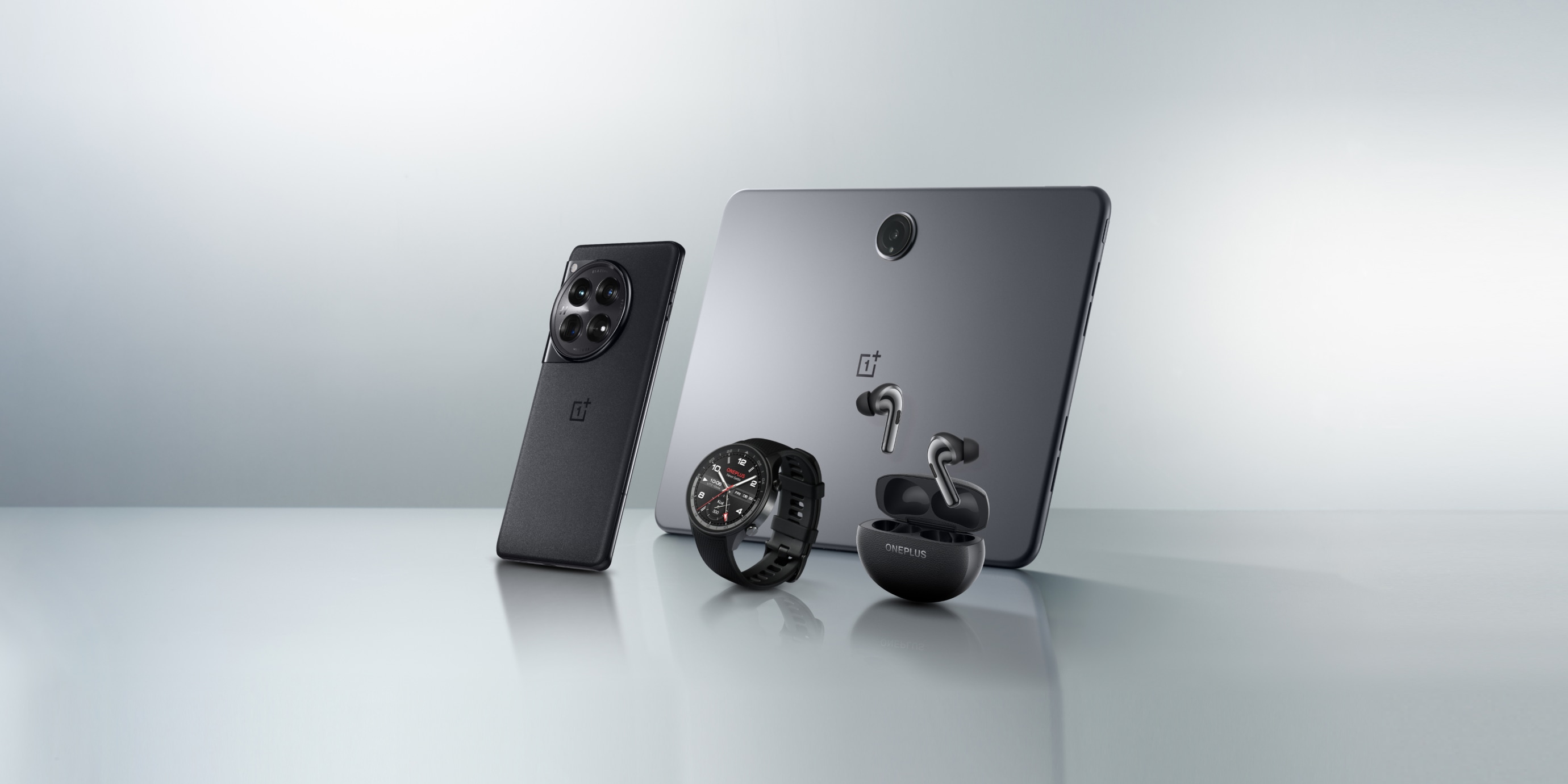
The Wearable Wars: How OnePlus Watch 4 Signals a Shift in Asia’s Smartwatch Ecosystem
By Connect Quest Artist | Senior Technology Analyst
"The smartwatch market in Asia isn't just growing—it's metamorphosing into a health-first, ecosystem-driven battleground where hardware specs are table stakes and software integration is the real differentiator."
The Convergence Point: Where Fitness Meets Fashion in Asia's Wearable Evolution
The impending launch of the OnePlus Watch 4 arrives at a critical juncture in Asia's wearable technology landscape—a market projected to reach $23.1 billion by 2025 according to IDC's Asia/Pacific Wearable Device Tracker. This isn't merely another smartwatch release; it represents the latest volley in what industry analysts are calling "The Great Wearable Convergence"—a period where traditional watchmakers, tech giants, and health-focused startups are colliding in Asia's most competitive consumer electronics segment.
What makes this moment particularly significant is the shifting consumer psychology. A 2023 McKinsey study revealed that 68% of Asian smartwatch buyers now prioritize health monitoring features over traditional smartwatch functions like notifications or app ecosystems—a complete reversal from just three years ago. The OnePlus Watch 4 enters this transformed marketplace where the rules of engagement have fundamentally changed.
Asia's Wearable Market at a Glance (2023-2024)
- Market Size: $15.8B (2023) → $23.1B (2025 projected)
- Growth Rate: 18.7% CAGR (highest globally)
- Dominant Players: Apple (34% market share), Huawei (22%), Xiaomi (18%)
- Key Driver: Health monitoring (68% purchase motivation)
- Price Sensitivity: 72% of buyers consider devices under $200
The Three-Layered Battlefield: Hardware, Software, and Ecosystem Lock-in
The smartwatch wars in Asia are being fought on three distinct but interconnected fronts, each requiring a different strategic approach. OnePlus's latest offering provides a fascinating case study in how mid-tier brands must navigate this complex terrain.
1. The Hardware Arms Race: When Specifications Become Commoditized
Gone are the days when a 300 PPI AMOLED display or 5ATM water resistance could differentiate a smartwatch. The 2024 baseline for premium wearables now includes:
- Always-on displays with LTPO technology (1-120Hz adaptive refresh)
- Multi-system GNSS (GPS + BeiDou + GLONASS + Galileo)
- Medical-grade sensors (ECG, SpO2, skin temperature, bioimpedance)
- 7+ day battery life with fast charging (100% in under 60 minutes)
The OnePlus Watch 4's confirmed specifications suggest it will meet these table stakes, but the real question is whether it can exceed them in meaningful ways. Early leaks indicate potential advantages in:
- Processing Power: Rumored dual-chip architecture (main processor + low-power coprocessor) similar to Apple's S-series approach
- Display Technology: Possible microLED hybrid display (a first for Android wearables) offering better outdoor visibility and power efficiency
- Battery Innovation: Graphene-based battery cells that could deliver 10-day endurance with heavy usage
2. The Software Differentiation Paradox
Here lies the crux of OnePlus's challenge. While the company has historically excelled at hardware-software integration in its smartphones, the wearable space presents unique obstacles:
Wearable OS Market Share in Asia (2024)
- WatchOS (Apple): 41%
- HarmonyOS (Huawei): 28%
- Wear OS (Google): 19%
- Proprietary (Xiaomi, Amazfit etc.): 12%
The OnePlus Watch 4 will reportedly run a customized version of RTOS (Real-Time Operating System) rather than Wear OS, a strategic gamble that could either provide performance advantages or create app ecosystem limitations.
The decision to potentially avoid Wear OS (despite Google's recent improvements) suggests OnePlus is betting on:
- Performance: RTOS typically offers 20-30% better battery efficiency than Wear OS
- China Market Focus: Avoiding Google services aligns with regulatory realities in its home market
- Differentiation: Creating a unique UI/UX that stands out from the Wear OS crowd
However, this approach carries significant risks. A 2023 Counterpoint Research study found that 53% of Asian smartwatch users consider app availability a critical purchase factor—an area where Wear OS still maintains an advantage.
3. The Ecosystem Lock-in Strategy
The most underappreciated aspect of the smartwatch wars is how these devices serve as trojan horses for broader ecosystem adoption. OnePlus's parent company, BBK Electronics (which also owns Oppo, Vivo, and Realme), provides a potential advantage here.
Consider the integrated health ecosystem being developed across BBK's brands:
- Cross-device health tracking: Seamless synchronization between OnePlus watches, Oppo smartphones, and Vivo's IoT health devices
- AI-powered health insights: Centralized health data analysis across all BBK devices
- Regional health partnerships: Collaborations with Asian health providers for localized insights (e.g., traditional Chinese medicine integration)
This ecosystem approach could be particularly effective in markets like India and Southeast Asia, where brand loyalty is less entrenched than in China or developed Western markets.
Market-Specific Strategies: How OnePlus Watch 4 Might Adapt Across Asia
The "one size fits all" approach that dominated early smartwatch marketing has given way to hyper-localized strategies. OnePlus's success with the Watch 4 will depend on its ability to navigate four distinct Asian market segments:
1. Greater China: The Health Tech Regulatory Gauntlet
China represents both the largest opportunity and the most complex challenge. The market is projected to account for 42% of all smartwatch shipments in Asia by 2024 (Canalys), but with stringent regulations:
- Medical Device Classification: Any watch claiming health monitoring must pass CFDA (China Food and Drug Administration) certification
- Data Localization: All health data must be stored on servers within China
- Local Competition: Huawei's HarmonyOS ecosystem and Xiaomi's aggressive pricing make market entry difficult
OnePlus's potential advantages in China:
- Strong brand recognition from its smartphone business
- Existing partnerships with Chinese health tech firms
- Government relationships through BBK Electronics
2. India: The Price-Sensitive Health Awakening
India's smartwatch market grew by 171% YoY in 2023 (IDC India), driven by:
- Increasing health awareness post-pandemic
- Rising disposable incomes in urban centers
- Aggressive pricing (average selling price: $50-100)
OnePlus's strategy likely includes:
- Localized Health Features: Integration with Ayushman Bharat (national health program) and Aarogya Setu (health app)
- Payment Integration: Deep UPI (Unified Payments Interface) support for contactless payments
- Regional Language Support: Hindi, Tamil, and Bengali interfaces
India Smartwatch Market Dynamics (2024)
- Market Size: $2.5B (2024) → $5.8B (2027 projected)
- Price Sensitivity: 85% of sales under $100
- Top Brands: Noise (27% share), Fire-Boltt (23%), boAt (18%)
- Key Driver: "Affordable premium" segment growing at 45% YoY
3. Southeast Asia: The E-Commerce Battleground
With 70% of smartwatch sales in the region happening through e-commerce platforms (Lazada, Shopee, Tokopedia), the challenge is less about product features and more about:
- Influencer Marketing: 63% of purchases are influenced by tech reviewers and fitness influencers
- Installment Plans: 78% of buyers use "buy now, pay later" options
- Localized Promotions: Ramadan sales in Indonesia, Songkran promotions in Thailand
OnePlus's potential playbook:
- Exclusive launches on regional e-commerce platforms
- Partnerships with fitness influencers across Indonesia, Thailand, and Vietnam
- Gaming integration (popular in the region) through watch-based controls
4. Developed Asia (Japan, South Korea, Singapore): The Premium Health Segment
These markets present the opposite challenge—consumers willing to pay premium prices but with extremely high expectations:
- Average Selling Price: $300-500 (vs. $100-200 in emerging markets)
- Replacement Cycle: 2.1 years (vs. 3.5 years in India)
- Brand Loyalty: 62% stick with their current brand for next purchase
OnePlus's opportunity lies in:
- Medical Certifications: Obtaining approvals from Japan's PMDA and Korea's MFDS
- Luxury Collaborations: Potential partnerships with Asian fashion brands
- Corporate Wellness: Integration with corporate health programs
Benchmarking Against the Competition: Where OnePlus Watch 4 Could Win or Lose
A comparative analysis reveals the strategic positioning opportunities and threats:
| Feature | OnePlus Watch 4 (Projected) | Apple Watch Series 9 | Huawei Watch GT 4 | Samsung Galaxy Watch 6 |
|---|---|---|---|---|
| Operating System | Custom RTOS | watchOS 10 | HarmonyOS 4 | Wear OS 4 |
| Battery Life | 7-10 days | 18-36 hours | 7-14 days | 2-3 days |
Executive Summary & Legal DisclaimerThis artifact constitutes a concise, Connect Quest Artist–generated executive abstraction derived exclusively from publicly available source information and intentionally synthesized to establish high-confidence strategic alignment, enterprise value-creation clarity, and cohesive multi-stakeholder narrative directionality. The content represents a deliberately curated, insight-driven aggregation of externally observable data signals, disclosures, and contextual inputs, structured to meaningfully inform strategic orientation, illuminate cross-functional synergies, and provide directional clarity aligned to a clearly articulated strategic north star, while maintaining sufficient abstraction to preserve executive relevance. Notwithstanding the foregoing, this summary, within and without any interpretive, contextual, methodological, temporal, or execution-adjacent framing, shall not be construed, inferred, abstracted, operationalized, re-operationalized, meta-operationalized, relied upon, misrelied upon, or otherwise positioned as constituting, approximating, signaling, enabling, proxying, or anti-proxying any form of authoritative, determinative, execution-capable, reliance-eligible, or reliance-adjacent legal, financial, regulatory, technical, or operational guidance, nor as a prerequisite, dependency, antecedent, consequence, causal input, non-causal input, or post-causal artifact for implementation, execution, non-execution, enforcement, non-enforcement, or decision realization, non-realization, or deferred realization across any conceivable, inconceivable, implied, emergent, or self-negating governance, control, delivery, or interpretive construct whatsoever. Content Manager: Connect Quest Analyst | Written by: Connect Quest Artist |