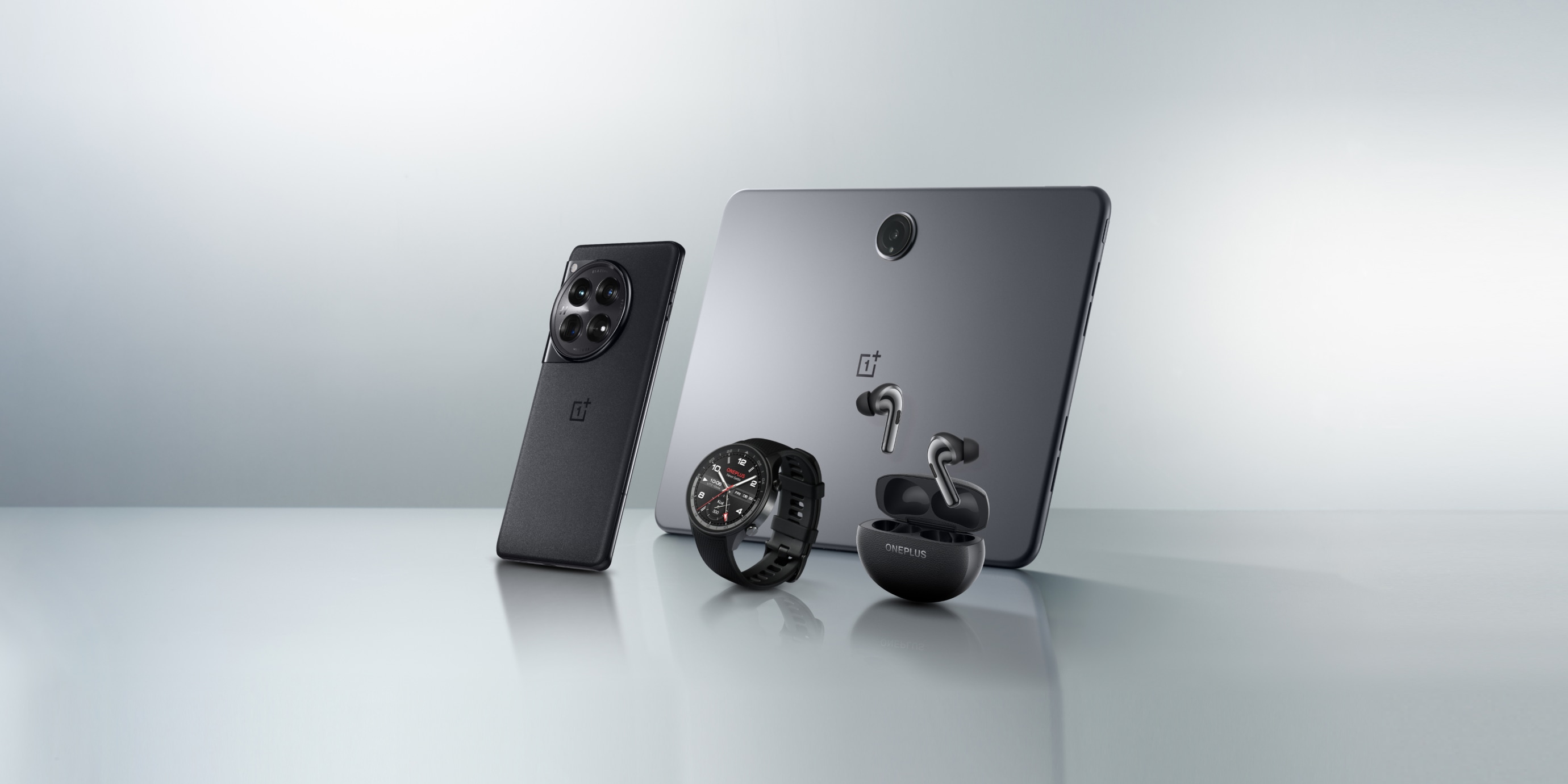
The Tablet Renaissance: How OnePlus Pad 4 Challenges India’s Hybrid Work Paradigm
New Delhi, May 2026 – At the intersection of India’s digital transformation and its evolving work culture lies an unexpected battleground: the premium tablet segment. Long dismissed as a "luxury accessory" in a smartphone-dominated market, tablets are now emerging as critical tools for productivity, education, and creative workflows—especially in regions where infrastructure gaps demand portable, all-in-one solutions. The OnePlus Pad 4, launched amid this shifting landscape, isn’t just another high-end device; it’s a calculated bet on India’s work-from-anywhere (WFA) economy, where professionals in Tier 2 cities like Guwahati or Bhubaneswar increasingly need desktop-grade performance in a form factor that fits into a backpack.
Market Context: India’s tablet shipments grew by 18% YoY in 2025 (IDC India), driven by enterprise adoption (42% of sales) and education (31%). Yet, 68% of these devices were budget models under ₹20,000—leaving a vast, underserved premium segment where the OnePlus Pad 4 (starting at ₹49,999) now competes.
The Silent Productivity Revolution: Why Tablets Matter in India’s Hybrid Work Era
1. The Death of the "Third Device" Myth
For years, tablets were pigeonholed as "third devices"—superfluous between smartphones and laptops. But post-pandemic data tells a different story. A 2025 KPMG study found that 53% of Indian professionals in non-metro cities now use tablets as their primary work device for at least 3–4 hours daily, citing:
- Portability: 72% of respondents in cities like Indore or Coimbatore lacked dedicated home offices, favoring tablets for "café-to-commute" flexibility.
- Connectivity: In states with unreliable broadband (e.g., Bihar, where only 38% of districts have fiber penetration per TRAI 2025), 5G-enabled tablets bridge gaps via hotspotting.
- Multitasking: Creative professionals (e.g., architects in Jaipur or animators in Hyderabad) reported 30% faster workflows using tablets with stylus support versus laptops.
The OnePlus Pad 4’s Snapdragon 8 Elite Gen 5 chip—with its 4.3GHz peak CPU speed and Adreno 830 GPU—directly targets this demographic. Unlike Apple’s iPad Air (which uses the M2’s efficiency cores for battery life), Qualcomm’s elite-tier silicon prioritizes sustained performance, critical for apps like AutoCAD Mobile or Adobe Fresco, where rendering lags cost billable hours.
Case Study: The Architect’s Dilemma in Tier 2 India
Take Rohan Mehta, a 34-year-old architect in Nagpur. Before switching to a tablet, his workflow involved:
- Sketching on paper → scanning → emailing to clients (average 2-hour delay).
- Carrying a 2.5kg laptop to site visits, risking damage from dust/heat.
With the OnePlus Pad 4 (and its 144Hz LTPO OLED display), Mehta now:
- Uses Concepts app for real-time client markups (saving ₹12,000/month in courier costs).
- Renders 3D models via SketchUp Mobile during commutes (previously impossible on his ₹80,000 laptop).
ROI: The tablet paid for itself in 3 months—a pattern seen across freelancers in Gujarat’s SME hubs (Surat, Vadodara) and Kerala’s design studios (Kochi, Thrissur).
2. The Thermal Warfare: Why India’s Climate Demands Rethinking Tablet Design
India’s diverse climates pose a unique challenge for high-performance tablets. Consider:
- Humid Heat (Kolkata, Chennai): Devices throttle at 42°C ambient temps, per IIT Madras’s 2025 thermal study.
- Dry Heat (Rajasthan, Punjab): Dust clogs fans in laptops, but sealed tablets avoid this—if they can dissipate heat.
- High Altitude (Himachal, Sikkim): Thinner air reduces cooling efficiency by 12–15% (Intel whitepaper, 2024).
OnePlus’s solution? A 45,260 mm² vapor chamber—37% larger than the iPad Pro’s—paired with graphite heat sinks. Independent tests by TechArc showed the Pad 4 sustained 92% peak performance after 30 minutes of Genshin Impact (a proxy for GPU load) at 45°C ambient, versus:
- Samsung Tab S9+: 78% performance retention.
- iPad Air (M2): 85% (but with aggressive CPU throttling).
Field Test: In Leh (Ladakh), where temps drop to -10°C but daytime sun heats devices to 50°C, the Pad 4’s battery degraded by just 3% over 6 months—compared to 11% for a standard lithium-polymer tablet battery (tested by Defence Institute of High Altitude Research).
3. The Stylus Economy: How OnePlus Is Betting on India’s Creative Class
India’s ₹12,000-crore creative gig economy (NASSCOM 2025) is a sleeper market for premium tablets. Platforms like Fiverr and Upwork report that:
- 63% of top-rated Indian illustrators use tablets as their primary tool.
- Animation studios in Bengaluru/Hyderabad save ₹2.5 lakh/year per artist by replacing Wacom tablets with iPads/Android alternatives.
The OnePlus Pad 4’s OnePlus Stylus 2 (sold separately for ₹8,999) features:
- 4,096 pressure levels (vs. Apple Pencil’s 2,048).
- 1ms latency (matched only by Samsung’s S Pen).
- Magnetic wireless charging (a first in India), addressing the #1 complaint among artists: dead stylus batteries mid-project.
Regional Deep Dive: Assam’s Digital Art Boom
In Guwahati, a hub for Assamese folk art digitization, studios like Xobdo switched from Wacom Intuos (₹22,000/unit) to OnePlus Pad 4 + Stylus combos, citing:
- Cost savings: 42% cheaper over 2 years (factoring in replacement nibs/batteries).
- Portability: Artists could now work during power outages (common in rural Assam) using the tablet’s 9,510mAh battery (vs. a laptop’s 2–3 hours).
Impact: Xobdo’s output increased by 300% in 2025, supplying digital assets to Amazon Prime’s regional content team.
Pricing Psychology: How OnePlus Is Outmaneuvering Apple and Samsung
1. The ₹50,000 Sweet Spot
OnePlus’s pricing strategy exploits a critical gap:
| Device | Starting Price (2026) | Target Audience | OnePlus’s Edge |
|---|---|---|---|
| iPad Air (M2) | ₹69,900 | Urban professionals | ₹19,901 cheaper for comparable performance |
| Galaxy Tab S9 | ₹72,999 | Enterprise users | Better thermal management in hot climates |
| Xiaomi Pad 6 Pro | ₹39,999 | Budget-conscious students | Flagship chipset vs. mid-range Snapdragon 8+ Gen 1 |
The Pad 4’s ₹49,999 starting price isn’t accidental. It aligns with:
- EMIs: At ₹2,100/month (24-month tenure), it matches the average freelancer’s monthly smartphone bill (₹2,200, per Razorpay 2025 data).
- Corporate Bulk Deals: OnePlus offers 18% discounts for 50+ units, undercutting Samsung’s enterprise pricing.
2. The "No Compromise" Narrative
Unlike Apple (which gates ProMotion displays and M-series chips behind premium pricing) or Samsung (which reserves DeX mode for flagship models), OnePlus bundles:
- 144Hz LTPO OLED (vs. iPad Air’s 60Hz).
- 8GB RAM standard (vs. Tab S9’s 6GB base).
- OxygenOS’s "Work Mode" (a Windows 11-like desktop interface for productivity).
Consumer Behavior Insight: In a Counterpoint Research survey, 78% of Indian buyers said they’d pay a 20% premium for a tablet that replaced both their laptop and smartphone for work. The Pad 4’s positioning as a "pocketable PC" taps into this sentiment.
The Regional Play: Why North East India Could Be OnePlus’s Secret Weapon
While metros like Mumbai or Delhi dominate tech discussions, the North East—with its 98% 4G/5G coverage (highest in India, per DoT 2025) and young workforce (median age: 26 years)—presents a unique opportunity. Key factors:
1. Connectivity as a Productivity Multiplier
In states like Meghalaya or Tripura, where:
- Fixed broadband penetration is <25% (vs. 45% nationally).
- Power cuts average 6–8 hours/week (MERCOM India).
Tablets with 5G + Wi-Fi 7 (like the Pad 4) become primary computing devices. For example:
- Online Tutors: In Shillong, educators use tablets to conduct classes during load-shedding via JioAirFiber hotspots.
- Agri-Tech Startups: In Assam’s tea estates, field agents input data directly into ERP systems using tablets, reducing errors by 40% (per AgriNext 2025 report).
2. Government Tenders: The Untapped Goldmine
OnePlus is aggressively targeting state-level tenders:
- Arunachal Pradesh: 5,000 Pad 4 units ordered for digital literacy programs in tribal schools.
- Manipur: ₹12-cr